The Best Thing I Saw on TV This Week (4/10 – 4/17)

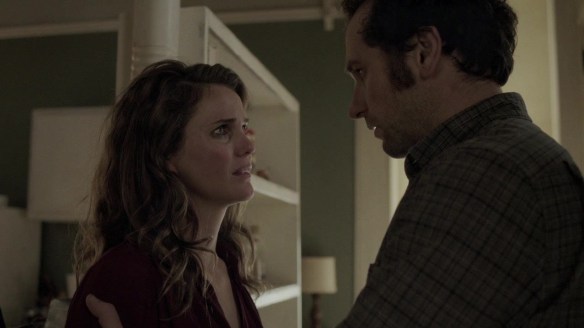
This week in television started off with a closer look at Belle’s character on Sunday’s episode of Once Upon a Time. Monday gave us Disney night on Dancing with the Stars, Jane’s bachelorette party on Jane the Virgin, and one of the most uplifting Castle moments of this season when Ryan and Jenny’s new baby boy was born (and given the perfect middle name of Esposito). On Tuesday, Brooklyn Nine-Nine‘s penultimate episode made me laugh harder than any episode of television so far this season, while The Mindy Project‘s big return made me cry (while also making me feel so proud of Mindy). Wednesday’s episode of Nashville took the drama—especially surrounding Maddie—up another notch, and on The Americans, certain characters found a way to release some of their own tension while others found their anxiety reaching a fever pitch with no release in sight. On Thursday, Orphan Black premiered with a look at Beth’s story, and on Friday, the impossibly charming Unbreakable Kimmy Schmidt returned to Netflix.

When many TV shows seem to be going to very dark places, it’s nice to take a moment to celebrate shows that still make us laugh. And Brooklyn Nine-Nine was at its comedic best on Tuesday night. “Bureau” had so many highlights that I can’t pick just one for the best moment on television this week. But I will single out Andre Braugher as the week’s best performer. Whether he was talking about his lint (which was oblong and blue, in case you were wondering) or describing the plot of Sex and the City, he proved once again why it’s a crime that he hasn’t won an Emmy for this role yet. I hope this is his submission episode for this season, because I can’t think of a better example of his talent.

What was the best thing you saw on TV this week? And would anyone else like to sign a petition for FOX to create a web series in which Captain Holt reviews TV shows?
TV Time: The Americans 4.05

Title: Clark’s Place

Episode M.V.P.: Alison Wright
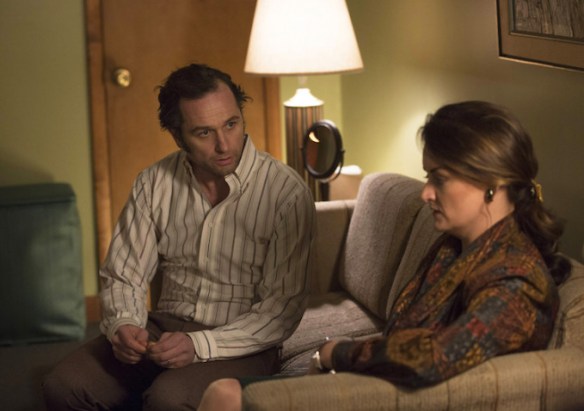
A common refrain in Storytelling 101 is “Show, don’t tell.” But sometimes a moment of telling can be even more moving and engaging than a moment of showing. You just have to find the right storyteller. And The Americans has found that with Alison Wright. So many of Wright’s scenes—especially since about midway through last season—have involved Martha telling “Clark” about how she feels. But what’s important to remember is that these scenes exist because Martha often can’t show her husband how she feels, because he’s not there. So she has to make him—or at least try to make him—understand her anxiety, her loneliness, and her frustration in those moments when he’s gone in whatever way she can. And in making him understand, she makes us understand, too.

That’s the surprising beauty of Wright’s performance: She manages to show and tell at the same time. For example, in the first scene of “Clark’s Place,” she doesn’t just tell “Clark” (and the audience) about her panic attack, she brings it to life in a way that’s more gripping than a flashback to her having that panic attack in the last episode. Because not only do we feel her panic at the mere memory of thinking she was having a heart attack and was going to die alone, we feel the myriad of other emotions she feels in the present, too. We feel her shame at being prescribed Valium to deal with her anxiety. We feel her frustration with herself for letting her life get so out of control and with her husband for turning her life upside-down. And we feel her increasing sense of loss—the loss of the fantasy that was her marriage, the loss of any kind of a normal life, and the loss of her sense of self. Because when Wright delivers those lines about her dinner with Aderholt and the panic attack afterward, it’s not really about the lines she’s saying; it’s about the weight of the suffocating emotions she puts into every word.

The thing that impressed me the most about Wright in this episode was the way she’s changed Martha’s reactions over time. Yes, her tears while telling her husband about her panic attack broke my heart, but what really stood out to me was her growing understanding and heartbreaking acceptance of the fact that she might be married, but she’s really alone. She’s not desperate anymore; she’s resigned. Even when things started to fall apart last season, I felt as if she still believed she and “Clark” were a team. Now, however, it’s killing me to watch her sink deeper and deeper into a sense of resigned loneliness with no one to help pull her out of it.

Martha knows she’s trapped, and watching that sense of resignation make its way into Wright’s line readings (“Why would I expect to keep anything?”) made me want to cry. This episode was like watching a character’s spirit and soul die before they actually die, which might be even more tragic than watching Nina get shot in the back of the head last week. And so much of that pathos comes from Wright’s performance.

Continue reading

Fangirl Thursday: Look for the Hope

It’s been an emotionally draining, depressing, and frustrating few weeks in various fandoms. It seems TV show after TV show has been doubling down on the idea that shocking deaths make for good television, without thinking about what certain deaths might mean for large groups of their fans. And even if characters aren’t dying on your favorite show, chances are it’s still gone into darker territory this season. It seems almost every show I watch has dealt with heavier material this year. Even the usually light Brooklyn Nine-Nine ended with an atypical life-threatening cliffhanger this week. (Even though I think we’re all 99.9% sure Holt’s going to be fine.) And the offerings at movie theaters aren’t much better lately, with superheroes fighting each other all over the place.

In short, if you feel a little beaten down by the media you’re consuming lately, you’re not alone.

There’s a tendency to judge the quality of a piece of media by how serious it is. Most of the “prestige dramas” we hear so much about are incredibly heavy and often bleak. So people often stick with television shows that make them feel hopeless and upset more often than not because they think that’s what “good” television is supposed to do. They think that walking away from a TV show when it starts to feel oppressively negative says bad things about them as a viewer instead of bad things about the show that made them walk away. Because a good drama can never be “too dark,” right?

WRONG.

It’s not just okay to walk away from a TV show when it starts negatively affecting your emotions on a consistent basis; it’s smart. There’s nothing wrong with putting your mental and emotional health above a television show’s ratings or your reputation as a fangirl or fanboy. Even if you loved a show for years, if it’s making you feel miserable or triggering you in some way, you’re not less of a fan if you stop watching something that’s not good or healthy for you anymore.

This trend of prioritizing shock value above quality character development needs to stop. This is especially true when the shock value comes from killing or traumatizing characters simply to show that no character is safe and that the world they inhabit is awful. If a character dies, that death should mean something—and not just that anyone can die. And if a character is put through a traumatic situation, it should be treated with care not just in that moment, but in all the moments that follow it. Death, beatings, torture, and rape shouldn’t be added to stories only to get people talking or to show how horrible a person or a society is. They should resonate thematically; they should carry weight not just in one episode, but throughout the rest of the series. They should matter.

Continue reading

TV Time: Once Upon a Time 5.17

OUAT 517

Source: avclub.com

Title Her Handsome Hero

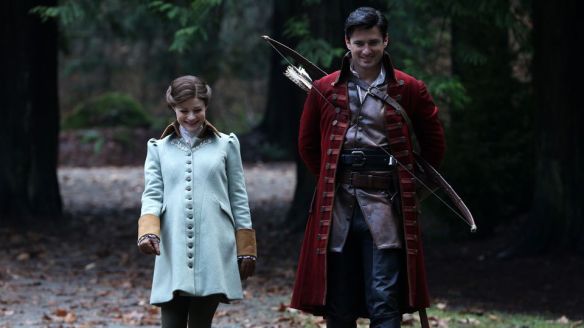
Two-Sentence Summary With Belle and Rumplestiltskin working together to try to save their unborn baby from Hades, the Lord of the Underworld enlists a familiar face from Belle’s past to throw a wrench into their plans: Gaston. Meanwhile, Emma’s nightmare of a beast attacking her mother forces her to confront her guilt about her family’s participation in her quest to save Killian.

Favorite Line “We knew it would be hard—these things always are—but some things are worth it. Love is worth it.” (Snow)

My Thoughts Hope is the strongest force of good there is on Once Upon a Time, and the opposite is also true: Hopelessness is the strongest agent of darkness. So much of this Underworld arc has focused on the way hope can take root in the darkest places, but that can only happen when hope is shared. When someone feels like they’re alone in hoping for the best, it’s easy for them to lose that hope when things get hard. And when that happens, it also becomes easy for them to open themselves up to darkness.

I really loved the visual symbolism in this episode of hope being a flower growing amid the decay of the Underworld. Like a flower, hope can’t grow in darkness, but light makes it grow strong. And Emma and her loved ones have brought light to the Underworld. These characters have a deep sense of hope, and they don’t just keep it to themselves. They’re heroes because they work to share that hope with others, and they’ve done that not just by giving hope to those who have since moved on, but also by continuing to give hope to each other when the darkness around them starts to feel overwhelming.

On the opposite end of the spectrum are Rumplestiltskin and Belle. Hope has never been something Rumplestiltskin has understood. He’s a coward, and fear and hopelessness are often deeply connected. But what made “Her Handsome Hero” so sad was the fact that Belle is also feeling hopeless now—not just concerning the fate of her child but concerning her entire belief system and her sense of self.

Continue reading

The Best Thing I Saw on TV This Week (4/3-4/10)

This was a great week for partnerships on television. Sunday’s episode of Once Upon a Time introduced a new potential pairing in the unexpected relationship between Zelena and Hades. On Monday, strong partnerships created some memorable routines to go along with memorable years on Dancing with the Stars. Tuesday’s episode of Brooklyn Nine-Nine featured a pleasantly surprising bit of honest and open conversation between Jake and Amy during an undercover operation, and American Crime Story: The People v. O.J. Simpson ended with plenty of emotion and another reminder that the show’s version of Marcia Clark and Chris Darden’s partnership helped make it must-see TV each week. On Wednesday, Juliette returned to Nashville, which ignited some hope in my “shipper” heart that she and Avery might be able to rekindle their partnership someday. Also on Wednesday, The Americans started by putting its central partners in quarantine and ended with a sad death in a lonely prison basement.  American Idol also ended this week, and I’d be lying if I said the reunion of Ryan Seacrest and Brian Dunkleman wasn’t one of my favorite things about that finale. Finally, Outlander returned on Saturday with a start I never saw coming but an ending that reminded me how much I love spending time swooning over Jamie and Claire.

Out of all the great moments between great partners this week, nothing topped the work done by two of the best scene partners on television right now: Keri Russell and Matthew Rhys on The Americans. In this week’s episode, the two shared a scene in a dimly lit bathroom that I have watched probably close to 10 times since it aired because it’s taken that many times to even come close to catching all the nuances in their performances. Watching Elizabeth have to work through the reality that she could die was painful enough, but nothing prepared me for watching Philip work through it. It was hard to see the normally stoic and strong Elizabeth look and sound so fragile and weak. (The statuesque Russell’s hunched posture in that scene conveyed so much.) But it just about destroyed me to watch Philip refuse to even consider a life without his wife and then almost fall apart when forced to consider it. In just a few short lines, Elizabeth showed how much her family has come to mean to her and how much their happiness now comes before them carrying on the mission. And in even fewer lines, Philip showed just how much Elizabeth means to him. Rhys and Russell have always made me believe the depth of feeling between their characters without ever making it feel forced, and that depth of feeling was like a warm light in that dim bathroom, adding another layer of honesty and emotion to TV’s best marriage.

Here’s a link to a GIF-set of this scene in case you want your heart to be broken by Matthew Rhys’s face. 

What was the best thing you saw on TV this week?

Scandal 5.17: “Thwack!”

It’s my pleasure to welcome Laura back for this week’s look at the world of Scandal!

Certain lines, once crossed, change everything. Olivia went to a place in this week’s episode that she can never come back from. For the first time, she has blood on her own hands—and face and clothes, for that matter. In this particular case, though, I found myself siding with Olivia. Her kidnapping ordeal knocked her white hat off. It’s hard to fathom the psychological repercussions of being abducted from your home, locked in a cell without knowing if you’ll live or die, and sold to the highest bidder. If someone did that to me, I’d probably want to bash his head in with a chair too, especially if he insulted me as horribly as Andrew insulted Olivia.

The things that struck me most in this episode, though, were the role Abby played and Olivia’s actions after she killed Andrew.

Continue reading

TV Time: The Americans 4.04

The Americans 404

Source: youtube.com

Greetings, comrades! I decided to slightly change the format for this week’s post in order to start by talking about the first thing on everyone’s mind. I couldn’t possibly call that scene my favorite, so I needed to add a separate section to talk about it the way I wanted to. With all that being said, you will see MAJOR SPOILERS FOR THIS EPISODE…shortly.

Title: Chloramphenicol

Most Important Scene: Nina’s death
There’s been a trend over the last few years of trying to shock viewers into thinking they’re watching good television. However, shock value doesn’t always equal strong storytelling. I think so many shows have been killing off and teasing about killing off major characters at this point that it’s easy to become desensitized to death on television. After a while, it all starts to feel like a big, gratuitous pile of bodies offered up at the altar of televised drama.

But Nina Sergeevna Krilova isn’t just another character to add to that pile. Her death was shocking in some ways and completely inevitable in others. But the important thing to remember is that it mattered. It mattered for her character, and it mattered for the show.

As Nina’s story became more isolated following her imprisonment in Russia, it became clear that one of two things had to happen: Nina would somehow make it back to America, or Nina was going to die. I should have seen her death coming—between the symbolism of her dream that looked like it was taking place in a funeral parlor with all the flowers and the sheer fact that getting Nina back to America would take a kind of suspension of disbelief that this show never calls for. There was no other way for Nina’s story to end, but that didn’t stop me from hoping—especially in this episode—that she would be spared. It didn’t help my sense of irrational hope that this episode focused on Oleg’s quest to free her, and I always connected more with his relationship with Nina than her relationship with Stan. I thought if anyone could get her out, Oleg might have a chance.

And I kept hoping until the last possible moment. I knew Nina’s dream was just a dream from its gorgeous lighting, but it still messed with my mind—because my thought as Nina was being sentenced was that she was going to wake up, and this would be the nightmare to contrast her good dream. However, the team behind this episode left no cheeky tease about her possibly surviving. There was no cliffhanger with whether or not she actually died. We saw the blood pool around her head. We saw the man check her pulse. We saw the guards wrap her lifeless body in burlap. Nina is dead, and I’m glad they left us with no doubts about that. The drama comes not from wondering if she’s really dead but from what her death will mean for the show and its characters going forward.

Continue reading

Fangirl Thursday: Coming Home

American_Idol_logo

When a television show you love ends, it can feel like leaving home. But when a television show ends years after you stopped really loving it, it can feel like hearing that the house you grew up in—but have since moved far away from—is going to be torn down. You might not have the same connection to that place anymore, but you still feel that loss, and that loss makes you think about who you were when you lived there and how much has changed since then.

I haven’t watched American Idol in years, but for a brief time, that show and its fandom were my home. So before it ends tonight, I wanted to look back—not so much at the show itself (because people far more talented than I am have done that already) but at its impact on my own life as a fangirl.

I was an Idol devotee for its first two seasons. I had a picture of Justin Guarini in my high school locker and worshipped Kelly Clarkson. (Let’s be honest: I still worship Kelly Clarkson.) I saw the Season Two contestants on tour, and, yes, I will admit to casting more than one vote for Clay Aiken. That show was something my family—even my extended family—wanted to watch and talk about together, which was rare at the time.

But as time passed, I drifted away from Idol, only returning for occasional episodes and each season’s finale. In fact, it was during the Season Eight finale that I saw Kris Allen and Adam Lambert perform “We Are the Champions,” and I knew right away that I was in trouble. Allen had the cute, singer-songwriter vibe I always adore, and you had to be crazy not to be drawn to Lambert’s incredible voice and magnetic stage presence. When coupled with the genuine friendship I saw on display when Kris was named the winner, I knew it was only a matter of time before I fell down an Internet rabbit hole, trying to catch up on everything I missed during the season.

During my trip down that rabbit hole early in the summer of 2009, I encountered a LiveJournal community about American Idol, and it felt like finding a home. The people there were smart, funny, and just as obsessed with the show and its contestants as I was. It was the same magical feeling I got when I discovered my first Star Wars fan site and visited MuggleNet for the first time. I didn’t feel alone anymore. But I didn’t have much experience with actual fandom participation. Sure, I’d posted on message boards about So You Think You Can Dance and even had my own blog about my hometown hockey team, but this was bigger and crazier than a message board and much wider in scope than the Buffalo Sabres fandom. I was scared to make that jump from lurker to participant in the discussions.

But then it hit me: I wanted to be a part of this. I didn’t want to watch everyone else having fun and making friends like I did in the Alias fandom back when I was in high school. I wanted to have fun and make friends myself. So the night of the first stop on the Season Eight tour, I stopped lurking and started commenting, and I never looked back.

Continue reading

TV Time: Once Upon a Time 5.16

Title Our Decay

Two-Sentence Summary When Hades gets Rumplestiltskin to open a portal between Storybrooke and the Underworld, Zelena, her daughter, and Belle are all brought to the realm of the dead, leading to revelations for both Rumplestiltskin and Belle and Hades and Zelena. The latter pair of characters is the focus of the flashbacks, which reveal Hades own plan for vengeance against a sibling and the love that made him reconsider his plans.

Favorite Lines
Zelena: Who the hell are you?
Hades: Who the hell am I? That question is more appropriate than you think.

My Thoughts Well that episode was just full of surprises, wasn’t it?

At a time when spoilers are readily available and episodes seem to be discussed and analyzed in intricate detail long before they actually air, it’s nice to still be surprised sometimes. And it’s nice to know that after five seasons, Once Upon a Time can still surprise me—not just by the twists and turns of its plot but by the unexpected emotional reactions I end up having.

“Our Decay” was a surprising episode on all fronts. But it wasn’t an out-of-character episode for this show. In fact, its surprises came from the way it took many of the show’s most important themes—self-definition, choice, love vs. power, family (specifically motherhood), and hope—and reflected them through new lenses.

Each storyline in this episode was connected through the theme of selfless love. True Love isn’t selfish. It’s the recognition that sometimes you have to sacrifice what you want for what the person you love needs; it’s the belief that the person you love always deserves their best chance, even if that’s not with you and even if you have to go to great lengths to secure that best chance. And that’s never more evident on this show than it is in the relationships between parents and children.

One of the biggest surprises of this episode was the way it made us truly care about Zelena as a mother. Before “Our Decay,” I never really believed that she actually cared about her baby beyond her daughter’s potential to love her (which was a selfish way of looking at parenthood rather than a selfless way of viewing it, though it made sense considering her history of abandonment and her deep-rooted mommy issues). And even at times in this episode, I found myself rooting against her and hoping Regina and Robin would get the baby away from her. However, through an amazing performance by Rebecca Mader and smart writing that paralleled some of this show’s most poignant scenes, it became clear to me that Zelena does truly love her daughter.

Continue reading

Scandal 5.16: “The Miseducation of Susan Ross”

Let’s all welcome back Laura, who’s returned to NGN to offer her take on Scandal as the show heads into the home stretch!

Hi folks! Sorry for the long hiatus from these Scandal posts; I’ve been dealing with some health issues. But I’m back now, and boy do I have a lot to say about where this show has been going in the second half of the season!

White hats came and went and came back again in this episode of Scandal. For a while, I thought my headline for this post would be “Olivia’s White Hat Gone for Good.” I’m thrilled the episode proved me wrong, although it did it in a way that took some of the choice out of Olivia’s hands. She fully intended to expose Susan’s secret and go ahead with her baby daddy’s interview until the moment she learned he’d hanged himself in prison. It wouldn’t be as much of a story without Ronny there to back up the paternity claims, which, in some ways, made it a lot easier for Olivia to put the white hat back on. Still, she deserves some credit; she plans to keep that hat on moving forward so she can end the campaign “with dignity.”

When Fitz and Huck are on the same side and have the moral high ground, telling you that you’re crossing a line, you know it’s time to rethink your actions. Olivia crossing that line did cause Ronny’s suicide—a fact that gets glossed over in her final conversation and drink with Fitz. She didn’t put the white hat back on in time to prevent that tragedy. Hopefully that fact will stick with her.

Speaking of Fitz, he seems to have undergone a profound transformation. I’ve always been a vocal supporter of Team Jake, but now that Jake’s working with Papa Pope, he’s starting to bring out the worst in Olivia instead of the best like before. And Fitz, who I originally thought brought out all of Olivia’s least desirable traits (not to mention I hated how he controlled her), is now pushing her to be a better person. Not sure I’m entirely ready to give up on Jake and join the Olitz fans, but that may change if this trend continues.

Continue reading