Fangirl Thursday: Look for the Hope

It’s been an emotionally draining, depressing, and frustrating few weeks in various fandoms. It seems TV show after TV show has been doubling down on the idea that shocking deaths make for good television, without thinking about what certain deaths might mean for large groups of their fans. And even if characters aren’t dying on your favorite show, chances are it’s still gone into darker territory this season. It seems almost every show I watch has dealt with heavier material this year. Even the usually light Brooklyn Nine-Nine ended with an atypical life-threatening cliffhanger this week. (Even though I think we’re all 99.9% sure Holt’s going to be fine.) And the offerings at movie theaters aren’t much better lately, with superheroes fighting each other all over the place.

In short, if you feel a little beaten down by the media you’re consuming lately, you’re not alone.

There’s a tendency to judge the quality of a piece of media by how serious it is. Most of the “prestige dramas” we hear so much about are incredibly heavy and often bleak. So people often stick with television shows that make them feel hopeless and upset more often than not because they think that’s what “good” television is supposed to do. They think that walking away from a TV show when it starts to feel oppressively negative says bad things about them as a viewer instead of bad things about the show that made them walk away. Because a good drama can never be “too dark,” right?

WRONG.

It’s not just okay to walk away from a TV show when it starts negatively affecting your emotions on a consistent basis; it’s smart. There’s nothing wrong with putting your mental and emotional health above a television show’s ratings or your reputation as a fangirl or fanboy. Even if you loved a show for years, if it’s making you feel miserable or triggering you in some way, you’re not less of a fan if you stop watching something that’s not good or healthy for you anymore.

This trend of prioritizing shock value above quality character development needs to stop. This is especially true when the shock value comes from killing or traumatizing characters simply to show that no character is safe and that the world they inhabit is awful. If a character dies, that death should mean something—and not just that anyone can die. And if a character is put through a traumatic situation, it should be treated with care not just in that moment, but in all the moments that follow it. Death, beatings, torture, and rape shouldn’t be added to stories only to get people talking or to show how horrible a person or a society is. They should resonate thematically; they should carry weight not just in one episode, but throughout the rest of the series. They should matter.

Continue reading

Fangirl Thursday: Coming Home

American_Idol_logo

When a television show you love ends, it can feel like leaving home. But when a television show ends years after you stopped really loving it, it can feel like hearing that the house you grew up in—but have since moved far away from—is going to be torn down. You might not have the same connection to that place anymore, but you still feel that loss, and that loss makes you think about who you were when you lived there and how much has changed since then.

I haven’t watched American Idol in years, but for a brief time, that show and its fandom were my home. So before it ends tonight, I wanted to look back—not so much at the show itself (because people far more talented than I am have done that already) but at its impact on my own life as a fangirl.

I was an Idol devotee for its first two seasons. I had a picture of Justin Guarini in my high school locker and worshipped Kelly Clarkson. (Let’s be honest: I still worship Kelly Clarkson.) I saw the Season Two contestants on tour, and, yes, I will admit to casting more than one vote for Clay Aiken. That show was something my family—even my extended family—wanted to watch and talk about together, which was rare at the time.

But as time passed, I drifted away from Idol, only returning for occasional episodes and each season’s finale. In fact, it was during the Season Eight finale that I saw Kris Allen and Adam Lambert perform “We Are the Champions,” and I knew right away that I was in trouble. Allen had the cute, singer-songwriter vibe I always adore, and you had to be crazy not to be drawn to Lambert’s incredible voice and magnetic stage presence. When coupled with the genuine friendship I saw on display when Kris was named the winner, I knew it was only a matter of time before I fell down an Internet rabbit hole, trying to catch up on everything I missed during the season.

During my trip down that rabbit hole early in the summer of 2009, I encountered a LiveJournal community about American Idol, and it felt like finding a home. The people there were smart, funny, and just as obsessed with the show and its contestants as I was. It was the same magical feeling I got when I discovered my first Star Wars fan site and visited MuggleNet for the first time. I didn’t feel alone anymore. But I didn’t have much experience with actual fandom participation. Sure, I’d posted on message boards about So You Think You Can Dance and even had my own blog about my hometown hockey team, but this was bigger and crazier than a message board and much wider in scope than the Buffalo Sabres fandom. I was scared to make that jump from lurker to participant in the discussions.

But then it hit me: I wanted to be a part of this. I didn’t want to watch everyone else having fun and making friends like I did in the Alias fandom back when I was in high school. I wanted to have fun and make friends myself. So the night of the first stop on the Season Eight tour, I stopped lurking and started commenting, and I never looked back.

Continue reading

Fangirl Thursday: The Best Seat in the House

When you love television as much as I do, where you watch matters almost as much as what you’re watching. Everyone has their favorite place to watch their favorite shows. It can be an oversized chair in a room where friends and family gather to watch things together or a darkened bedroom where you escape with your laptop and Netflix.

Sometimes it’s a cozy couch with room for the people you love to share the shows you love. My couch has quite the reputation as a great TV-watching couch. It was where I cried when Castle walked away from Beckett to end Castle’s second season. It was where I spent a glorious few days hosting mini marathons of Parks and Recreation episodes when Heather came to Buffalo a couple of years ago. And it’s where I watch every episode of Once Upon a Time with my sister and my mom on Sunday nights.

My couch is an ideal place to watch television—it’s huge and comfortable and right in front of a big HD screen. However, it’s not my favorite place to watch television. That honor belongs to a corner of my kitchen where a small television stands next to a coffee pot and a bowl of fresh fruit.

Continue reading

Fangirl Thursday: The Case for Crying

do you cry

Hi, my name is Katie, and I’m a crier.

I cry all the time. I cry when I’m sad, when I’m happy, and sometimes when I’m really angry. I cry when I’m overwhelmed, when I’m scared, and sometimes when I’m really proud of myself or someone I love—or even someone I don’t know. And I cry all the time when I watch TV, go to the movies or theater, or read a book.

I think I’m supposed to be ashamed of that. I’m supposed to think that makes me weak and that I need to try harder to keep my emotions below the surface. But that’s never been who I am. And I’m done feeling bad about that.

I was only nine when a movie made me cry for the first time not because I was scared, but because I felt so deeply. It was an animated movie about cats in Old Hollywood called Cats Don’t Dance, and I cried so hard when it looked like the main cat was going to have to give up his dancing dreams to move back to his hometown that my mother had to turn the movie off and tell me things were going to be okay.

I feel things deeply; I always have. However, we’re taught from an early age that it’s dangerous to feel things deeply. We’re taught to be afraid of intense emotions. But the intensity with which we feel things and the ways we express how we feel are some of the most important parts of our collective humanity. Our emotions—even when they’re strong and sometimes overwhelming—are part of us. And that’s not something to be afraid or ashamed of. Instead, it’s something to understand.

Continue reading

Guest Post: Join the Clone Club!

One month from tomorrow (April 14) Orphan Black returns with its Season Four premiere. To celebrate, please welcome our newest NGN Contributing Writer Meera, who’s written a little something about why this show means so much to her.

orphan-black-season-2-finale

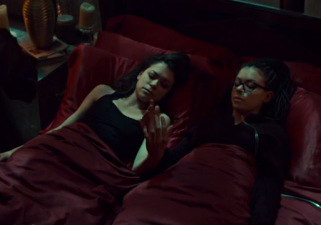
Every so often we come across a book, film, or TV show that leaves us in awe. One such TV show for me is Orphan Black, the Canadian TV show based on human cloning. It kicks off with protagonist Sarah Manning witnessing the suicide of a girl who looks just like her (Beth Childs). Sarah steals Beth’s wallet with the hope of taking up Beth’s identity to fix her messy life. This is where the mystery unfolds and chaos ensues. Sarah learns she is a clone, she meets her clone sisters (Cosima Niehaus, Alison Hendrix, and Helena), and a series of adventures unfold—which I am not going to get into because I’d rather you watch the show yourself. I am, however, going to get into why this show is so special to me and why it is so important for today’s day and age.

First, the show’s representation of women is, above all, realistic. The show has many female characters—from the clone sisters to scientists to mothers. The women are not just stereotypical “strong independent women;” they are that and so much more. We get to see the lengths a mother is willing to go to protect her child. We discover irresponsible women who change entirely when it is their child in danger. We’re introduced to women who get anxious and turn to alcohol and pills, and eventually go through rehab. We meet smart women who are excited by the tiniest scientific discoveries. We see women who love food, women who smoke pot, women who have been broken, and women who have been abandoned and are dealing with the repercussions of that. We watch women fall in love, fall out of love, and even crave love. We see women with heels, with dresses, and with sneakers and leather jackets. We see women in control, we see them being controlled, we see them take control, and we see them lose control. We uncover the vulnerabilities, the sacrifice, and all the other facets of these female characters that are present in women of all ages, and that is just beautiful.

Continue reading

Stronger Than She Knows: A Letter to Rey

TFA poster

In honor of today’s deadline for submissions for The Fan Mail Project, I wanted to share my latest letter for this project with all of you!

Dear Rey,

I’ve written a lot of letters for this project. I’ve written to characters who shaped my past and to characters who are helping me be my best self in the present. But you represent the future. So, while I have certainly discovered things about you while watching The Force Awakens that have inspired me personally, I’m not writing this letter for me.

I’m writing this letter for the little girls I saw in the movie theater around me all four times I saw The Force Awakens. I’m writing this for the girls too young to write you a letter of their own. I’m writing this for the girls too young to even write at all. And I’m writing this for the girls who aren’t even born yet but will someday be introduced to your story the way I was introduced to the original Star Wars trilogy as a child of only five or six.

When I was a little girl, I used to play Star Wars with my cousins on the playground near my grandparents’ house. While I always had fun pretending to be Princess Leia, so many of our games involved the boys “rescuing” me from the jungle gym that we imagined was the Death Star. There were times—even when pretending to be one of the strongest women in sci-fi—that I felt like I was just playing a small part in their imaginary adventures.

When I saw The Force Awakens for the first time, my initial reaction was to think of the little girl who would one day be playing this version of Star Wars on a playground with her cousins. And I was overwhelmed with gratitude on behalf of that little girl—whoever she may be. Because when that little girl pretends to be you, she’ll be the hero of her own story, and it’ll be the boys who are part of her adventures—not the other way around. That little girl will pretend she’s flying the Millennium Falcon. She’ll pretend she’s breaking out of her holding cell on her own. She’ll pretend to hold a lightsaber and use the Force. And none of those imaginary adventures will seem crazy to her, because she’ll have seen you do all those things. And when you see someone like you doing amazing things—no matter if it’s real or fictional—you begin to believe that you, too, can do amazing things.

Continue reading

Guest Post: A Love Letter to Once Upon a Time

Today we’re kicking off the one-week countdown to Once Upon a Time’s 100th episode with a guest post by longtime NGN Family member and passionate Oncer, Shauna! Stay tuned for plenty more OUAT-related content this week here at NGN as we gear up for one of our favorite shows hitting such an important milestone!

OUAT

Shauna here—longtime Nerdy Girl Notes commenter, first time poster. I am coming to you from above the comment box because I wanted to do something special to honor Once Upon a Time’s 100th episode. And since my love of OUAT and my love of this site will always be intertwined, I am very thankful to Katie for giving me the opportunity to share my thoughts with you. So without further ado, here’s my love letter to a show and a fandom that have meant more to me than I ever could have imagined:

When I first sat down to watch the pilot in 2011, I had no idea of the journey I was about to embark on. I loved the pilot, and I immediately saw myself in Emma: tough as nails on the outside, but beneath the surface, a lonely woman longing for connections and love in her life. That wasn’t necessarily the place I was at in my life when I saw the pilot, but I had been there in the past. While I might not know what it’s like to grow up an orphan, I do know loneliness. While I can never even imagine the heartbreak and guilt that comes from having to give a child away, I do know what it’s like to give up a chance to be close to someone because I felt I couldn’t handle the responsibility. My first love didn’t abandon me and send me to jail for their crime, but I do know what it’s like to be betrayed and so scared to love again that I stopped trying altogether. How exactly Emma became the woman we saw in the pilot is a unique tale, just like everyone has their own unique origin story, but the scars left from her past were easy to relate to. That connection to Emma was there on Day One, and it’s just as strong now, if not more so, 99 episodes later.

While watching Emma’s journey toward openness over the seasons and writing about it on this site, I have also become more open. When I look back, I realize it’s now much easier for me to express my feelings than it was back in 2011. I used to be someone who would cry whenever she talked about her feelings. Someone who kept her fears and insecurities so close to her chest that, when they did come out, it was a flood of emotion that could not be stopped. I used to be a person who tended to focus on the negative while ignoring the positive. A cynic, not a supporter. But I can now (usually) talk about my feelings more regularly without an emotional breakdown. I tell people how much they mean to me. I have become more empathetic and patient. I have become more articulate and a better writer. I try to look for the good in others rather than trying to find their flaws. I can be encouraging and supportive of friends and family without feeling insecure about my own worth. That’s not to say I don’t fall back into those negative habits, but it happens much less frequently now. I believe all of this is evident in my own writing and interactions with people on this site over the past few years, and I believe it is a testament to the uniquely positive tone Katie has created here at NGN.

Continue reading

What Makes You Extraordinary: A Letter to Kate Beckett

This is the latest in my collection of letters to female characters who’ve inspired me throughout my life as a fangirl. If you have a character you’d like to write a letter to, click here for details about The Fan Mail Project—you have two weeks left to get your letters written!

Dreamworld

Source: Tumblr.com

Dear Beckett,

I’ve tried to start this letter no less than 10 times in 10 different ways. In fact, I’m sitting right now with tear tracks on my face because I’ve been trying to come up with the perfect way to start this letter for the last hour, and nothing’s felt right. I want this letter to be perfect because you mean so much to me. I want it to be the best letter I write for this project that was inspired in no small way by the impact you’ve had on my life.

But the start of this letter doesn’t have to be perfect—none of it has to be perfect. Because the biggest lesson you’ve taught me is that it’s okay to be imperfect; it’s okay to struggle, and it’s okay to admit that you’re struggling. Your story taught me to take the parts of myself that I see as weaknesses and make them strengths, to acknowledge that my imperfections and flaws are a part of me, and to use that acknowledgement to grow into a better and stronger version of myself. So if this tribute is flawed, that doesn’t mean it’s without value. You taught me that, and that lesson changed my life.

We’ve been on a long journey together, Beckett. I’ve watched Castle since the pilot episode, and I’ve admired your character just as long. From the start, I loved your confidence and competence, your inability to suffer fools, your hair, and your coat collection. You were the reason I bought my first pair of stilettos and my first trench coat. It was your picture I brought to the salon when I decided to get red highlights in my hair. And, thanks to you, I hardly ever go to Starbucks without ordering a skinny vanilla latte.

But something changed during Season Four of Castle. Your story became the story. You’d always been a hero, but the narrative was suddenly laser-focused on you becoming your own hero. And that story helped me reclaim my story. It helped me see myself as a protagonist and not just a supporting player in other people’s stories. In becoming your own hero, you taught me how to become my own hero.

Continue reading

Something Really Amazing: A Letter to the Women of The Selection Series

This is the latest in my collection of letters to female characters who’ve inspired me throughout my life as a fangirl. If you have a character you’d like to write a letter to, click here for details about The Fan Mail Project!

selection-series

Source: bookishbarrister.wordpress.com

To the women of the Selection series:

You stand out. Young Adult fiction is an ever-expanding genre, and many series have been created over the last handful of years about a brave girl who fights a corrupt government—and has to choose between two very different but very attractive male suitors as she does so. Even in stories that are about things other than fallen societies and uprisings, there seems to be a trend in many Young Adult novels: The girl stands alone. Yes, there might be female family members who are important to the main heroine or one close female friend or mentor. However, the central female character is often a loner or a girl who’s much closer to the young men around her than other young women.

Thank you for being part of a different kind of story.

I spent the summer I turned 26 reading nothing but Young Adult books in an attempt to prove that this genre isn’t something to put down, but is instead filled with beautiful works of literature to be cherished by readers of all genders and generations. That’s when I discovered The Selection, The Elite, and The One. More than any other books I read that summer, those stayed with me, and it was because of you, the women of this world. Yes, this series had sweeping romance, action, and sociopolitical commentary. But it also had something I’d never seen before in a Young Adult series: a plethora of female characters who are incredibly different but come to support, forgive, protect, and genuinely love each other.

So often women are taught to compare themselves to other women and to see themselves as competition—especially competition for male attention and affection. And, at first, that’s the world many of you were thrust into—selected to compete for the hand and heart of Prince Maxon. You were expected to see each other as enemies, to immediately judge each other and judge yourselves in comparison to each other, and to put each other down in an attempt to build yourselves up. And some of you (I’m looking at you, Celeste.) did exactly that for far too long.

But some of you immediately chose to defy expectations and become friends. Thank you, America and Marlee, for showing everyone who picks up these books that—even when put in an environment that is created to pit women against each other—friendships can blossom. You never had ulterior motives with each other or gossiped behind each other’s backs. Instead, the two of you represent the best of what female friendship can be: warm, supportive, and life-changing. America, your desperate attempt to save Marlee from being beaten was one of the most moving moments in the entire series. It was a testament to the things women will do to help one another and protect one another. And it was beautiful to see in The Heir that yours became a lifelong friendship, the kind so many women find but so few pieces of media celebrate.

Continue reading

They Have a Choice Now: Thoughts on The Force Awakens

TFA poster

Source: starwars.com

Warning: This post contains MAJOR spoilers for The Force Awakens

I can’t write a review of The Force Awakens. To me, a review implies being able to see things at least somewhat objectively, being able to critically evaluate a piece of media. And there is no way I can be objective about this movie. Maybe after further viewings I’ll be able talk about things like cinematography and scoring and pacing and whether it borrowed too much of its structure from A New Hope or just enough to make it resonate with fans. But I’ve only seen it once so far, and after seeing it, there was only one thing I really wanted to write about—and that’s what this movie is going to mean for little girls and their playground adventures.

When I was a little girl, I used to play Star Wars on a playground near my grandparents’ house with my two older cousins, both of whom were boys, and my little sister (who—being the adorable toddler she was—always played an Ewok). My cousins had a choice: They could be Han or Luke or Darth Vader or any X-Wing pilot or any Stormtrooper. I could be Princess Leia. I’m not saying that was a bad thing or that I even wanted a choice back then. I think even now—if given a choice to pretend to be any female character ever created—I’d still choose Princess Leia. But maybe other little girls playing on playgrounds wanted a choice. And the only other choice they really had (besides being a dancer in Jabba’s palace—and no one wanted to choose that) was Luke’s Aunt Beru—who dies at the beginning of A New Hope—or Mon Mothma—who gets one exposition-heavy monologue that lasts about a minute and is never really seen again.

Even after the prequel trilogy came out, choices were limited for little girls who wanted to pretend to be Star Wars characters. Padme was a strong leader, but she wasn’t the main focal point of the story. There were some female bounty hunters and politicians, and even some female Jedi—but they never received the kind of focus that made kids really take notice of them in a way that became part of their imaginations and aspirations.

After The Force Awakens, things are different. Little girls have a choice now. They can be General Organa if they want to be a fierce leader of the Resistance, they can be Captain Phasma if they want to play the villain for a little while, they can be Maz Kanata if they want to be a wise alien creature, they can be any of the many female military leaders (on both sides of the conflict) and X-Wing pilots shown throughout the film, or they can be Rey if they want to go on their own hero’s journey.

As I watched Daisy Ridley own every bit of her screen time as Rey, I kept thinking about all the little girls who will see this movie in the coming weeks, months, and years. I thought about the little girl who one day—years after this trilogy ends—will be introduced to these movies by her older cousins and will play out Rey’s story on the playground with them by her side. And when she plays out this story, she will be the hero, and it will be the boys who are part of her story—not the other way around.

Continue reading