“I Want It to Be Real”: The Best of Philip and Elizabeth Jennings

The Americans 3.10

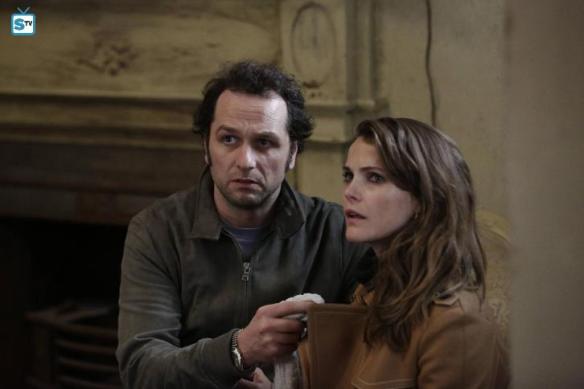
Source: spoilertv.com

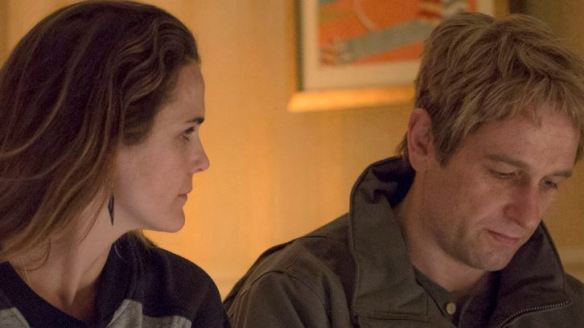
The Americans is a show about a lot of things: Cold War politics, international espionage, bureaucracy, ideological conflicts, and, of course, WIGS. But at its heart, it’s a show about marriage. It’s a show about trust, intimacy, honesty, and what it means to be truly seen in a world where we all are wearing some form of disguise more often than not. And that’s what’s made it stand out in both the sea of spy shows that have developed into their own genre over the years as well as the sea of antihero-driven dramas that have emerged in this Golden Age of Television. Instead of being focused on missions of the week or the internal struggles and dark deeds of one (usually male) character, the show has always been a kind of love story—a story that first and foremost cares about a husband and wife and how the world around them affects their union, and vice versa. From the pilot onward, the relationship between Philip and Elizabeth Jennings has always been the show’s driving force and its emotional core, and it seems that after a season of separation and tension, that relationship is poised to be at the center of what’s sure to be an emotional series finale.

My love for Philip and Elizabeth’s marriage is well-documented around these parts. It’s what initially drew me to the show, and it’s what’s kept my viewing experience from ever becoming too bleak. Even when bodies were being shoved in suitcases and throats were being slashed, one look from husband to wife had the ability to fill my heart with hope that even in the worst circumstances, something beautiful can be built. Even in a world of lies, something honest can exist between two people.

That’s why—despite the murder and the blackmail and the sex with other people—The Americans is the piece of fiction that I think best explains why people get married, why someone would choose to commit to another person for their rest of their life. And it’s because being married means having a partner. Even if your life doesn’t involve chopping up bodies in parking garages, it probably will involve raising kids and balancing careers and making big decisions in the same way Philip and Elizabeth have learned to do, and it’s nice to know you don’t have to do those things alone. And even if you don’t have to lie for a living, we all hide parts of ourselves from the world—but as Philip and Elizabeth have shown us, being married means finding the one person you can be your true self with. It means finding the one person who understands you better than anyone else, the one person you can be honest with, and the one person you know has your back when it feels like the world is against you. Even though there have been times when Philip and Elizabeth have struggled to be those things for each other, they always come home in the end. And that’s what marriage is more than anything else—it’s home. It’s the person who you stand beside when the rest of the world is falling apart around you, and that’s who Philip and Elizabeth have become for each other.

The journey Philip and Elizabeth have gone on—from strangers to fake married coworkers to co-parents to falling in love to getting married for real and all the stops, starts, and separations in between—has made for one of the most compelling relationship explorations I’ve ever seen in a piece of fiction. Brought to life through the incredible talents and heart-stopping chemistry of Matthew Rhys and Keri Russell (whose own working relationship turned into a real-life romantic partnership thanks to this show), Philip and Elizabeth Jennings are something special. As such, I wanted to celebrate the end of their journey (in whatever way it may end tomorrow) with a look back at their best moments.

These are the scenes, lines, and looks that I always come back to when I think of why The Americans told one of the most subtly affecting love stories of this Peak TV period. There were so many great moments between them that it felt nearly impossible to cut it to just 10. I hope you share your own favorites in the comments so we can keep the discussion going!

1. Elizabeth lets Philip in (1.01: Pilot) 
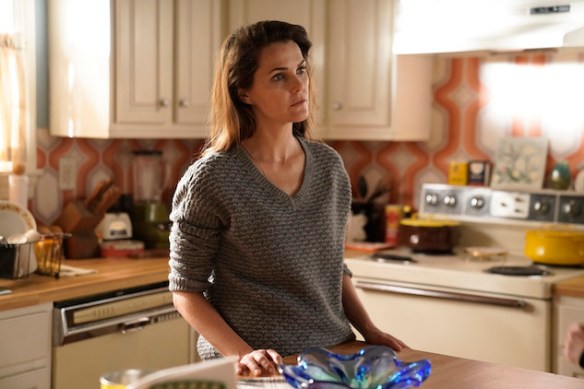
I can trace my love for The Americans back to one specific moment from the show’s pilot: Philip’s voice cracking when asking Elizabeth how Timoshev hurt her and then him killing her rapist with his bare hands as she watched, completely transfixed. In that moment, both the audience and Elizabeth had to confront an essential truth of Philip’s character: Elizabeth always comes first. He will give up everything for her, and he will choose her and her needs over himself and his needs every time. And once Elizabeth finally let herself believe that someone had her back and truly cared about her, everything changed. It led to the perfect “In the Air Tonight” love scene, but even more importantly, it led to Elizabeth breaking the rules by telling Philip about her past and revealing her real name. That simple act of emotional intimacy, punctuated by the most adoring look I’ve ever seen in Philip’s eyes as she intertwined their fingers, showed that Elizabeth had found something more important than her orders to keep her true self hidden; she’d found someone who would love that true self.
Continue reading

TV Time: The Americans 6.09

Title: Jennings, Elizabeth

This Week’s Discussion Topic: Finding Yourself When Everything Else Is Lost
“We do not want you to lose who you are.”

When illegal-in-training Nadezhda was told this near the end of the episode bearing the title of the name she was given by the KGB, I was struck by the irony of the fact that people have continually tried to tell her who she is. How can a person not lose who they are in some way when even their name is given to them by someone else? In this episode alone, the two women Elizabeth is closest to—her mother figure and her daughter—both tried to define her by their narrow views of her actions. To Claudia, she’s a selfish traitor to the Cause. To Paige, she’s a liar and a whore.

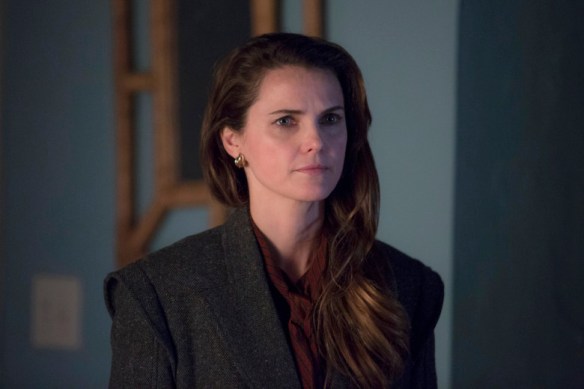
So who is Elizabeth Jennings—or, perhaps more accurately, who is Nadezhda? She’s a woman who never had the luxury of self-reflection. In that final flashback, her downcast eyes and hunched posture (How great was Keri Russell at making her look so young?) showed the truth: Self-definition has always been a foreign concept to Elizabeth. When you’re just trying to survive, you don’t really have time to care about how you see yourself and what you value.

However, this episode showed that it’s often in those kinds of traumatic circumstances that our identity reveals itself. When a person’s back is against the wall, they often revert to the truest version of themselves. And nearly every character’s back is against the wall now. In that sense, “Jennings, Elizabeth” gave us not only an action-packed penultimate episode, but a penultimate episode that reminded us exactly who these characters are and what matters to them when they have nothing left to lose.

Continue reading

TV Time: The Americans 6.08

ta_608_0149

Source: indiewire.com

Title: The Summit

This Week’s Discussion Topic: The Heartbreaking, Heroic Humanity of Elizabeth Jennings
“You don’t think I’m a human being?”

That question looms over every moment of “The Summit,” and by the end of the episode, no one who’s been paying attention could accuse Elizabeth Jennings of being devoid of humanity. This was an episode devoted to putting the show’s truest believer through the emotional wringer until every speck of soul she tried to burn away with ideological zeal and every bit of conscience she tried to bury under her devotion to her cause were finally laid bare. And from that vulnerable place emerged a woman who’s more dangerous and in more danger than ever before—because humanity can be a strength, but in the world these characters inhabit, it can also get you killed.

Elizabeth’s awakening sense of agency didn’t come out of nowhere. It was the culmination of small moments of humanity throughout the show’s run, including the powerful moment in last week’s “Harvest” when she let herself finally accept the magnitude of Philip’s love for her and the lengths her will go to for her. The opening of “The Summit” was fueled by that revelation, with Elizabeth entering their living room in a much less guarded and more sincere emotional state than we’ve seen her in previously this season. The softness on her face when she told Philip she knows he cares about what happened in Chicago and that he worries about her was a shocking contrast from how she’s looked at her husband for much of this season. Elizabeth’s walls were down with her husband in that moment, and that made everything that came after even more painful because Keri Russell let us see exactly why Elizabeth puts those walls up in the first place—because anyone she lets behind those walls has the power to destroy her.

Continue reading

Thanks for the Magic

leaving storybrooke

“And you may think this is just a story, but that’s the thing about stories—they’re more than just words. They live inside us. They make us who we are. And as long as someone believes that, there will always be magic.” (Henry Mills) 

I’ve always loved stories. I’ve always believed in the power of stories—the stories we’re told, the stories we tell, the stories that reflect who we are, and the stories that show us who we can become. When I look at my life, I can see that I’m the sum of a million different stories that all showed up to shape me exactly when I needed them.

One of those stories ended last night, and I can’t let it go without a proper sendoff.

Once Upon a Time is a show about many things—crazy timelines, strong women, second chances, and hope. But it’s also a show about stories. One of the most prominent themes throughout the show’s seven seasons has been that you have the power to control your life’s narrative; you can write your own happy ending. You can choose whether people see you as a villain or a hero. You are the author of your story. And that’s where hope comes from—knowing that it’s never too late to change your story, to find your happily ever after.

Continue reading

TV Time: The Americans 6.07

After a little hiatus, I’m back and ready (but also completely NOT READY) to discuss this final run of episodes with all of you! And because I feel these last episodes of such a deep and complex show deserve a little more attention, the format for these posts will be changing slightly to accommodate even more analysis. I’ll be taking one major theme/discussion point each week and developing it into an essay, but please feel free to bring up other discussion points, too. I hope you all find the change to be a welcome one, and I also hope to see your thoughts, hopes, fears, and favorite moments in the comments section!

the-americans-episode-607-harvest-promotional-photos

Source: spoilertv.com

Title: Harvest

This Week’s Discussion Topic: Epiphanies, Emotional Connections, and the Truths We Try to Bury
“Harvest” was an episode that lived up to its name. So many moments in the episode harkened back to similar moments in the pilot, and it was both thrilling and gut-wrenching to watch those seeds planted so many years ago—in both the show’s timeline and our own—begin to finally sprout into something fruitful for the plot. But where this episode truly excelled was in using the time that’s passed and the emotional connections that have developed between these characters to turn those parallels to the pilot into explorations of how far these characters have come and how much higher the stakes are because of those emotional connections.

This episode was anchored by three key epiphanies for its three major players—Stan, Elizabeth, and Philip. But, in typical The Americans fashion, these moments didn’t lead to huge shifts in plot momentum or dramatic “Aha!” scenes. Instead, they were quiet moments of shifting understanding, handled with no dialogue or in the spaces between words where so much of the emotional weight of this show has always existed. These moments were less about propelling the plot forward into the final stretch of episodes than they were about reminding us what this show has always been and will always be about: the connections between people. While this episode certainly moved the characters closer to the endgame, it did so in a way that prioritized the interpersonal consequences of those moves and, in doing so, ensured that absolutely no one (including those of us watching) will be able to escape the coming carnage unscathed.

Continue reading

Holding on to Humanity: My Journey with The Americans (So Far)

Today’s The Americans analysis is going to be structured differently than what you’re used to around these parts, but hopefully my rationale makes sense when all is said and done. There are only so many weeks in a row that I can talk about how well Keri Russell is playing Elizabeth’s downward spiral, and there are much more important things I want to get around to now that we’re a few episodes into this final season.

the americans 408

Source: spoilertv.com

As many of you know, I don’t watch a lot of “prestige dramas.” I never warmed up to Breaking Bad, Mad Men didn’t interest me at all, and The Sopranos was before my time and never beckoned me to discover what all the fuss was about years later. All those male-driven antihero dramas just seemed too depressing to keep watching every week for years on end. Life can be hard enough; I didn’t want the media I consumed to be another source of doom and gloom.

And then I discovered The Americans.

What made that show different? Why did I fall so deeply in love with what many people have called one of the bleakest shows on television when I couldn’t stomach other similarly dark dramas? Obviously the fact that its main antihero was a woman made it immediately more compelling to me. Elizabeth Jennings drew me into her messed-up mind in a way that Don Draper, Walter White, and all the men who came before them never could. But it was so much more than that.

It was the fact that, from the pilot, this has been a show about two broken people learning how to love each other. It has always been a show about a marriage. But even beyond that, it has always been a show about humanity. It’s a show about the things that makes us human—our need to connect with each other, our need to find some level of truth and honesty with another person, our desire for intimacy. From the moment Philip chose killing Elizabeth’s rapist over turning him in and Elizabeth then chose telling Philip the truth about herself over following their orders to never mention their pasts, The Americans has always been a show about choosing people—flesh and blood and warmth—over hard and cold ideals.

That focus on the connections between people has kept The Americans from being too dark. Even at its lowest points—the death of Nina, the sad story of Martha—there was always an underlying sense of humanity amid tragedy. Nina was killed in a brutal way, but she died because she chose friendship over following orders and betraying a good man. And Martha’s life was shockingly spared in no small way because Philip had come to care for her. Also, she may have ended up in Russia, but she didn’t end up alone. Her dream of being a mother was realized in the form of an orphaned Russian girl the KGB arranged for her to adopt.

It all comes back to people. On a show about warring ideological forces, the human beings on both sides are shown to be exactly that—human beings. And human beings have a desire to connect with each other, to build relationships and develop intimacy and form families.

That’s what made The Americans different for me. It was a show that ventured into very dark territory, but it balanced that darkness with humanity. Even when the show seemed bleak, it never became completely nihilistic. It never preached the idea that nothing matters because everything and everyone is terrible (which would have been an easy thing to preach given the subject matter). In fact, it seemed to be preaching the opposite: There is meaning to be found in even the saddest lives and most tragic stories. But that meaning isn’t found in something intangible like patriotism or even idealism; it’s found in the relationships we form with each other.

Continue reading

Suddenly the World Seems Such a Perfect Place (or Help, We’re All Obsessed with Two Canadian Ice Dancers!)

Once upon a time…

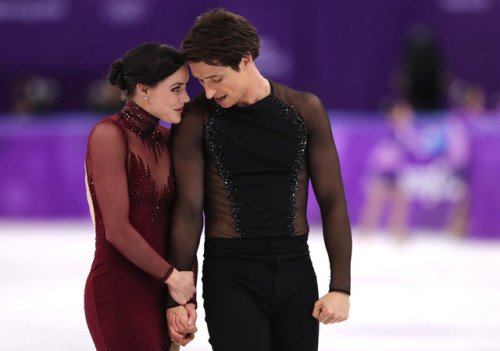
A nine-year-old boy and a seven-year-old girl became ice dance partners, and in the boy’s own words, “Something really changed in my life when I started to hold onto the hand of a beautiful little girl.” The boy gave up his early dream of being a professional hockey player, and the girl gave up a spot in a prestigious ballet program—all because even as children, they were committed to each other. The girl was the boy’s first kiss; the boy became the girl’s best friend.

As the years went on, they faced highs and lows. She endured painful surgeries to keep skating with him, and while she recovered, he trained with sandbags because he didn’t want another partner. They won Olympic gold in their home country, becoming Canada’s sweethearts in the process, but four years later, they came home with a silver medal instead of the repeat gold they were chasing.

They took a couple of years away from the sport, but they couldn’t stay away from the ice—or from each other—for long. As the boy said, being close to the girl was “the whole reason [he] wanted to come back to skating.” They decided to return to the sport they loved with a new mindset and a new focus on telling their own story, on making it “personal” this time around. They fought to choose their own music—music that reminded the boy of the girl whose hand he first held 20 years before. And they fought to become the best once again—to bring home the gold medal that eluded them in 2014.

They faced tough competition, and despite winning a gold medal with their teammates, they needed to have the skates of their lives to win individual gold. They began with a world record, but their fiercest rivals set the bar high with one of their own. Stepping onto the ice as Olympic competitors for the last time, they knew they had to do something magical in order to win. But instead of waiting for a fairy godmother, they created their own magic—the boy singing their song to the girl as they danced across the ice, capturing the hearts of everyone in the crowd, captivating the world, and catapulting themselves to the top of the standings and the medal podium.

And they lived happily ever after…

Or so we all hope, right?

Continue reading

NGN’s Best of 2017: Reasons to Hope

the good place

Source: avclub.com

One woman, standing in the middle of no man’s land with only a shield and an unshakeable sense of purpose, drawing all the fire to protect those who cannot fight for themselves.

One woman, staring down certain death with steel in her eyes, deciding to sacrifice herself to save the people and the cause she believes in with everything she has.

Two sisters, coming together despite their differences, finally executing the man who caused them, their family, and their home so much loss.

A mother and daughter, training together in a garage, learning what it means to never feel like a victim again.

A team, finding their strengths in the wrestling ring, using their bodies for themselves and not for anyone else.

A group of mothers, putting aside the things they believed divided them, acting as a force of nature to make sure an abuser never lays a hand on his victims again.

When I looked back on my favorite media moments of the year, one theme emerged loud and clear: This was a year that so many pieces of media—from prestige TV dramas to big-budget blockbusters—let women be their own heroes. This was the year that women teamed up, fought back, and found strength in themselves and in their relationships with one another.

This was the year female characters said “No more.” No more pushing us to the background. No more telling us people don’t care about our stories because of our gender, our race, our sexuality, or our age. No more trying to divide us or painting us as each other’s enemies. No more abuse. And I don’t think it’s a coincidence that this was also the year more women than ever before started to say “No more” in real life, too.

Continue reading

Hope and Heroism in The Last Jedi

last jedi poster

Source: StarWars.com

MAJOR SPOILERS AHEAD! PROCEED WITH CAUTION! 

Star Wars: The Last Jedi is many things. It’s surprising. It’s emotional. It’s visually stunning. It’s challenging. And at its heart, it’s deeply, profoundly, and unashamedly hopeful.

Star Wars has always been a story about hope—who embodies it, how it spreads, and what happens to those who lose it. In this way, it’s perhaps our most cherished piece of uniquely American mythology. For generations now, people have seen reflections of our collective national fears and aspirations in this saga, and they’ve found hope in this story that has now been passed on for more than 40 years. And that’s what myths are. They’re the stories we tell ourselves to get through the darkest nights, to inspire us to keep going, and to help us believe that heroes exist and maybe even exist inside of us.

In the eyes of some people, The Last Jedi takes that mythology and smashes it—making heroes fall and hope shrink. However, those eyes are trained on the past, and The Last Jedi is a story about the past giving way to the future and old heroes passing the torch to new ones. It doesn’t destroy the Star Wars mythology that’s been passed down since 1977; it expands it. And in doing so, it provides us with a new message of hope that is deeply important for the world we’re living in:

You don’t have to look like a traditional hero to be a hero. You don’t have to be born into greatness to do great things. Your worth isn’t determined by other people’s expectations; every person has value, and everyone’s journey can be a hero’s journey.

Continue reading

How Long Forever Was: Remembering Carrie Fisher

leia

Rest easy, General.

“It was raining in L.A. and I was Princess Leia. I had never been Princess Leia before and now I would be her forever. I would never not be Princess Leia. I had no idea how profoundly true that was and how long forever was.” — The Princess Diarist

What is a legacy? Hamilton taught me “It’s planting seeds in a garden you never get to see.” But I believe some people—if they leave the right kind of mark—live to see at least a small portion of that garden. And I think Carrie Fisher was one of those people.

She got to see the little girls dressed up as Princess Leia. She got to hear stories of women who were inspired by the character she brought to life. And she’d be the first one to tell you that she also got to hear stories of men who were inspired in their own way by the character, too.

Princess Leia is a huge part of Fisher’s legacy. She will live on forever in that character—forever our Princess, our General, our trailblazing badass.

I’ve written so much already about what Princess Leia has meant to me (and I’m planning to write much more in the future), so I’ll just say this about Fisher’s most famous role: I have no idea who I would have become if I never saw Leia shooting her blaster, kissing her pirate, and commanding her troops as a kid, but I do know that woman would have been a lot less confident, independent, outspoken, and happy.

I was introduced to Princess Leia at the ripe old age of five, so it took a while before I understood that she wasn’t real and that a woman named Carrie Fisher played her in the movies. But once I could grasp that concept and I learned about Fisher’s life, I became incredibly intrigued by her writing career. Even as a kid, I knew I loved to write, and upon learning that Fisher became a writer after her time in that galaxy far, far away, it occurred to me that maybe if I couldn’t really be a Princess/Rebel, being a writer might be the next best career path.

Princess Leia is my hero, but so is the woman who played her. And as I’ve gotten older, my admiration for Carrie Fisher beyond her job of bringing Leia to life has only grown. Her ability to be unapologetically, unashamedly, unrelentingly herself in a world that constantly tried to make her feel bad about that is something we all should strive to channel in our own lives. And her emotional honesty and openness—especially in her writing—represents the kind of bravery I can only hope to achieve.

Continue reading