Nerdy Girl Goes to the Movies: The Butler

Lee-Daniels-The-Butler-poster__130723170234-275x308

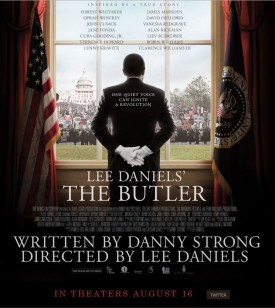
Title: Lee Daniels’ The Butler

Rating: PG-13

Cast: Forest Whitaker (Cecil Gaines), Oprah Winfrey (Gloria Gaines), David Oyelowo (Louis Gaines), Elijah Kelley (Charlie Gaines), Cuba Gooding Jr. (Carter Wilson), Lenny Kravitz (James Holloway), Robin Williams (Dwight D. Eisenhower), John Cusack (Richard Nixon), James Marsden (John F. Kennedy), Liev Schreiber (Lyndon B. Johnson), Alan Rickman (Ronald Reagan), Jane Fonda (Nancy Reagan)

Director: Lee Daniels

The Basics: The Butler is a sweeping portrait of the civil rights movement in America, told through the eyes of Cecil Gaines, who served as a butler in the White House from Eisenhower to Reagan. While the film highlights important moments in American history from inside the White House, the true heart of this film lies in Cecil’s house, where he struggles with an alcoholic but loving wife, a son in Vietnam, and another son making his voice heard as a Freedom Rider and later as a member of the Black Panther Party. This film takes the fight for equal rights—from a sharecropping field in the 1920s to the election of President Obama—and makes it intensely personal. This is a story that needs to be told, and its told through some truly fantastic performances. Yes, some of the presidential stunt casting was unbelievable to the point of taking away from the film, but, ultimately, what really mattered where the performances given by Whitaker, Winfrey, and Oyelowo. This trio of actors anchored the film with performances that were nuanced, powerful, and completely compelling.

M.V.P. (Most Valuable Performer): Without a strong actor taking on the role of Cecil, this film could have felt like a dry history lesson, jumping from one milestone to the next without any real emotional connection. Thankfully, Forest Whitaker gives his performance the quiet strength that we’ve come to expect from such a brilliant actor. Cecil never feels like a caricature or anything less than a real, three-dimensional person. We can feel the toll that years of hard work and suffering have taken on this man, but we can also feel the pride he takes in his job and the life he was able to build for his family. There is a quiet dignity to Whitaker’s performance that could get lost among the more flashy performances to come as “Oscar season” approaches. But his work should not be forgotten or lost in the shuffle because he is able to make you believe in this man and in the values by which he lives his life. It’s a testament to Whitaker’s performance that I found myself crying by the end of the film because I felt like I could understand what the election of President Obama would mean to Cecil Gaines. That ability to make the audience connect so strongly with a character in just a couple of hours is something only the best actors possess.

Scene Stealer: David Oyelowo might be a relative unknown (to me at least), but I walked away from this film incredibly impressed with him. There was such passion in his performance, and that uncontrolled fire of purpose worked so well opposite Whitaker’s more quietly powerful Cecil. The generation gap between Louis and Cecil is a driving force in this film, and it works because you are able to understand both sides of that gap. Whitaker makes you believe in Cecil’s reasons for acting the way he does (the murder of his father being the horrible foundation for his views on acting out too strongly), but Oyelowo also makes you understand Louis’s need to take action and to fight. He’s not just some rebellious kid; he’s someone who wants a better life for his future family the same way Cecil did. He doesn’t hate his father; he just doesn’t understand him. And that kind of universal struggle between generations takes on such a unique life in this film, a life that rings with authenticity because of the honesty Oyelowo gives to Louis’s journey.

Bring the Tissues? If you remain unmoved while watching Cecil react to the 2008 Election Night results, then I’m not sure you were really watching the movie. I was on the verge of tears a few times throughout the film, but that moment is what made me actually start crying because I could feel how much it meant to these characters, especially Cecil.

Most Memorable Scene: The generation gap that fuels the tension throughout the film comes to a powerful head in a dinner table confrontation between Cecil, Louis, Gloria, and Louis’s girlfriend. With Louis in his Black Panther clothing and his girlfriend sporting a huge afro while sitting with the modestly dressed Cecil and Gloria, the contrast is evident before any of the characters even begin speaking. And when they do begin speaking, it erupts into the best scene in the film. A discussion about Sidney Poitier turns from small-talk to fighting words when Louis scoffs at men like him and, by extension, his father. Louis’s inability to understand the pride his father takes in his job finally proves too much for the usually stoic Cecil, who explodes with a force we only see once in the film—but it’s enough.

But the true “scene stealing” moment belongs to Oprah. I know it’s been shown in every commercial and trailer for the film, but the moment when she slaps her son and tells him that everything he is and has is because of “that butler,” I still got chills like I was hearing it for the first time. And I wanted to cheer when she kicked his horrible girlfriend out of her house. I was worried going into the film that Oprah wouldn’t be able to disappear into this role as much as she would need to, but this scene was the moment when I knew my concerns were unfounded.

Continue reading

Nerdy Girl Goes to the Movies: The Heat

The Heat poster

Title: The Heat

Rating: R

Cast: Sandra Bullock (Sarah Ashburn), Melissa McCarthy (Shannon Mullins), Marlon Wayans (Levy), Demian Bichir (Hale), Michael Rapaport (Jason Mullins), Taran Killam (Adam)

Director: Paul Feig

The Basics: The Heat is a classic buddy-cop comedy about an uptight, conceited FBI agent who’s forced to work with a gruff and unorthodox detective from Boston in order to bring down a drug kingpin and murderer. The unique thing about this film is that both the FBI agent and Boston detective are women. Although it’s probably not the greatest cop film anyone will ever see, this film should be remembered for its dedication to focusing solely on the relationship between these two female characters—and what great characters they are. Melissa McCarthy and Sandra Bullock both bring such different but equally fantastic comedic energies to this film, proving once again that a film driven by women can be just as funny as (if not funnier than) a male-centric comedy.

M.V.P. (Most Valuable Performer): There’s no way to separate McCarthy and Bullock when talking about this film, especially not when trying to judge who was better. They were a true team, bringing different comedic styles to the table and bouncing those styles off each other to create something genuinely entertaining. Both actors played variations on roles we’re familiar with (McCarthy’s Mullins was in many ways similar to her role in Bridesmaids, and Bullock’s Ashburn had notes of her performances in both Miss Congeniality and The Proposal.), but the combination of the two of them together was lightning in a bottle. They’re each skilled in so many different ways to be funny—from physical comedy to deadpan delivery to the perfect time to drop an f-bomb (or 10). When I first heard that McCarthy and Bullock were making a buddy-cop comedy together, I knew they would be a dream team, but they exceeded even my high expectations. They seemed to bring out the best and funniest in each other, creating a kind of comedic chemistry that can’t be forced. Actors either have it or they wish they did, and these two have it in spades.

Scene Stealer: The movie really belonged to Bullock and McCarthy—to the point where it was hard to pick someone who diverted any attention away from them. The closest this movie came to having any scene stealers was Mullins’s family. From Joey McIntyre as one of her loudmouthed brothers to Jane Curtin as her constantly disapproving mother, the casting of this family was excellent. The scene where Mullins and Ashburn cram the whole family into a van to get them out of their neighborhood was absolutely hilarious.

Bring the Tissues? Only if you have a tendency to cry when you laugh really hard.

Should I Stay or Should I Go? Stay in your seat during the credits for an extra scene featuring Ashburn, Mullins, and the cat Ashburn likes to borrow from her neighbor. It’s worth sticking around for a little bit to get one last laugh in before you leave.

Most Memorable Scene: There were a lot of memorable, hilarious scenes in The Heat, but the funniest scene—the one that combines all of Bullock and McCarthy’s comedic strengths—is the scene where Mullins and Ashburn follow a suspect into a club and attempt to get close to him to bug his phone. Yes, one of the biggest laughs was spoiled in the trailers and commercials for the film (Mullins asking “What’s gonna come popping out?” when she learns what Spanx are for). However, that scene is so much more than just one punch line. When Mullins tells Ashburn to ventilate the area usually covered by her Spanx, I couldn’t breathe because I was laughing so hard. It’s a kind of humor that appeals to women because we can relate and I’d think appeals to men as well because McCarthy and Bullock’s delivery is just so good. And once the women leave the bathroom and go back into the club, it’s physical comedy gold. Watching Bullock try to seduce the suspect while McCarthy yells out encouragement (“Use your boobs!”) was hilarious, and I loved watching them try to get rid of one woman who kept trying to get herself in the middle of their seduction attempt.

Continue reading

Nerdy Girl Goes to the Movies: Much Ado About Nothing

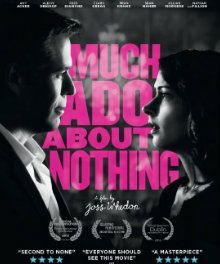
Much ado poster

Title: Much Ado About Nothing

Rating: PG-13

Cast: Amy Acker (Beatrice), Alexis Denisof (Benedick), Clark Gregg (Leonato), Jillian Morgese (Hero), Fran Kranz (Claudio), Reed Diamond (Don Pedro), Sean Maher (Don John), Nathan Fillion (Dogberry)

Director: Joss Whedon

The Basics: This most recent cinematic version of Shakespeare’s classic comedy tells the story of two relationships: the love-at-first sight romance between Hero and Claudio and the bickering buildup of love and passion between Beatrice and Benedick. A game of matchmaking initially draws the latter couple closer together, but it’s only when Benedick sides with Beatrice after her cousin Hero is wrongly shamed by Claudio that the two fall in love in earnest. Set in modern times but told using all of Shakespeare’s dialogue (though it has been slightly condensed), Joss Whedon’s take on this story heightens all of its comedy as well as all of its tragic undertones. This film is already the stuff of legend for being shot in only 12 days in Whedon’s own home, and it deserves all the praise that can be sent its way. The cast is brilliant, the direction is smart, and the cinematography is gorgeous. In a movie season usually filled with explosions and animated characters, Much Ado About Nothing is a welcome bit of culture and substance—while still being a whole lot of fun.

M.V.P. (Most Valuable Performer): I didn’t know much about Amy Acker going into this movie: I knew her from her small roles on Alias and Once Upon a Time, and I knew she was a popular Whedonverse actress—but that was it. It took only a few minutes for me to be completely bowled over by her talents and her charm, and now I want to see everything she’s ever been in (and I want her to be the lead in many more films after this one). Acker was truly the perfect Beatrice. Shakespearean English doesn’t sound great coming out of everyone’s mouth, but each line of dialogue rolled off her tongue like she was born to play this role. She brought such a compelling mixture of poise and spunk to her performance, deftly balancing both the comedy of the part and its dramatic moments. Acker proved to be great at both physical comedy (falling down the stairs upon hearing of Benedick’s affection for her) and verbal sparring matches (with her well-matched partner, Alexis Denisof). However, I found her to be most compelling in Beatrice’s darker and quieter moments. Her delivery of Beatrice’s “Oh that I were a man!” monologue was incredibly powerful; I felt all of her pain, anger, and helplessness. And I bought every step along the way in her relationship with Benedick. Acker positively glowed in her softer moments with Denisof, creating a Beatrice who is a gorgeously multifaceted character in life and in love.

Scene Stealer: Much Ado About Nothing is first and foremost a comedy, and the funniest thing about thing about this film was Nathan Fillion’s performance as the pompous-yet-inept officer of the law, Dogberry. He played the part with a shocking amount of subtlety, considering how easy it could be to go overboard with this kind of role. And that decision made every moment he was on screen all the funnier. Fillion, like Acker, delivered each line like he came out of the womb reading Shakespeare, his smooth voice and great comedic timing working their magic to full effect. His gift for physical comedy was also on display, and those small moments—from trying to get on a suit jacket that’s far too small to locking himself out of his car at the end of the film—were just perfect. As a huge fan of Fillion’s work on Castle, it was fun to see the role reversal of him playing a cop, even if Dogberry might be the most ridiculous (and yet ultimately effective) cop in literary history.

Bring the Tissues: While there are some very powerful emotional moments, this is still a Shakespearean comedy, which means you can probably leave the tissues at home for this one.

Should I Stay or Should I Go? There’s nothing hidden after the credits for this film.

Most Memorable Scene: This film felt like a string of one memorable scene after another: the first party scene (which I found more fun and more entertaining than the first party in Baz Luhrmann’s The Great Gatsby), all of the matchmaking exploits (Denisof’s attemps to eavesdrop made me cry with laughter), Hero and Caludio’s dramatic wedding, every scene featuring Dogberry, the joyous party at the end…

But if I had to pick just one scene, I think my selection would be surprisingly dramatic for a Shakespearean comedy. The scene where Beatrice and Benedick confess their love after Hero’s wedding disaster was incredibly powerful. Acker and Denisof both brought such a sense of total commitment to that scene and to each other as scene partners—it was a beautiful thing to behold. Acker’s grief was painfully palpable; I believed every tear that ran down her face. And Denisof was equally convincing in his dedication to her and his desire to do whatever it takes to make her pain end. This scene jumps back and forth so sharply between tragedy and romance that it calls for two actors who are strong as individuals but even stronger together, and that’s exactly what Acker and Denisof were in this film. This scene was the best showcase for their chemistry. Yes, I loved their bantering scenes, but this scene—with its sweeping undercurrent of passion and devotion—made me truly believe the love between Beatrice and Benedick in a way I don’t normally believe most Shakespearean love stories.

Continue reading

Nerdy Girl Goes to the Movies: Monsters University

MU Poster

Title: Monsters University

Rating: G

Cast: Billy Crystal (Mike Wazowski), John Goodman (James Sullivan, aka “Sulley”), Steve Buscemi (Randall), Helen Mirren (Dean Hardscrabble), Peter Sohn (Squishy), Joel Murray (Don), Sean Hayes/Dave Foley (Terri/Terry), Charlie Day (Art), Nathan Fillion (Johnny Worthington III)

Director: Dan Scanlon

The Basics: In this long-awaited prequel to Pixar’s 2001 hit Monsters, Inc., we travel back in time to when Mike met Sulley as freshmen in the prestigious Monsters University Scare Program. The monsters initially clash (Mike is a hard-working bookworm while Sulley tries to get by on pure talent and family reputation), but they learn to work together when both join Oozma Kappa, a fraternity full of lovable outcasts. This colorful, hilarious, and surprisingly deep film is more than just Pixar’s take on Revenge of the Nerds. It’s a story about what happens to our goals and dreams as we grow up and learn that sometimes life doesn’t go according to our best-laid plans. While it may not be as narratively original as the best of Pixar’s films, Monsters University is still a great example of what this studio does better than any other.

M.V.P. (Most Valuable Performer): The animators on this film deserve to be singled out for their incredible achievements. No two monsters look exactly alike (with the exception of the PNK sorority sisters), and that’s no easy feat. The color palette in this film was brilliant. The vibrant colors were a great fit for the energetic and youthful tone of the film; when you first go to college, it’s like entering a bright new world filled with colorful new people, and the animators captured that feeling perfectly. Also, they did an incredible job with the amount of detail shown on each monster. From the scales on Don’s skin to each strand of fur on Sulley’s body (especially his totally in-character spike of hair), I was blown away by the care taken to make each monster look as lifelike as possible.

Scene Stealer: While the entire voice cast was stellar, I cannot get over how genius it was to cast Helen Mirren as the voice of Dean Hardscrabble. Her voice oozes class and poise but also a sense of controlled intensity that was ideal for the character. Every time her character was onscreen, I found myself hanging on every word she said, which is exactly the way students feel when addressed by such an important faculty member. Pixar always manages to surprise me with the talent they put in their films, and this was no exception.

Bring the Tissues: Monsters University may not be a sobfest like Toy Story 3 or the opening minutes of Up, but it still offers some very powerful scenes about the realities of growing up and the struggles we all face in trying to determine if the dreams we had as children are compatible with the realities of who we are as adults. To make a long story short, if you’re 18 or over, you should probably be prepared to shed a tear or two.

Should I Stay or Should I Go? If you stay until after the (very long) credits, you’ll be rewarded with a cute and funny scene referencing an earlier gag in the film. It has no bearing on the plot or any future films, but it’s fun and gives you a chance to hear Bill Hader’s voice again.

Most Memorable Scene: I don’t want to give away any spoilers for the end of the film, so I’ll just say there’s a nice twist that takes Monsters University from being a cute film about a group of outcasts overcoming obstacles to a much deeper film about one of the hardest lessons of adulthood: Sometimes things don’t turn out the way you think they’re supposed to. With that twist (involving Mike, Sulley, Dean Hardscrabble, and a scare simulator), this film joined the pantheon of great Pixar films about growing up. It has lessons for kids about honesty and the importance of working hard, but it also has an important message for young adults struggling to carve out their identity: There’s more than one way to be successful, and being unable to live up to the expectations we put on ourselves (or our parents/teachers put on us) doesn’t mean we’ve failed. It just means we get to find a new dream—one more realistic to who we’ve become. Without that plot twist, this film is just another typical underdog success story, but with that twist, it becomes so much more.

Continue reading

Let the Wookie Win: Ranking the Star Wars Films

I’m a Star Wars nerd. I’ve watched the original trilogy more times than I can count. I own an encyclopedia of characters and multiple Expanded Universe novels. I’ve idolized Princess Leia since I was a little girl. And I freaked out when I discovered my family’s trip to Disney World was going to coincide with the annual Star Wars Weekends held at Hollywood Studios.

Star Wars has been a part of my life for almost 20 years. It was my first real foray into fandom, my first real taste of the nerdy life I so proudly live today. There’s something special about your first love, and that’s what Star Wars was for me. From pretending to be Princess Leia on the playground with my cousins as a kid to writing about its mythology as a college student, Star Wars has always had a presence in my life—and I hope it always will.

To celebrate my Star Wars Weekend adventures (and because it’s never a bad time to talk about Han Solo), I thought it would be fun to rank the six Star Wars films from worst to best.

phantom menace poster

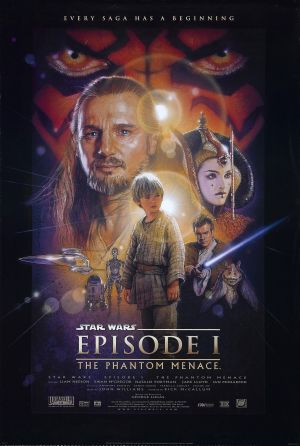
6. Episode I: The Phantom Menace (1999)
Yes, there are some really cool things about this movie. As an original trilogy fan, it was fascinating to watch Palpatine’s rise and to see a younger Yoda on the Jedi Council. Darth Maul and his double-sided lightsaber are the epitome of badass. And any movie featuring both Samuel L. Jackson, Liam Neeson, and Ewan McGregor as Jedi Knights can’t be a total loss. However, this movie takes those strong points and dilutes them with a story that’s incredibly boring. Who cares about the Trade Federation? (Answer: NO ONE) It also takes one of the great mysteries of the Star Wars universe (the Force) and turns it into something that can be analyzed in blood tests (and can apparently impregnate women—or at least Anakin’s mom—in the most ridiculous “WTF?!” moment in the whole series). Finally, no mention of The Phantom Menace is complete without a mention of its enduring legacy: Jar Jar Binks. Meesa wishing he was never created.

Continue reading

Just Keep Swimming: My Favorite Pixar Movies

As my Disney World journey continues, I felt it was only right to follow yesterday’s countdown of my favorite Disney movies with a countdown of my favorites from Pixar. I shortened my list from a Top 10 to a Top 5 because Pixar is still a relatively new studio. Though it may be new, it continually produces animated films with both exceptional visual artistry and incredible emotional depth. If you can find an adult who hasn’t had tears in their eyes during at least one Pixar film, I’d be shocked.

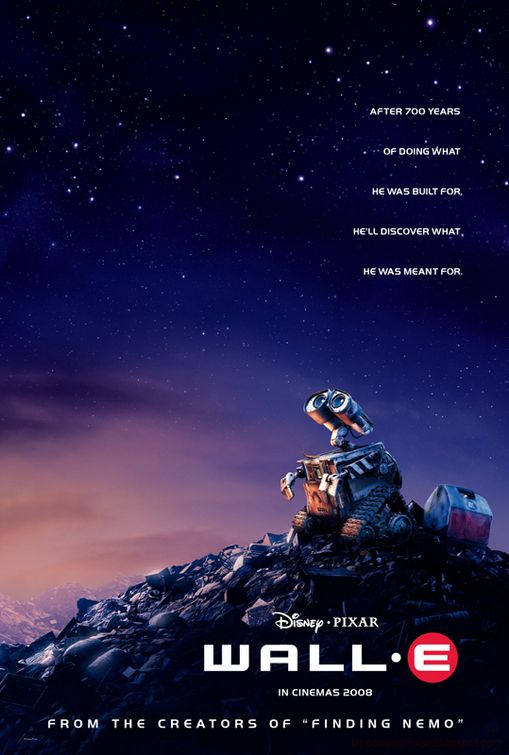
5. Wall-E (2008)

wall_e

Wall-E is such a quietly powerful and visually impressive film. It’s such a bold, brave movie; it’s a “family film” that spends nearly the first half of its runtime without dialogue and doesn’t suffer at all for it. Instead, the film achieves a level of intimacy that wouldn’t have been reached had the subject matter been approached in a “normal” way. Besides the big risks and big rewards of its first half, the film itself is simply a beauty—especially the gorgeous scene of Wall-E and EVE in space. Wall-E is Pixar’s greatest love story and one of the sweetest cinematic romances to come out in recent years.

Continue reading

Tales as Old as Time: My Favorite Disney Movies

To celebrate my current Walt Disney World adventure, I thought it was fitting to count down my Top 10 Disney animated films for you. Do you agree with my choices? Which movies make your list?

10. Cinderella (1950)

cinderella

There’s something so quintessentially magical about this film that I smile just thinking about it. Even though Snow White was the first Disney princess, Cinderella will always be the epitome of a Disney princess to me: elegant, beautiful, kind, hopeful, and strong in her own way. The scene where Cinderella’s torn dress is transformed into her iconic gown will always be a Disney classic, and the image of the prince trying that glass slipper on Cinderella’s foot will always fill me with renewed belief in “happily ever after.”

Continue reading

Nerdy Girl Goes to the Movies: The Great Gatsby

220px-TheGreatGatsby2012Poster

Title: The Great Gatsby

Rating: PG-13

Cast: Leonardo DiCaprio (Jay Gatsby), Tobey Maguire (Nick Carraway), Carey Mulligan (Daisy Buchanan), Joel Edgerton (Tom Buchanan), Elizabeth Debicki (Jordan Baker), Isla Fisher (Myrtle Wilson)

Director: Baz Luhrmann

The Basics: This adaptation of F. Scott Fitzgerald’s Jazz Age classic takes Jay Gatsby’s quest to reclaim his lost past by reclaiming his lost love and puts a loud and raucous spin on it that can only be describe as Luhrmannian in nature. This quintessentially American story of Gatsby, the tragic dreamer; Daisy, the “golden girl;” and Nick, the man whose own life becomes tangled in their reunion, is presented for audiences with lavish cinematography, gorgeous costumes, and a modern soundtrack. All this adds up to a film that has a clear sense of style but not enough substance. There are moments when it comes close to the heart of the novel, but those moments are too-often undercut by a heavy-handed script, misguided direction, and one of the worst casting decisions in recent memory.

M.V.P. (Most Valuable Performer): When I was 13 and read The Great Gatsby for the first time, I was convinced that Leonardo DiCaprio would make the perfect Jay Gatsby. Eleven years later, I left the theater feeling vindicated: This movie had its share of flaws, but DiCaprio wasn’t one of them. He was everything I could have hoped for in an adaptation of my favorite literary character, and that’s not just hyperbole. It was refreshing to watch DiCaprio turn on the charm in this role and act every bit the charismatic star he so rarely allows himself to be onscreen. But underneath that golden charm Gatsby wears as easily as one of his pink suits is a desperation that could have been lost in the hands of a lesser actor. Instead, DiCaprio allowed the audience perfect little glimpses behind Gatsby’s carefully constructed façade, reminding us that this is a desperate man as well as a debonair one. Above all else, though, DiCaprio excelled at making Gatsby a real man rather than just a symbol or a mythic figure. He gets every dimension right—from Gatsby’s sense of hope to his deluded belief that Daisy is worthy of that hope. While many may argue the true “greatness” of Jay Gatsby, I don’t think there can be any arguing over the greatness of DiCaprio’s turn as one of literature’s most iconic (and complicated) characters.

Scene Stealer: I didn’t know who Joel Edgerton was before seeing The Great Gatsby, but now I can’t stop thinking about his brilliant turn as Tom Buchanan. Yes, he gave the role the sense of brute physicality and gruff menace necessary to contrast with DiCaprio’s smooth and romantic take on Gatsby. However, he was also able to take the Tom Buchanan of Fitzgerald’s prose and elevate him to something resembling a human being—albeit a reprehensible one. Edgerton had one foot on each side of the line between humanity and heartlessness, and that worked incredibly for the character. Tom can’t be someone you root for, but he doesn’t have to be cartoonishly evil, either. Edgerton’s work in the hotel room confrontation was some of the most captivating and nuanced acting in the whole film. Every time he was onscreen, I could feel the tension between him and almost all the other characters, and that’s exactly what I’d hoped to feel when it came to Tom Buchanan.

Bring the Tissues? There are opportunities for tears in this film, but I found myself dry-eyed throughout all of it. Others may feel differently, though—especially if they have somehow managed to avoid any knowledge of how the story ends.

Should I Stay or Should I Go? To the best of my knowledge, there aren’t any hidden gems during or after the credits, so you can head out as soon as they start rolling.

Most Memorable Scene: For most viewers, the lasting impression of The Great Gatsby is probably the first party scene, and that’s because it makes quite the impression. In this one scene, Luhrmann’s style worked like a charm: the anachronistic music, the chaotic action, the lush colors, and the opulent set pieces came together in a way I think Fitzgerald himself would have approved of.

However, the scene that will stay with me the most is the scene I think comes closest to the spirit of the novel. It’s a quiet conversation between Gatsby and Nick outside the former’s mansion in which Gatsby reveals his obsessive need to recreate the past, and Nick concludes (in his voiceover) that Gatsby isn’t so much in pursuit of Daisy as he is in pursuit of who he was when he first loved her. It took one of the most meaningful passages in the novel—the passage that gets to the heart of who Jay Gatsby is perhaps better than any other—and brought it to life:

He talked a lot about the past, and I gathered that he wanted to recover something, some idea of himself perhaps, that had gone into loving Daisy. His life had been confused and disordered since then, but if he could return to a certain starting place and go over it all slowly, he could find out what that thing was…

In a film that tried so hard to make The Great Gatsby a love story between Daisy and Gatsby, I was shocked to see this scene done so well because it reveals that the real love story is between Gatsby and the innocence he had when he had first loved Daisy. This is the true spirit of the novel—it’s a story about a man searching for a way to go back in time in the midst of a country and time period that were all about moving forward. For one brief moment, I felt like the filmmakers actually understood the soul of the novel they were adapting, and that made me happier than I excepted to be at any point during my viewing of The Great Gatsby.

Continue reading

Nerdy Girl Goes to the Movies: Iron Man 3

ironman3

Title: Iron Man 3

Rating: PG-13

Cast: Robert Downey Jr. (Tony Stark), Gwyneth Paltrow (Pepper Potts), Don Cheadle (Colonel James Rhodes), Guy Pearce (Aldrich Killian), Rebecca Hall (Maya Hansen), Jon Favreau (Happy Hogan), Sir Ben Kingsley (The Mandarin), Ty Simpkins (Harley Keener)

Director: Shane Black

The Basics: The third installment of Marvel’s successful Iron Man franchise finds Tony Stark still haunted by the alien attack he helped fend off in The Avengers, throwing himself into the construction of Iron Man suit after Iron Man suit in a feeble attempt to keep his PTSD at bay. However, when the Mandarin, a terrorist waging war on the United States, brings destruction to Tony’s doorstep, he is forced to rely on only himself (and young Harley Keener) to protect those closest to him and the country as a whole. In the process, he confronts the question of whether or not Iron Man can be a hero outside of his suit. Iron Man 3 is the best of the franchise. Its action-packed moments were breathtaking, but the film was even more impressive in its quieter moments of character development. And, as always, it was anchored by a charming, funny, and surprisingly nuanced performance from Robert Downey Jr.

M.V.P. (Most Valuable Performer): Any superhero movie is only as good as its superhero. What’s made the Iron Man films stand out above almost any other in the genre is the easy charisma Downey lends to Tony Stark. His rapid-fire delivery and natural sense of “cool” make it impossible to see where actor ends and character begins, and that’s always been the selling point for this franchise. Downey was once again excellent in Iron Man 3, but the real strength of his performance was not in how cool he made Tony appear but in the exact opposite: the sense of barely-contained anxiety he brought to every scene. Yes, he was still brilliant in his smooth-talking, sharp-shooting moments of dialogue, but he was even better in the moments where he had to convey to us just how damaged Tony had become since the events of The Avengers. This time, his fast-paced delivery hinted not at a “too cool for school” attitude but instead at a crippling panic he’s trying to push down with every word spoken. In this film, Downey had to show more sides to Tony than ever before, and he proved himself more than up to the challenge.

Scene Stealer: Child actors can often make or break a film. A bad one makes you roll your eyes or cringe with every line of dialogue, but a good one brings an energy to a film that only a child can bring. I think it’s safe to say that Ty Simpkins is one of the good ones. I would have never thought that the missing emotional piece in the Iron Man franchise was a little boy, but Simpkins’s performance added a warmth to Iron Man 3 that was absent in both the first and second films. His chemistry with Downey was incredible; the scene where Harley talked to Tony during one of his panic attacks was one of my favorite moments in the film. He was sweet but not cloyingly so, and his solid delivery was a strong match for the great things Downey can do with dialogue. Best of all, his presence in the film added another dimension to Tony as a character and brought out another side of Downey as an actor. The genuine bond between Tony and Harley was such a pleasant surprise, and it really helped make this the best Iron Man film yet.

Bring the Tissues? I think you can leave the tissue box at home for this one. While there were plenty of strong emotional moments, there weren’t any that reduced me to tears.

Should I Stay or Should I Go? Stay until after the credits are all over for a hilarious scene featuring one of my favorite members of the cast of The Avengers. It does nothing to tease future movies or enhance this one’s plot in any way, but the surprise cameo was probably one of my favorite parts of Iron Man 3.

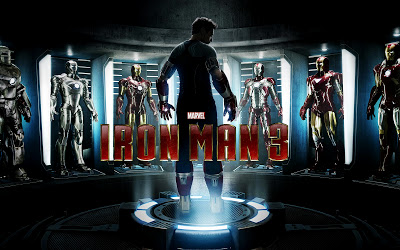
Most Memorable Scene: While Iron Man 3 was elevated above traditional “popcorn flick” status by its moments of serious character study, it was also an incredibly entertaining thrill ride—and in no scene was that more evident than in the film’s climatic action sequence. The moment when all of the Iron Man suits appeared on command was a gorgeously triumphant moment, and the action that followed was a breathless adrenaline rush. Coupled with the emotional stakes in the scene for Tony and Pepper, this was everything I love about big action movies rolled up into one incredibly fun scene.

Continue reading

The 2013 Oscars: Winner and Losers

It may have been long. It may have been riddled with bad jokes and too many musical numbers. But when the right people win (which was almost completely the case last night), it’s hard to see the Oscars as anything but a fun night at the movies. So here they are, the winners and losers in my eyes from what was a memorable 2013 Oscars.

Winners: Ben Affleck and Jennifer Garner

d47aff52da9036985f6987111ab70e20ec7d7266 Ben Jen US Magazine

Source: Us Weekly

Not only did they both look great, they proved once again to be the sweetest, most normal couple at the Oscars when Ben talked in his acceptance speech about how marriage is work but, “…it’s the best work. There’s no one else I’d rather work with.” Real, lasting marriages take hard work, but the key is to find someone you love working with—and I’m so happy two of my favorite people in Hollywood found that in each other.

Losers: Seth McFarlane’s attempts to be edgy
With jokes about 9-year-old nominees dating George Clooney, Rihanna and Chris Brown, and actresses looking great after getting the “flu” (a not-so-subtle reference to bulimia), there were more than a few spots where McFarlane didn’t just fall flat; he crossed the line. And I kept feeling uncomfortable when he would call out the crowd for not laughing or for reacting poorly to his jokes. It just wasn’t my style of humor, but I suppose we sadly can’t have Amy Poehler and Tina Fey host everything.

Winners: Dancers
Channing Tatum and Charlize Theron looked gorgeous during their old-Hollywood-style routine, as did Joseph Gordon-Levitt and Daniel Radcliffe. If there’s one thing McFarlane and the producers did right, it was bringing back some panache to the show in the classiest way possible: good-old-fashioned dance numbers.

Loser: Catherine Zeta-Jones
Her performance of “All That Jazz” was just painful. If you’re going to lip-synch, at least have the decency to match up your mouth with the music.

Winner: Jennifer Hudson
Now that is how you relive your Oscar glory, Ms. Zeta-Jones.

Losers: James Bond fans
Was anybody else severely underwhelmed by the Bond tribute, or was that just me? Halle Berry was the best you could do, producers? Did none of the past (or present) Bonds want to come to the Oscars?

Winners: Musical Theater Nerds
Seeing the cast of Les Misérables all on stage at once, belting their hearts out to “One Day More” was enough to give me chills and keep me rewatching multiple times. Kudos to Samantha Barks, Eddie Redmayne, Aaron Tveit, and, of course, Hugh Jackman for standing out and making the Oscars feel for a brief moment like the Tony Awards—and I mean that as a compliment.

Losers: The men of America not named Hugh Jackman and Bradley Cooper
After Jennifer Lawrence’s unfortunate tumble on her way to accept her Best Actress Oscar, Jackman and Cooper immediately rushed to her aid, proving to all the women watching that chivalry isn’t dead and gentlemen do still exist. My expectations for the opposite sex may have just been raised more than a little bit.

Continue reading