Today’s The Americans analysis is going to be structured differently than what you’re used to around these parts, but hopefully my rationale makes sense when all is said and done. There are only so many weeks in a row that I can talk about how well Keri Russell is playing Elizabeth’s downward spiral, and there are much more important things I want to get around to now that we’re a few episodes into this final season.
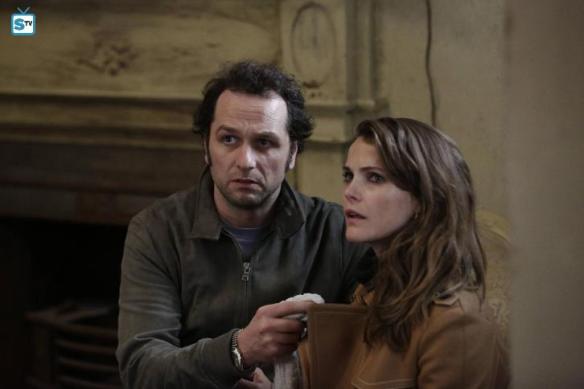
Source: spoilertv.com
As many of you know, I don’t watch a lot of “prestige dramas.” I never warmed up to Breaking Bad, Mad Men didn’t interest me at all, and The Sopranos was before my time and never beckoned me to discover what all the fuss was about years later. All those male-driven antihero dramas just seemed too depressing to keep watching every week for years on end. Life can be hard enough; I didn’t want the media I consumed to be another source of doom and gloom.
And then I discovered The Americans.
What made that show different? Why did I fall so deeply in love with what many people have called one of the bleakest shows on television when I couldn’t stomach other similarly dark dramas? Obviously the fact that its main antihero was a woman made it immediately more compelling to me. Elizabeth Jennings drew me into her messed-up mind in a way that Don Draper, Walter White, and all the men who came before them never could. But it was so much more than that.
It was the fact that, from the pilot, this has been a show about two broken people learning how to love each other. It has always been a show about a marriage. But even beyond that, it has always been a show about humanity. It’s a show about the things that makes us human—our need to connect with each other, our need to find some level of truth and honesty with another person, our desire for intimacy. From the moment Philip chose killing Elizabeth’s rapist over turning him in and Elizabeth then chose telling Philip the truth about herself over following their orders to never mention their pasts, The Americans has always been a show about choosing people—flesh and blood and warmth—over hard and cold ideals.
That focus on the connections between people has kept The Americans from being too dark. Even at its lowest points—the death of Nina, the sad story of Martha—there was always an underlying sense of humanity amid tragedy. Nina was killed in a brutal way, but she died because she chose friendship over following orders and betraying a good man. And Martha’s life was shockingly spared in no small way because Philip had come to care for her. Also, she may have ended up in Russia, but she didn’t end up alone. Her dream of being a mother was realized in the form of an orphaned Russian girl the KGB arranged for her to adopt.
It all comes back to people. On a show about warring ideological forces, the human beings on both sides are shown to be exactly that—human beings. And human beings have a desire to connect with each other, to build relationships and develop intimacy and form families.
That’s what made The Americans different for me. It was a show that ventured into very dark territory, but it balanced that darkness with humanity. Even when the show seemed bleak, it never became completely nihilistic. It never preached the idea that nothing matters because everything and everyone is terrible (which would have been an easy thing to preach given the subject matter). In fact, it seemed to be preaching the opposite: There is meaning to be found in even the saddest lives and most tragic stories. But that meaning isn’t found in something intangible like patriotism or even idealism; it’s found in the relationships we form with each other.






 Nerdy Girl Notes