You Have All the Strengths: A Letter to Leslie Knope

Source: glamour.com

Source: glamour.com

Dear Leslie,

I’m not ready to say goodbye. I know all good things must come to an end, but that doesn’t make it easier to think about tomorrow’s series finale of Parks and Recreation. I’ve spent a long time thinking of the right way to bid farewell to a show that’s meant so much to me, and I decided to approach it (like I approach most things in life) the way you would: with positivity, with optimism, and with appreciation for the power one woman—if she’s the right woman—has to inspire those around her to be their best selves. You might not be real, but the impact you had on me is as real as it gets. So before I say goodbye, I wanted to say thank you.

Thank you, Leslie, for your passion. As we grow, we’re often led to believe that it’s cool to be apathetic; it’s cool not to care, or at least not to show you care. Because openly caring about things asks for a kind of vulnerability and honesty that scares people. So thank you for being brave enough to let the world see how much you care. Thank you for reminding me that a life well-lived is a life lived with passion and intensity. And thank you for never apologizing for feeling as strongly as you felt about the things that mattered to you. Women often feel a need to apologize for their feelings, especially if they’re strong, but you were allowed to own your passion unapologetically. And you were surrounded by characters who supported that passion and were inspired by your ability to care. The depth with which you cared about things was never mocked; it was celebrated, and it made me feel proud to be someone who only knows how to feel things strongly.

Continue reading

Fangirl Thursday: A Magical Anniversary

OUAT

Three years ago today, the Once Upon a Time pilot aired, bringing some much-needed magic to primetime network television. I will admit; I didn’t watch the show that first night. But I caught a marathon of the first seven episodes on New Year’s Day 2012, and it was love at first sight for me. I knew from the opening of the pilot episode that I was watching something special, and I know I wasn’t the only person who felt that way. And three years (or almost three years in my case), dozens of plot twists and new characters, and far too many hours spent analyzing this show later, so many of us still feel that way. And that’s something worth celebrating.

Once Upon a Time and Nerdy Girl Notes are intrinsically linked. The day I first watched the show was also the day I made the resolution to start this website. In no small way, Once Upon a Time has shaped the look and feel of NGN more than perhaps any other piece of media I’ve written about. Nothing inspires me as a writer like Once Upon a Time (just in case you didn’t already know that from the length of my weekly posts or the number of essays I’ve written about this show), and I am forever grateful that I found a show to write about that challenges me the way this show does with each new episode.

Once Upon a Time has taught me to write from a place of optimism and positivity. It’s taught me that it’s okay to acknowledge flaws, but it’s also important to acknowledge the good stuff—and there’s always good stuff. It’s helped me see that writing for me is a lot like magic for this show’s characters—it’s all about emotion. I write my best when I write from my heart, and Once Upon a Time celebrates the beauty and power of approaching everything with an open heart. Because of that, this show has undoubtedly made me a braver writer. It’s helped me feel like it’s okay to wear my heart on my sleeve, and I know for a fact I’m a better writer because of that.

Continue reading

Fangirl Thursday: A New Dress and an Open Heart

This post is a little different from my usual Fangirl Thursday ones, but sometimes you just have to go where the inspiration leads.

I love clothes. I love to shop for them, to look at them in magazines and on red carpets, and to talk about them. As such, dissecting a character’s costume choices is one of my favorite ways to analyze any piece of media. From the evolution of Kate Beckett’s hair to the bright colors worn by Mindy Lahiri, the outward appearance of a TV character gives us a lot of insight into exactly who they are.

Therefore, when a character shows up wearing something different from what we’ve come to expect, it’s important. It’s worth talking about.

JENNIFER MORRISON

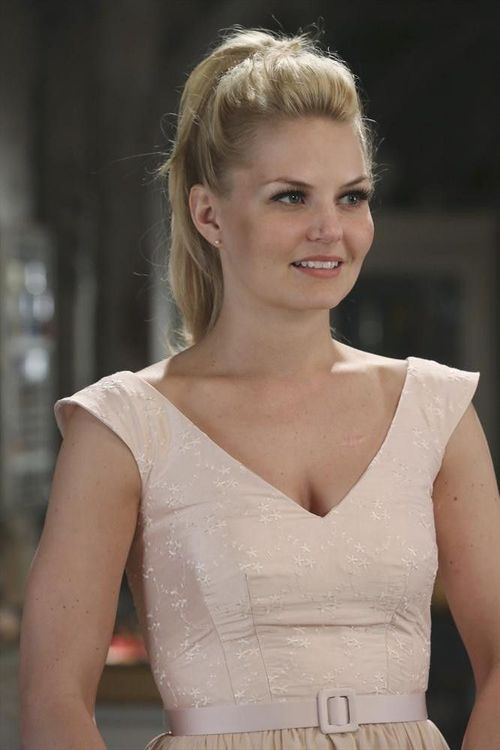
This—Emma Swan in a soft pink dress with her hair pulled back, ready for her first real date with Hook—is worth talking about.

Continue reading

Fangirl Thursday: Let’s Get Lost

Source: abc.com

Source: abc.com

It’s been 10 years since we watched Jack Shephard dramatically open one eye, stumble through a jungle, and come upon the harrowing wreckage of Oceanic Flight 815. It’s been 10 years since we met Kate, Sawyer, Charlie, Claire, Locke, and so many other characters who would make us laugh, cry, and fall in love right along with them over the course of six seasons. And it’s been 10 years since we saw a polar bear, discovered a smoke monster, and realized we were in for a journey like nothing else we’d ever seen on TV before.

That’s right, friends; Lost turned 10 years old on Monday. Ten years ago, I stood in front of the tiny TV in my kitchen and watched what I still consider to be the greatest pilot of all time. I knew I was in for one heck of a ride after learning all about J.J. Abrams’s crazy ways of weaving stories through my years spent loving Alias, but I don’t think any of us knew exactly how crazy this ride was going to be.

I learned so much from watching Lost, and those lessons have stayed with me for the last 10 years and will continue to stay with me for much longer. I learned that no character I love on a TV show is safe at any time (not just in premieres and finales), and that’s helped me get through every season of Game of Thrones, Once Upon a Time, and even The Good Wife.

I learned that sometimes your choice of favorite character changes as you grow and change yourself—from Kate to Charlie to Sawyer to Juliet. I learned that you don’t choose your “ships;” they choose you. (I spent so long wondering why I wasn’t more invested in the Jack/Kate/Sawyer triangle, only to discover that my heart was apparently saving all of its feelings for the unexpectedly perfect pairing of Sawyer/Juliet.) I learned that I love any and all plots involving time travel. And I learned that nothing makes me happier as a fan than when a character or a show can still manage to surprise me.

The most important lesson, though, that I learned from Lost was taught to me in the pilot and reinforced in the series finale: It’s all about the characters. For all the polar bears and smoke monsters, the reason I loved the pilot was because it made me care about these people beyond just their observations of the mysteries unfolding around them. The pilot opened with people just trying to survive and help one another do so; the mysteries came later. And I tried to never forget that. For as much as this was a show with possibly the most complex mythology to ever grace network TV, what made it work was its commitment to creating and developing characters that made us care.

Continue reading

A New Hope: Emma Swan, Captain Hook, and a Different Kind of Fairytale

good form

Happy endings aren’t always what we think they will be…

From the fairytales of old to today’s most popular Young Adult novels, there’s a recurring theme when it comes to the idea of happy endings: The happiest ending imaginable is one you share with your first love. No other kind of relationship is romanticized the way first love is romanticized. We’re taught over and over again that there’s no love as great as first love; you’ll never love again like you did the first time, when you were innocent and open and full of hope.

Once Upon a Time is a television show that revolves around the idea of happy endings—what they are, who they’re meant for, and if they’re even possible. Throughout the course of the show’s first three seasons, it’s challenged many basic fairytale tropes—the damsel in distress, the irredeemable villain, etc.—but for a long time it still relied on a very basic piece of classic fairytale mythology: First love is the love all the stories get written about.

For as far as we know (and it would be shocking to find out this isn’t the case), Snow White and Prince Charming are both each other’s first loves and true loves. Their love has grown and matured as they have; it’s been (quite literally) tested by fire and strengthened by shared experiences of joy and loss. Snow and Charming represent the kind of first love that lasts because it didn’t begin with rose-colored glasses or idealized notions of who the other was. But the fact still remains that they—to the best of everyone’s knowledge—have never loved anyone else. And while that’s beautiful, it’s not always relatable.

If there’s one character who grounds Once Upon a Time in the real and relatable, it’s Emma Swan. In Season Three’s “The Heart of the Truest Believer,” Emma told her parents, “My experiences are different.” And one of the biggest differences is how Emma and her parents experienced first love. For Snow and Charming, their first love is their only love, and that’s all they know. But Emma’s first love didn’t end in happily ever after; it didn’t survive every test it faced like her parents’ love has. Emma looked at her parents and saw the kind of love she believed wasn’t meant for her—because she was the savior, because she wasn’t born in a fairytale world, and because her first experience with love left her afraid to let someone get too close again.

Season Two’s “Tallahassee” featured a young Emma who was genuinely happy, unguarded, and as hopeful as a girl who grew up the way she did could be. Emma and Neal’s relationship throughout most of that episode showed the way first love can light up a young person’s life like nothing they’ve ever experienced before and like nothing they’ll ever experience again. However, it also showed that first love can go wrong. Sometimes it doesn’t lead to the happy ending it feels like it’s heading towards.

Learning to open your heart again after it’s been broken is an important theme of Once Upon a Time, and it’s been at the crux of Emma’s character development from the start. Emma has learned to open her heart to her son after it broke her heart to give him up. She’s learned to open her heart to her parents after it broke her heart to feel like an orphan for most of her life. She’s learned to open her heart to a home after it broke her heart to never have a real home growing up. And she’s also learned to open her heart to romantic love after it broke her heart to feel abandoned by her first love.

Continue reading

Virtual Hugs Are Still Hugs

Last week, one of my closest friends (Heather, for those of you who haven’t been following along on our adventures via Twitter) came to stay with me for a few days. We did plenty of sightseeing, went to the mall, and ate a ton of delicious food.

In short, they were the best three days I’ve had in ages. However, I’m sure there are people out there who thought it was weird that I was opening up my home to someone I’d only met once before. You see, Heather and I are what some people like to skeptically call “Internet friends.” We met through LiveJournal, grew closer through Twitter, and support each other now through our blogs. And for some, that means our friendship is inherently less valid than any we form with people we meet in person.

There’s still a real stigma around friendships that start in various corners of the Internet. I know that there’s the potential to be building a friendship with someone who is nothing like they seem, but can’t the same be said for friends we make in the “real world,” too?

I have a wonderful group of people I’ve met online whom I consider to be great friends. Some I’ve seen in person many times now, some only once, and some I still have yet to meet face-to-face. But what I’ve come to learn from my years in fandom is that friendship shouldn’t be measured by physical proximity or the number of times you’ve hung out in person. It should be measured by the experiences and pieces of yourself that you share with each other. It should be measured by the amount that you sincerely care for each other. And those things aren’t exclusive to friends who meet at school or at work.

If you take away anything from my writing, I hope it’s this: When we share our passions, we share parts of ourselves. And that’s what makes friendships that develop through fandom so special. I know that I share so much more about who I am when talking about the books, movies, TV shows, and characters that I love than I do when I’m just talking about myself. There’s a total vulnerability I allow myself when talking about fandom-related topics that I don’t always show under other circumstances. And I know I’m not alone in that.

Slowly, that sense of openness that comes with sharing fandoms with someone becomes a sense of real understanding. And aren’t openness and understanding the two pillars upon which all friendships should be built? The development from being two people with common interests to being real friends happens online the same way it does in person, so I don’t know why people feel the need to classify them as different levels of friendship.

Continue reading

A Matter of Opinion

Am I imagining things, or has the Internet been excessively vitriolic lately?

I’m no stranger to fandoms bickering among themselves and critics trying to stir up trouble by claiming their opinions are the right opinions, but it’s reached epidemic proportions during the last few weeks. And it’s getting exhausting.

I’ve always believed that the beauty of fiction is that it’s open to interpretation. We all view fiction through the prisms of our own experiences. As such, our interpretations say a lot about who we are. We often reveal more about ourselves in talking about fiction than we do when we try to talk about our own life experiences.

There’s an inherent vulnerability in talking about the fictional works, characters, and relationships that mean the most to us. That’s why respect is so important when it comes to discussing fiction. If someone has a different opinion, that doesn’t make them “idiotic,” “crazy,” or “delusional” (all words I’ve seen casually thrown around in the last few days). It simply means they see the world—and, as a consequence, a piece of a fandom—differently than you do.

In my experience, I’m at my most vulnerable as a writer when I talk about the characters, relationships, and works of fiction that I love the most. In the increasingly negative culture of Internet-driven fandom, it takes real bravery to admit to loving, being inspired by, or feeling an emotional attachment to something. Sadly, it’s those sincere admissions of emotional attachment that I’m seeing torn down and ridiculed the most. I’m never going to argue that the media doesn’t need people to look at it critically, but there’s a clear line between criticism and condescension, between discourse and degradation—and that line is one I keep seeing people cross without even a second thought.

Continue reading

We Need to Talk About New Girl

new girl disappointed

Nick and Jess broke up. It’s been over a week, and I’m still having trouble writing about it.

Before you think that this is just a case of impassioned fangirl angst, let me remind you that I am no stranger to TV breakups. I live with the emotional scars of being an Alias fan; I had to watch my favorite character deal with the fact that the love of her life married someone else and stayed married to her for a whole season. I’m not one to get apoplectic over a TV breakup.

But do you know what I do get apoplectic over? Contrivances, poor characterization, and shoddy writing choices. If my favorite couple on a given TV show calls it quits in a way that feels believable and organic to their characters, I’ll be sad, but I’ll understand. I don’t understand Nick and Jess breaking up, but maybe that’s because I don’t really feel like I understand New Girl very well anymore.

I wasn’t someone who immediately jumped on the Nick/Jess train—or even the New Girl train, if I’m being honest. It took until Season One’s “Injured” for me to really open my heart to the show, and that was because I cared about the people in that episode; I wanted good things to happen for them, and I could see that they wanted good things to happen for each other. I don’t enjoy TV shows that let the plot influence how the characters are written; I want the characters to drive the plot. In order for that to happen, those characters need to be written consistently. By New Girl’s second season, I was blown away by the consistent and surprisingly complex characterizations that were guiding the show.

When Nick and Jess kissed, I think everyone was surprised by the impact of the moment—including the writers. These were people who had said that both Nick and Jess had a lot of growing up to do before they could be with one another romantically; they even hinted that a relationship would be bad for both characters. But as Season Two entered its incredible final stretch, it seemed as if they were proving themselves wrong on a weekly basis. Nick and Jess didn’t just work together; their relationship was good for both characters. It showed sides of them that enriched their characterizations while still keeping the show as funny as it ever was.

Season Two was the Season of Nick. We learned about his past, we saw that he was capable of being responsible and romantic, and we watched him develop into a person who was willing to grow. Nick Miller was a revelation in Season Two of New Girl, and the whole show benefitted as a result of the deft handling of his character.

And then came Season Three…

Continue reading

Love Is Strength: Once Upon a Time and the Truth About True Love

Ginnifer-Goodwin-and-Josh-Dallas-Once-Upon-a-Time

True love isn’t easy, but it must be fought for. Because once you find it, it can never be replaced.

Once Upon a Time doesn’t play by the centuries-old rules of fairytale lore, and the show takes pride in that. Rumplestiltskin is also Belle’s Beast, Jack who climbs the beanstalk is actually a woman, and Snow White threatens the Evil Queen with a sword at her wedding ceremony. But perhaps the most important fairytale makeover this show has presented to audiences is the way it handles the concept of “true love.” The way true love is defined on Once Upon a Time—as an empowering force for good and something that requires effort and acceptance to achieve and maintain (and as something that doesn’t have to be romantic to be true)—should be one of the show’s enduring legacies.

The entire premise of Once Upon a Time is built around the idea of what happens after the “happily ever after.” What happened after Prince Charming woke Snow White from the queen’s sleeping curse? It turns out, a lot of things happened—even before their wedding—that tested and strengthened their love. On Once Upon a Time, true love isn’t something that is achieved and makes everything perfect in both your relationship and your life in general. True love requires teamwork. That’s what Snow and Charming are; they’re a team. They fight side-by-side for more than just their love; they fight for their kingdom. They don’t always agree, and their love isn’t a magical solution to all of their problems. But the support they give to one another is a defining part of their “true love.” Even when things are falling apart around them, they can rely on each other, knowing that the other has their back. True love doesn’t conquer all, but it gives you someone to take on life’s challenges beside you. And that’s a much more realistic story than one in which a prince and princess ride off into the sunset and never have any problems because they have true love.

The reason why Snow and Charming are able to both win so many battles and withstand so many losses is because they have someone who they know is by their side in both victory and defeat. Their true love is unconditional—it’s a love between two people who accept the other for who they really are, both the good and the bad. Charming and Snow met at a time when she was at her most cynical, and he still fell in love with her after she robbed him and hit him over the head with a rock. Even when Snow confessed her “darkened heart” to Charming in Season Two’s “Selfless, Brave, and True,” he didn’t judge her or stop loving her. Instead, he promised to help her believe in her own goodness again because that’s what true love is—it’s something that inspires both parties to be their best selves.

Continue reading

No Longer a Lost Girl: Emma Swan and the Power of Choice

Emma Swan

I didn’t ask for that! I don’t want it!

When Emma Swan spoke those words in Once Upon a Time’s Season-One episode “The Stranger,” she was talking about her role as the savior of all of the cursed inhabitants of Storybrooke. However, she could have been talking about most of the events in her life up through—and even following—that point. Emma is a character who has been defined by things that have happened to her; she is an active woman whose real curse is the way others have so often rendered her passive, stripping her of any ability to choose her own path. But if Emma’s tragedy is the lack of agency she has been afforded in the first 28 years of her life, her journey to her own happy ending is a journey to finally getting to choose what she wants that happy ending to be.

Even before she was born, Emma was a victim of circumstance. She was destined to be the savior because she was the product of Snow White and Prince Charming’s true love. And once she was born, her parents had to make a choice no parent should ever after to make: keep their daughter, knowing she would be cursed along with them, or send her into an unknown world without them because it gave her the best chance to become the savior she would one day need to be. It was an impossible choice, and Snow and Charming cannot be faulted for choosing the way they did. However, their good and loving intentions still meant that Emma grew up alone because of someone else’s choice. Rumplestiltskin chose to create the curse, Regina chose to cast it, and Snow and Charming chose to save Emma from it by sending her through the portal. The only one with no real choice in the matter was the one person who would be most affected by it—baby Emma.

Little did Snow and Charming know, though, that Emma didn’t have to grow up alone. Pinocchio was also sent through the portal, but he was tasked with a job too difficult for a small boy to handle: taking care of the savior. Like Snow and Charming, Pinocchio (who we later come to know as August) was faced with choices no person in his situation should have to face: struggle to take care of a baby when he himself was just a child or strike out on his own. It should come as no surprise to anyone that he chose the latter.

The story of Emma Swan’s formative years is a story of people choosing to leave her, including her first set of foster parents, who decided to send her back into the system when they started their own family. Emma grew up believing that she was abandoned by her parents and subsequently by anyone who ever came close to caring for her. She was powerless to stop people from leaving her behind, completely devoid of control over her own life. She was—in so many ways—a lost girl.

Continue reading