“I Want It to Be Real”: The Best of Philip and Elizabeth Jennings

The Americans 3.10

Source: spoilertv.com

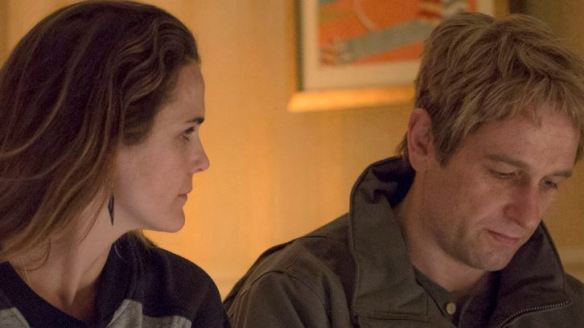
The Americans is a show about a lot of things: Cold War politics, international espionage, bureaucracy, ideological conflicts, and, of course, WIGS. But at its heart, it’s a show about marriage. It’s a show about trust, intimacy, honesty, and what it means to be truly seen in a world where we all are wearing some form of disguise more often than not. And that’s what’s made it stand out in both the sea of spy shows that have developed into their own genre over the years as well as the sea of antihero-driven dramas that have emerged in this Golden Age of Television. Instead of being focused on missions of the week or the internal struggles and dark deeds of one (usually male) character, the show has always been a kind of love story—a story that first and foremost cares about a husband and wife and how the world around them affects their union, and vice versa. From the pilot onward, the relationship between Philip and Elizabeth Jennings has always been the show’s driving force and its emotional core, and it seems that after a season of separation and tension, that relationship is poised to be at the center of what’s sure to be an emotional series finale.

My love for Philip and Elizabeth’s marriage is well-documented around these parts. It’s what initially drew me to the show, and it’s what’s kept my viewing experience from ever becoming too bleak. Even when bodies were being shoved in suitcases and throats were being slashed, one look from husband to wife had the ability to fill my heart with hope that even in the worst circumstances, something beautiful can be built. Even in a world of lies, something honest can exist between two people.

That’s why—despite the murder and the blackmail and the sex with other people—The Americans is the piece of fiction that I think best explains why people get married, why someone would choose to commit to another person for their rest of their life. And it’s because being married means having a partner. Even if your life doesn’t involve chopping up bodies in parking garages, it probably will involve raising kids and balancing careers and making big decisions in the same way Philip and Elizabeth have learned to do, and it’s nice to know you don’t have to do those things alone. And even if you don’t have to lie for a living, we all hide parts of ourselves from the world—but as Philip and Elizabeth have shown us, being married means finding the one person you can be your true self with. It means finding the one person who understands you better than anyone else, the one person you can be honest with, and the one person you know has your back when it feels like the world is against you. Even though there have been times when Philip and Elizabeth have struggled to be those things for each other, they always come home in the end. And that’s what marriage is more than anything else—it’s home. It’s the person who you stand beside when the rest of the world is falling apart around you, and that’s who Philip and Elizabeth have become for each other.

The journey Philip and Elizabeth have gone on—from strangers to fake married coworkers to co-parents to falling in love to getting married for real and all the stops, starts, and separations in between—has made for one of the most compelling relationship explorations I’ve ever seen in a piece of fiction. Brought to life through the incredible talents and heart-stopping chemistry of Matthew Rhys and Keri Russell (whose own working relationship turned into a real-life romantic partnership thanks to this show), Philip and Elizabeth Jennings are something special. As such, I wanted to celebrate the end of their journey (in whatever way it may end tomorrow) with a look back at their best moments.

These are the scenes, lines, and looks that I always come back to when I think of why The Americans told one of the most subtly affecting love stories of this Peak TV period. There were so many great moments between them that it felt nearly impossible to cut it to just 10. I hope you share your own favorites in the comments so we can keep the discussion going!

1. Elizabeth lets Philip in (1.01: Pilot) 
I can trace my love for The Americans back to one specific moment from the show’s pilot: Philip’s voice cracking when asking Elizabeth how Timoshev hurt her and then him killing her rapist with his bare hands as she watched, completely transfixed. In that moment, both the audience and Elizabeth had to confront an essential truth of Philip’s character: Elizabeth always comes first. He will give up everything for her, and he will choose her and her needs over himself and his needs every time. And once Elizabeth finally let herself believe that someone had her back and truly cared about her, everything changed. It led to the perfect “In the Air Tonight” love scene, but even more importantly, it led to Elizabeth breaking the rules by telling Philip about her past and revealing her real name. That simple act of emotional intimacy, punctuated by the most adoring look I’ve ever seen in Philip’s eyes as she intertwined their fingers, showed that Elizabeth had found something more important than her orders to keep her true self hidden; she’d found someone who would love that true self.
Continue reading

TV Time: The Americans 6.09

Title: Jennings, Elizabeth

This Week’s Discussion Topic: Finding Yourself When Everything Else Is Lost
“We do not want you to lose who you are.”

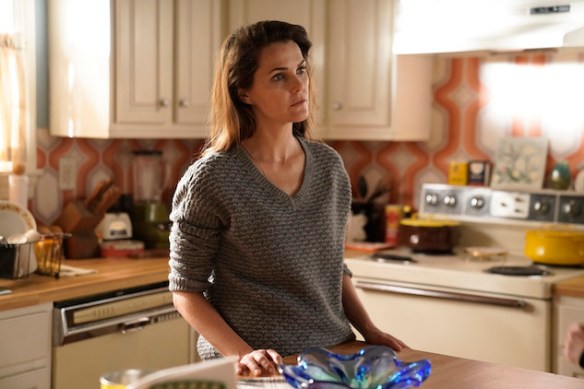
When illegal-in-training Nadezhda was told this near the end of the episode bearing the title of the name she was given by the KGB, I was struck by the irony of the fact that people have continually tried to tell her who she is. How can a person not lose who they are in some way when even their name is given to them by someone else? In this episode alone, the two women Elizabeth is closest to—her mother figure and her daughter—both tried to define her by their narrow views of her actions. To Claudia, she’s a selfish traitor to the Cause. To Paige, she’s a liar and a whore.

So who is Elizabeth Jennings—or, perhaps more accurately, who is Nadezhda? She’s a woman who never had the luxury of self-reflection. In that final flashback, her downcast eyes and hunched posture (How great was Keri Russell at making her look so young?) showed the truth: Self-definition has always been a foreign concept to Elizabeth. When you’re just trying to survive, you don’t really have time to care about how you see yourself and what you value.

However, this episode showed that it’s often in those kinds of traumatic circumstances that our identity reveals itself. When a person’s back is against the wall, they often revert to the truest version of themselves. And nearly every character’s back is against the wall now. In that sense, “Jennings, Elizabeth” gave us not only an action-packed penultimate episode, but a penultimate episode that reminded us exactly who these characters are and what matters to them when they have nothing left to lose.

Continue reading

TV Time: The Americans 6.08

ta_608_0149

Source: indiewire.com

Title: The Summit

This Week’s Discussion Topic: The Heartbreaking, Heroic Humanity of Elizabeth Jennings
“You don’t think I’m a human being?”

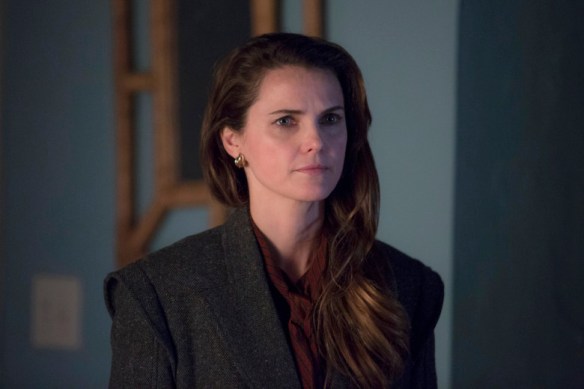
That question looms over every moment of “The Summit,” and by the end of the episode, no one who’s been paying attention could accuse Elizabeth Jennings of being devoid of humanity. This was an episode devoted to putting the show’s truest believer through the emotional wringer until every speck of soul she tried to burn away with ideological zeal and every bit of conscience she tried to bury under her devotion to her cause were finally laid bare. And from that vulnerable place emerged a woman who’s more dangerous and in more danger than ever before—because humanity can be a strength, but in the world these characters inhabit, it can also get you killed.

Elizabeth’s awakening sense of agency didn’t come out of nowhere. It was the culmination of small moments of humanity throughout the show’s run, including the powerful moment in last week’s “Harvest” when she let herself finally accept the magnitude of Philip’s love for her and the lengths her will go to for her. The opening of “The Summit” was fueled by that revelation, with Elizabeth entering their living room in a much less guarded and more sincere emotional state than we’ve seen her in previously this season. The softness on her face when she told Philip she knows he cares about what happened in Chicago and that he worries about her was a shocking contrast from how she’s looked at her husband for much of this season. Elizabeth’s walls were down with her husband in that moment, and that made everything that came after even more painful because Keri Russell let us see exactly why Elizabeth puts those walls up in the first place—because anyone she lets behind those walls has the power to destroy her.

Continue reading

Thanks for the Magic

leaving storybrooke

“And you may think this is just a story, but that’s the thing about stories—they’re more than just words. They live inside us. They make us who we are. And as long as someone believes that, there will always be magic.” (Henry Mills) 

I’ve always loved stories. I’ve always believed in the power of stories—the stories we’re told, the stories we tell, the stories that reflect who we are, and the stories that show us who we can become. When I look at my life, I can see that I’m the sum of a million different stories that all showed up to shape me exactly when I needed them.

One of those stories ended last night, and I can’t let it go without a proper sendoff.

Once Upon a Time is a show about many things—crazy timelines, strong women, second chances, and hope. But it’s also a show about stories. One of the most prominent themes throughout the show’s seven seasons has been that you have the power to control your life’s narrative; you can write your own happy ending. You can choose whether people see you as a villain or a hero. You are the author of your story. And that’s where hope comes from—knowing that it’s never too late to change your story, to find your happily ever after.

Continue reading

TV Time: The Americans 6.07

After a little hiatus, I’m back and ready (but also completely NOT READY) to discuss this final run of episodes with all of you! And because I feel these last episodes of such a deep and complex show deserve a little more attention, the format for these posts will be changing slightly to accommodate even more analysis. I’ll be taking one major theme/discussion point each week and developing it into an essay, but please feel free to bring up other discussion points, too. I hope you all find the change to be a welcome one, and I also hope to see your thoughts, hopes, fears, and favorite moments in the comments section!

the-americans-episode-607-harvest-promotional-photos

Source: spoilertv.com

Title: Harvest

This Week’s Discussion Topic: Epiphanies, Emotional Connections, and the Truths We Try to Bury
“Harvest” was an episode that lived up to its name. So many moments in the episode harkened back to similar moments in the pilot, and it was both thrilling and gut-wrenching to watch those seeds planted so many years ago—in both the show’s timeline and our own—begin to finally sprout into something fruitful for the plot. But where this episode truly excelled was in using the time that’s passed and the emotional connections that have developed between these characters to turn those parallels to the pilot into explorations of how far these characters have come and how much higher the stakes are because of those emotional connections.

This episode was anchored by three key epiphanies for its three major players—Stan, Elizabeth, and Philip. But, in typical The Americans fashion, these moments didn’t lead to huge shifts in plot momentum or dramatic “Aha!” scenes. Instead, they were quiet moments of shifting understanding, handled with no dialogue or in the spaces between words where so much of the emotional weight of this show has always existed. These moments were less about propelling the plot forward into the final stretch of episodes than they were about reminding us what this show has always been and will always be about: the connections between people. While this episode certainly moved the characters closer to the endgame, it did so in a way that prioritized the interpersonal consequences of those moves and, in doing so, ensured that absolutely no one (including those of us watching) will be able to escape the coming carnage unscathed.

Continue reading