NGN’s Best of 2016: TV Moments, Episodes, and Shows

I hope all of you have a safe and happy New Year’s Eve and New Year’s Day, and may 2017 bring you an abundance of laughter, love, peace, good health, and everything that makes you happiest.

I apologize for the delay in posting my Best of 2016 lists; I needed to take some time instead to write something in honor of Carrie Fisher, a personal hero of mine. But the delay just means you get three lists in one on this last day of 2016!

For as difficult as parts of this year have been, I think we can all agree that it was a great year for television. In a world where it felt like sexism was given a frighteningly public platform, we were given shows, episodes, and moments that brought fierce, complex female characters to the forefront. In a stressful year, we were given plenty of things to laugh about, but there were also plenty of cathartic moments to cry over, too.

As the television landscape continued to broaden and deepen, it became more difficult than ever to narrow down these lists, which is a problem I am more than happy to have. These are my choices for the best TV had to offer this year (in addition to my picks for Best Performances and Best Relationships, which I shared earlier), but I want to know yours, too! Don’t forget to add your picks in the comments and to check out the lists made by TVexamined and MGcircles for more end-of-2016 fun!

Best Moments
gmw

Source: Disney Channel

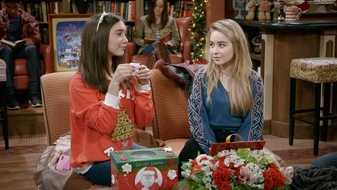
1. Secret Santa exchange (Girl Meets World: “Girl Meets a Christmas Maya”)
Sometimes you just want to feel good when you watch television, and no moment this year made me feel better than this gift exchange between the core group of friends on Girl Meets World. Each gift represented the kind of deep, sincere understanding and appreciation that makes the relationships on this show so special. From Smackle’s gift of the broken clock and reminder to Maya that her friends know how hard she’s working to fix herself to Zay’s gift of the re-written etiquette book that made Smackle feel loved for exactly who she is, this was one of those moments that made you feel hopeful for the future. In a year that made many of us confront the reality that the world can be an unkind place, this was a reminder of the importance of kindness and friendship just when we needed it most.

2. Claire and Jamie say goodbye (Outlander: “Dragonfly in Amber”)
Claire and Jamie’s love story has always been epic, but this scene took it to an entirely new level of emotional power. The chemistry between Caitriona Balfe and Sam Hueghan was sparking during this scene with a ferocity I’ll never forget, an intensity and total believability (even in the face of the fantastical element of time travel) that set this scene apart from any other love scene that aired in 2016.  I dare you to watch Hueghan deliver his line, “Lord, ye gave me a rare woman, and God, I loved her well” without swooning and crying at the same time. (I’ve tried; it’s physically impossible.)

3. “Hallelujah” (Saturday Night Live: “Dave Chappelle, A Tribe Called Quest”)
Kate McKinnon is a gift that none of us are worthy of, and if you need proof of that, watch this moment again. It was the perfect blending of character and actor; you could feel her singing as both Hillary and Kate, which made it even more cathartic to watch. For those of us left shocked and saddened by the results of this year’s presidential election (and the loss of the genius Leonard Cohen), this was the cathartic moment we so desperately needed. “Hallelujah” is one of my favorite songs ever written, and this only made me love it more. I still can’t watch it without crying through McKinnon’s stunning vocals on the last verse (“And even though it all went wrong, I’ll stand before the Lord of song with nothing on my tongue but Hallelujah…”) and her impassioned, emotional plea to do as both she and Hillary would want and never give up fighting for what we believe in. When I need to feel both emotional and empowered, this is still the moment I turn to.
Continue reading

NGN’s Best of 2016: TV Relationships

the americans 408

Source: spoilertv.com

Television in 2016 was filled with a variety of complex and compelling relationships—from family and friends to fairytale True Loves and teammates. These dynamic duos weathered professional and personal storms together, fought and made up in epic fashion, and provided plenty of reasons for us to cheer, cry, and swoon this year.

Today’s entry in NGN’s Best of 2016 series is focused on the best partnerships, parent/child pairs, and friendships on television this year. Don’t forget to share your choices in the comments to check out TVexamined and MGcircles for even more year-end fun!

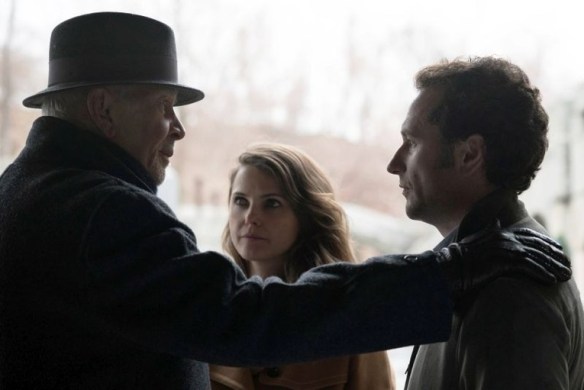
1. Elizabeth and Philip Jennings (The Americans)
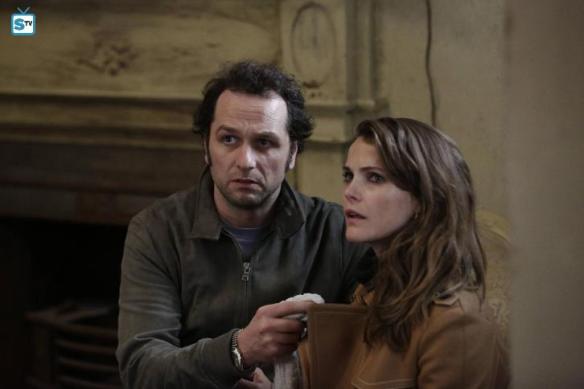
The center around which the high-stakes world of The Americans orbits has always been this marriage and the family it created, and that center was shaken more forcefully than ever this season—from the strain of having a daughter who knows too much about their true identities as spies to jealousy over fake relationships that have more truth behind them than either wants to admit and, of course, the constant anxiety of living double lives across the street from an FBI agent (and throw in one major near-death experience via potential bioweapon for good measure). Just one of these things could have destroyed their partnership, but what was so beautiful about this season of The Americans was the way it allowed them to grow closer together, ending the season as a more united front than perhaps ever before. Each new challenge was met with a deepening sense of honesty, openness, and intimacy, which sometimes resulted in horrible fights but, more often, resulted in quiet moments of connection that reminded everyone watching that, as Philip said this season, “The Center made a good match.” The same could be said of the casting team, who found lightning in a bottle with Keri Russell and Matthew Rhys. Their chemistry continues to shine through the smallest details, creating a marriage that feels believable and a partnership that you can’t help but root for—even when you feel like you should be rooting against them.

2. Marcia Clark and Christopher Darden (The People vs. O.J. Simpson)
It’s not easy playing real people, and it’s especially challenging to play two real people whose relationship has been a source of speculation and conjecture for 20 years but who have never given a definitive answer to what the nature of their relationship was. Somehow, though, Sarah Paulson and Sterling K. Brown—along with some wonderfully ambiguous writing—managed to turn what could have felt uncomfortable into a twist on the “Will they or won’t they?” (or maybe “Did they or didn’t they?”) dynamic that was at turns sexy, sweet, and sad. Paulson and Brown had the kind of chemistry directors and writers pray for—conveying so much in a look across a bar, a charged moment outside a hotel room, or a late-night dance. The show managed to walk the line between professional respect, deep friendship, and the continued undercurrent of romantic possibility so well, and it did this by focusing less on the question of what actually happened between them and more on the support system they created with each other, which—like many aspects of this show—took something that was often sensationalized and made us care about it on a deeply emotional level.

3. Ginny Baker and Mike Lawson (Pitch)
Sometimes the best TV relationships sneak up on you, and you find yourself caring about them more than you ever expected to. That was certainly the case with these two teammates. Part mentor-mentee relationship, part professional partnership, part reluctant friendship, and part slow-burn romance—Mike and Ginny’s relationship is a delicate balancing act between sharp banter, serious scenes, and sizzling chemistry. The writers did an admirable job of building this relationship with a solid foundation of respect—showing Mike take every opportunity to sing Ginny’s praises to anyone who would listen, including Ginny herself—so that when the “almost kiss” happened at the end of the season, it felt earned and believable instead of cliché and cheap. Kylie Bunbury and Mark-Paul Gosselaar became two of 2016’s most potent screen partners, creating an electrifying dynamic that felt completely effortless and natural. A freshman show (especially one with only 10 episodes) creating such a strong arc for its central relationship is something that should be commended. And beyond any serious analysis, this relationship made me smile more than any other on television this year, and if you need a reminder, just watch their phone call after the All-Star Game if you need a little year-end pick-me-up.

Continue reading

NGN’s Best of 2016: TV Performances

Before we get down to business, I want to take a moment to wish all of you a holiday season filled with laughter, love, and light. Merry Christmas and Happy Hanukkah to all who are celebrating!

peple-vs-oj

Source: ABCNews.com

It’s everyone’s favorite time of year—the time to reflect on the year that was in the world of television! For the next week, I’ll be posting my year-end retrospective lists detailing the best of TV in 2016. I love doing these posts because they encourage such great discussion and have led to some fantastic TV recommendations, so please share your own choices in the comments! And if you’re looking for more year-end lists, I highly recommend the ones put together at TVexamined and MGcircles.

Without further ado, let’s get the party started! Here are my choices for the year’s best performances—the ones that made me laugh the most, cry the hardest, and think the most deeply. This was a year of incredible acting on the small screen, and these performances are just a small sample of the brilliant work done on so many television shows this year. (As usual, I tried to limit myself to one actor per show—with one exception.)

1. Sterling K. Brown as Christopher Darden and Randall Pearson (The People vs. O.J. Simpson and This Is Us)
Turning in one powerful, nuanced, heartfelt performance in a year is a great feat; to do it twice in two different shows is so rare that I had to give Brown special recognition for his stellar work this year. He made a name for himself in The People vs. O.J. Simpson as Christopher Darden, and his complex portrayal of a lawyer trying to reconcile his identity as a black man with his identity as someone who fights for justice hit all the right notes—from moments of barely-controlled fury to moments of surprisingly gentle warmth. It was that warmth and sense of inherent goodness that made Brown’s Darden the beating heart of The People vs. O.J. Simpson, and those traits have also been on full display in his work on This Is Us. Not a week goes by where I’m not moved to tears by Brown’s work on this freshman drama. He has a true gift for emotional honesty, and his ability to show just as much in his reactions as he shows in his character’s big, dramatic moments helped make every actor around him better. There’s a steadfast quality Brown brings to his characters that grounds everything and everyone around them, and that allowed him to stand out in ensembles filled with talented actors.

2. Sarah Paulson as Marcia Clark (The People vs. O.J. Simpson)
In terms of single performances given in 2016, there was none better than Paulson’s work as Marcia Clark. To give you a sense of how much her performance affected me, the only thing I knew about Clark before the series aired was that her hairstyle was a huge deal and she lost the case of the century, but afterward, I came to care so much about her story that I bought her autobiography. That was Paulson’s true gift: She made us care about someone that so many people wrote off, mocked, or outright hated. And she did this by making us feel everything her character was feeling—I dare you to watch the scene where Clark walks into the courtroom with her new haircut and not feel her humiliation as acutely as if it was happening to you. The amount of anger and sadness I felt on her behalf throughout the series genuinely surprised me, and it was all because of the depth Paulson gave this woman. She allowed us to finally see Clark as a person and not as a symbol, stereotype, or caricature, and in doing so, she made everyone watching reconsider their own preconceptions and judgments about her, which is exactly what a great portrayal of a real person should do.

3. Keri Russell as Elizabeth Jennings (The Americans)
Elizabeth may have been struggling with her work as a spy more than ever this year, but Russell was certainly not struggling with her work bringing her to life. As Elizabeth became more vulnerable, Russell became more of a force to be reckoned with. This was the year in which Elizabeth’s emotions started to break through her stoic facade, and the way Russell played those emotions showed her masterful understanding of this complex woman. There were the moments her sadness seeped out in quiet words shared with her husband (“I’m going to miss her.”); moments her emotional and physical vulnerability made her seem smaller than ever before (She made almost dying seem all too real.); moments her insecurity made this superspy finally feel relatable (when she asked Philip if he would leave with Martha); moments of sincere connection between her and her daughter (opening up about her childhood and why she wanted to join the KGB); and moments her anger exploded out of her like a volcano, destroying everything in its path (the entirety of “The Magic of David Copperfield V: The Statue of Liberty Disappears”). Russell’s work in this role is the kind that rewards you for paying attention, and the rewards were more fruitful than ever this year.

Continue reading

TV Time: The Americans 4.13

the americans s4 finale

Source: ign.com

Title: Persona Non Grata

Episode M.V.P.: Everyone
This might seem like a copout, but “Persona Non Grata” was a total team effort. Each actor was given their time to shine, and each performance worked with and added to the others. Masterpieces generally aren’t painted using only one color, and symphonies don’t work with only one instrument. In the same way, this powerful finale was the sum of all of its talented parts.

What impressed me the most about this episode was the way it balanced its stories so well, giving every character we’ve come to care about an important story to tell. This allowed every actor in this brilliant ensemble a chance to do something special, and they ran with it.

Of course, there were the big moments: Dylan Baker’s heartbreaking work as William died a horrible death—made even more horrible by the fact that he was alone; Matthew Rhys’s stunning monologue about feeling sick every day before going to work; Costa Ronin’s poignant farewell scenes; and Holly Taylor’s masterfully ambiguous performance as Paige and Matthew grew closer.

But I also found myself entranced by the smaller beats in this episode, the silent moments that reminded me of the trust this show places in its actors to convey so much without words. I was spellbound watching Noah Emmerich’s face as Stan took in William’s words about loneliness, the sad understanding creeping across his features. I found myself close to tears as Taylor’s face changed from joy to longing to hopeless sorrow as she held Pastor Tim and Alice’s baby and was suddenly confronted with the reality of her own journey from childhood to the awful grownup world she’s found herself in—a world that could jeopardize the future of this little girl. I was devastated by the exhaustion and hopelessness in Lev Gordon’s posture as Arkady processed the fact that he was being sent back to Russia. I even found myself getting emotional over Tatiana, as Vera Cherny sold her sincere sadness over Oleg’s departure in a way I wasn’t expecting.

And that’s not even including the incredibly charged silences between Rhys and Keri Russell throughout the episode. Russell didn’t speak much in “Persona Non Grata,” especially compared to some of the other episodes this season, but she still delivered a knockout performance. The entire sequence of moments between Philip and Elizabeth after Gabriel suggested they return to Russia was a master class in using silence to your advantage as an actor. You could almost see the wheels turning in Elizabeth’s head as she processed what it might mean to return “home” after building a real home in America with her family. The war between officer and mother was raging inside Elizabeth, and the only evidence we saw of it was in Russell’s intense eyes. Watching her and Rhys in those scenes made me feel afraid to blink because I might miss something, and that’s when this show is at its very best.

Continue reading

TV Time: The Americans 4.12

the americans 411

Source: spoilertv.com

Title: A Roy Rogers in Franconia

Episode M.V.P.: Keri Russell and Holly Taylor
For those of you who don’t know, in addition to being a writer and editor, I’m also a dance teacher, and this weekend was my students’ big recital (which is one of the main reasons why this post is so late). As such, I’ve been thinking a lot about dance lately. So maybe I just have dance on the brain, but every time I watch Keri Russell and Holly Taylor share a scene together, I think about them not just as the actors they are but as the trained ballet dancers they are as well. Their dance training has not only given them both beautiful posture (which makes them feel related even when they’re just sitting next to each other); it’s also given them a unique ability to naturally convey emotion through their body. And that shared ability to say so much through movement and expression—to make the emotional something physical—was put on prominent display in this episode. The placement of their bodies in a scene—the way they responded to each other’s touch or lack thereof, the angle of their body and head as the other spoke—took what was already stellar writing and made it feel grounded in a very physical reality.

Russell has been on a hot streak the likes of which I’m not sure I’ve ever seen from an actor in a weekly series before. Each week she’s been turning in career performances, and this week was no exception. The most astounding thing about Russell’s work in this episode was the way she followed up Elizabeth’s violent actions at the end of last week’s episode with such soft, sincere uncertainty. That’s Elizabeth in a nutshell; she is supremely confident when it comes to disarming enemies, but she is so unsure of herself when it comes to connecting with the people she loves. And what’s been so beautiful about Russell’s performance is the way she believably lets us see both sides of this complex character. My favorite thing about her work in this episode was the cautious, almost frightened way she carried herself in the early scenes with Paige. You could feel her fear that she’d become a monster in her daughter’s eyes, and it was amazing to see that this was the one thing that could scare the seemingly unshakeable Elizabeth Jennings.

Russell is a master of nuance, and it seems Taylor is taking her apprenticeship under her seriously. Paige feels like a real teenager thrust into a heightened reality, and one of the best things about Taylor’s performance is that she imbues it with a genuine sense of confusion and uncertainty without ever making Paige feel like an idiot. It was a true joy to watch Taylor in this episode because she made Paige’s actions feel just as layered in their intentions as her parents’ actions always feel. She showed us that Paige was both terrified of what she witnessed her mother do and intrigued by what motivated her to learn to do it. She was both sincerely connecting with Matthew and using that connection to help her family. She was both eager for more answers about what her parents really do and immediately regretful that she asked. (Her wonderfully sarcastic “Great…” might have been one of the show’s most perfect conclusions to an episode.) Every time Paige is in the spotlight, Taylor shows that she’s not just a great young actor; she’s a great actor. And this episode was another example of her holding her own alongside the best actors on television.

Continue reading

TV Time: The Americans 4.11

the americans 411

Source: tv.com

I apologize for making like the Statue of Liberty and disappearing for a while, but between a wonderfully long Disney World vacation and the holiday weekend, I haven’t had much time to write! But before I get back to writing, I think we should all take a minute and share a collective happy sigh over the news that Keri Russell and Matthew Rhys welcomed their new baby into the world earlier this month. Congratulations to them!

Title: Dinner For Seven

Episode M.V.P.: Keri Russell
Consider this a cumulative M.V.P. award for Russell’s outstanding work in the last bunch of episodes. Her performance throughout this Don/Young Hee arc has been a thing of layered, complex beauty—some of her best work on this show to date. And her performance in this episode was no exception. Russell has taken Elizabeth to an intensely vulnerable place in these last few weeks, and she’s done so in a way that feels true to this character, who still believes she’s not supposed to have emotional reactions to her job. Elizabeth isn’t going to break down sobbing over losing someone she considered a friend, and she’s not going to have a heart-to-heart talk with anyone about what she had to do to a beautiful family. Instead, she’s going to show her guilt, grief, and emotional exhaustion in the tiniest but most heartbreaking ways: crying even after she leaves Don and doesn’t need to act heartbroken anymore, closing her eyes tighter when Philip holds her, and hanging up the phone with shaking hands when she hears Young Hee crying. This is what happens when Elizabeth’s carefully compartmentalized emotions start seeping out of their compartments, and it’s fascinating to watch her begin to struggle with the idea that the human cost of what she’s doing—including what she’s doing to herself—might be too much.

Russell was brilliant throughout this episode, but her masterfully subtle take on Elizabeth’s emotional awakening was best shown through her scenes with Pastor Tim. In their first interaction, Elizabeth was clearly still seeing him as an opposing force. Her posture, her tone of voice, and her choice of words were all careful and professional. In their first scene alone in the church, Elizabeth’s softness still felt like an act, and we could see she was still dealing with him as a potential threat. However, by her final scene with him, those lines between sincerity and artifice were blurred in the way only this show can blur them. The way she searched for words, the soft way she spoke, and the lost look in her eyes made me believe at least some part of her was really trying to get advice about finding clarity and comfort when things feel overwhelming. Of course, part of her was probably saying those things to keep him close and to manage him like any other asset. However, Russell played that moment with just enough vulnerability that I could feel the truth in what Elizabeth was saying about her mental and emotional state.

Elizabeth’s growing vulnerability and clear unease with what she’s been asked to do contrasted so well with the episode’s final scene, which reminded us that she’s still a trained killer who should be feared. The way her body snapped into action so instinctively was amazing, and I was captivated by the feral look in her eyes as she protected herself and her daughter and also by the businesslike way she dealt with the aftermath—with just a hint of concern in her eyes about what her child just witnessed. Elizabeth Jennings is one of the most fascinating female characters on television, and the woman who brings her to life each week deserves every bit of recognition imaginable for bringing such powerful complexity to this role.

Continue reading

TV Time: The Americans 4.08

the americans 408

Source: spoilertv.com

Title: The Magic of David Copperfield V: The Statue of Liberty Disappears

Episode M.V.P.: Keri Russell
In a just world, this would be the episode that earns Keri Russell an overdue Emmy for playing one of the most complex, compelling female characters on television. (But since this is not a just world, I’m already preparing the post I’ll write when she and the show are once again so rudely snubbed.) In one hour, Russell was given the opportunity to unleash her entire arsenal of acting skills in a way most actresses are unable to do in the course of their entire career. Masterfully shifting from understanding to frustration to rage to numb shock, Russell was able to take the reins off this characters whose emotions are so often compartmentalized and shown only in the tiniest reactions. And what happened when she showed the full extent of Elizabeth’s power was a thing of terrifying beauty.

Russell’s performance in this episode will be remembered (and, mark my words, it will be remembered) because of two volcanic eruptions of emotion. But what shouldn’t be lost when talking about her brilliance is the way she—much like Matthew Rhys in his similarly astounding performance in Season Two’s “Martial Eagle”—showed the mounting stress that pushed Elizabeth to her breaking point.

What amazed me about Elizabeth in this episode was how much I felt for her at the beginning of it—especially considering how terrified I was of her by the end of it. Russell did such a great job of showing how hard Elizabeth was trying to be there for Philip, and her reactions to Philip shutting her out felt so uncomfortably realistic. I felt her frustration, her desire to understand her husband, and her jealousy on a level that surprised me. I never expected to be angry with Philip for being sad about Martha leaving, but something about Russell’s understatedly vulnerable performance in those early scenes resonated so strongly with me that I found myself wanting Philip to stop moping around and talk to his wife.

As the episode went on, Russell’s performance kept building like a symphony. For so much of this season, we’ve seen the cracks in Philip, but Elizabeth is cracking, too. Her flippant tone when responding to Philip’s statement that Martha wasn’t simple was so human and relatable. But then her flippant attitude about Martha turned into deep-rooted anger, and it was like the wrath of a vengeful god raining down on Philip. Watching Russell in that fight scene with Rhys was like watching a prize fighter in her glory, fearless and fierce. And the way Russell showed Elizabeth still holding on to that anger even in Gabriel’s presence was perfect. She was petty and snarky and decidedly un-Elizabeth, and it worked so well to show us her deteriorating control over her emotions.

Elizabeth’s lack of control culminated in that downright frightening takedown of Paige in the kitchen. If I was being even more specific with my M.V.P. award, I’d give it to the veins in Russell’s face, which were on full display as she made Elizabeth’s fury something real and physical, which made it all the more frightening. This is how Elizabeth falls apart—not crumbling from the inside like Philip but exploding with a force that destroys everyone around her, and Russell made sure we all felt the force of that explosion.

It felt right that this acting tour de force by Russell happened under Rhys’s direction. The two are partners, and you could feel his respect for her talent and her trust in his direction in every scene. They always create magic together onscreen, so it’s nice to know that they can continue to create something special together from opposite sides of the camera, too.

Continue reading

TV Time: The Americans 4.07

The americans 407

Source: tv.com

Title: Travel Agents

Episode M.V.P.: Alison Wright
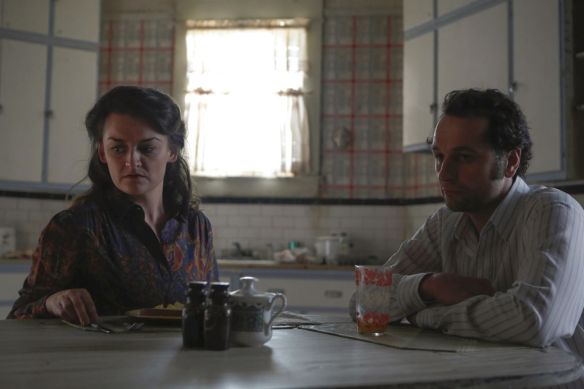
This is the third week in a row that Alison Wright has been the episode’s standout performer, and it’s because just when I think she can’t get better, she does. And just when I think she can’t break my heart any more than it’s already been broken by Martha’s tragic story, she delivers another line with so much naked vulnerability that it feels like a KGB agent just punched me in the gut.

This week, the line that emotionally destroyed me was Martha’s question after Philip said he wasn’t going to Russia with her: “Not even to visit?”

I was floored by how much vulnerability Wright put into those four lines. I’m not sure I’ll ever forget how deeply, profoundly sad that moment made me feel. In an episode that left most of us shocked that Martha kept managing to stay alive, this was the moment when her spirit died, when the last bit of hope left her body. And the way Wright conveyed that was masterful.

Over the last few episodes, Wright has done such a great job of making us feel Martha’s emotions, putting us in her mental and emotional shoes and making us walk a mile in them. And never has that made me more uncomfortable than in the scene in which Martha was walking down the street, her anxiety causing her to (understandably) suspect every man and every car of being sent to retrieve her. Wright is brilliant at making Martha’s panic feel believable and not overdramatic, and that makes her a character we’ve come to empathize with and not just pity.

And even though we don’t just pity Martha, that doesn’t mean there aren’t moments when our hearts break for her. And one of those moments in this episode was her phone call to her parents. Once again, Wright’s ability to make Martha feel so achingly human in a world where people seem to have a superhuman hold on their emotions made her stand out. I barely held it together myself watching her smile through her tears when her father came on the line.

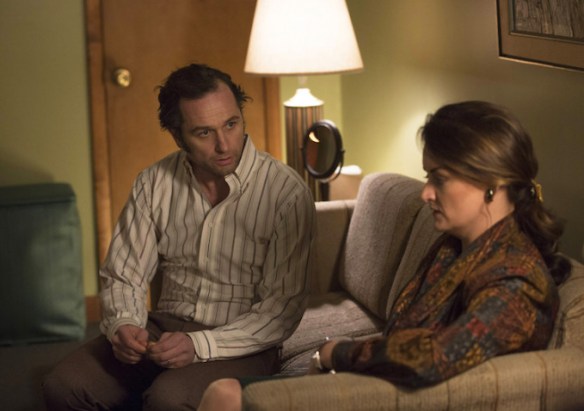
Later, my ability to hold it together was completely destroyed when Philip told Martha what was going to happen to her. The transformation that took place in her during that scene was an awful but impressive thing to behold. Wright took Martha from a place of incredible sadness to total emptiness by the time she told Philip that she’d be alone again—just like she was before she met him. Her cold acceptance of loneliness spoke to a life in which that was far too common for her. Martha might still be alive, but everything inside of her died the moment Philip told her she’d be going to Russia alone because he shattered the one last truth she was clinging to: that he loved her the way she loved him. And the way Wright made that so palpable will continue to haunt me long after this season ends.

Continue reading

TV Time: The Americans 4.06

the americans 406

Source: vox.com

Title: The Rat

Episode M.V.P.: Alison Wright
This is the second week in a row that Alison Wright shone the brightest among the many acting superstars in this talented cast. And what I loved most about her performance in “The Rat” was the way it grew naturally and realistically out of her performance in last week’s “Clark’s Place.” That episode showed Martha’s spirit beginning to die and resignation beginning to set in, and this episode showed that downward spiral continuing. Some of the most heartbreaking and chilling moments in “The Rat” were moments where the camera focused on Wright’s face when she was alone in a room and we were able to see the emptiness in her eyes. Martha may not be dead yet, but Wright’s performance continues to show us that she is a dead woman walking in more ways than one. It’s not easy to convey the death of someone’s entire reality without making it melodramatic, but Wright has made every step on this sad journey—including those horribly tense steps away from Gabriel and toward her own doom—feel grounded in a brutal kind of reality. Martha isn’t just a character we pity; she’s a character we empathize with, and that’s an important difference. Because most of us have—at some point—opened our hearts to someone and trusted them, only to find out they’re not exactly as advertised. It just so happens that Martha’s version of this story is a lot worse than most of ours.

Wright—like most of her fellow actors on this show—has a true talent for reacting. One of the most painful single shots of this episode was her reaction to Philip’s admission that he works for the KGB. Without any words, Wright made me feel sick to my stomach for her character. Through the slight sinking of her posture, Wright showed the brutal force of Philip’s confession while still leaving enough ambiguity in her performance to hint that Martha probably knew in her gut that this was a possibility. But Philip confirming it destroyed any last ability she had left to remain in denial about who she’d been helping, and the weight of that makes her physically shrink, as if she’d lost another part of herself.

Following that stunning moment, Wright showed Martha’s desperation to remain in denial about one final thing: her husband’s love for her. I don’t think I’ve ever seen a sadder sex scene on television. It was hard to watch, and the reason I felt so uncomfortable during it was because of how completely broken Martha was and how vulnerable Wright’s performance was in showing Martha’s desperate desire to cling to this final lie. And once that final lie seemed to be over—once Martha woke up and Philip was gone—it was easy to believe this woman would snap. The way Wright’s performance over episodes and whole seasons  built to that confrontation with Gabriel was nothing short of brilliant. For the first time, Martha chose herself, but in choosing to walk away, she most likely signed her own death certificate. It feels now like we’re living on borrowed time when it comes to appreciating Wright’s talent, and I plan to use all the time we have left to scream from the rooftops (or at least whisper-shout in the middle of the street) about how good she is.

Continue reading

TV Time: The Americans 4.05

Title: Clark’s Place

Episode M.V.P.: Alison Wright
A common refrain in Storytelling 101 is “Show, don’t tell.” But sometimes a moment of telling can be even more moving and engaging than a moment of showing. You just have to find the right storyteller. And The Americans has found that with Alison Wright. So many of Wright’s scenes—especially since about midway through last season—have involved Martha telling “Clark” about how she feels. But what’s important to remember is that these scenes exist because Martha often can’t show her husband how she feels, because he’s not there. So she has to make him—or at least try to make him—understand her anxiety, her loneliness, and her frustration in those moments when he’s gone in whatever way she can. And in making him understand, she makes us understand, too.

That’s the surprising beauty of Wright’s performance: She manages to show and tell at the same time. For example, in the first scene of “Clark’s Place,” she doesn’t just tell “Clark” (and the audience) about her panic attack, she brings it to life in a way that’s more gripping than a flashback to her having that panic attack in the last episode. Because not only do we feel her panic at the mere memory of thinking she was having a heart attack and was going to die alone, we feel the myriad of other emotions she feels in the present, too. We feel her shame at being prescribed Valium to deal with her anxiety. We feel her frustration with herself for letting her life get so out of control and with her husband for turning her life upside-down. And we feel her increasing sense of loss—the loss of the fantasy that was her marriage, the loss of any kind of a normal life, and the loss of her sense of self. Because when Wright delivers those lines about her dinner with Aderholt and the panic attack afterward, it’s not really about the lines she’s saying; it’s about the weight of the suffocating emotions she puts into every word.

The thing that impressed me the most about Wright in this episode was the way she’s changed Martha’s reactions over time. Yes, her tears while telling her husband about her panic attack broke my heart, but what really stood out to me was her growing understanding and heartbreaking acceptance of the fact that she might be married, but she’s really alone. She’s not desperate anymore; she’s resigned. Even when things started to fall apart last season, I felt as if she still believed she and “Clark” were a team. Now, however, it’s killing me to watch her sink deeper and deeper into a sense of resigned loneliness with no one to help pull her out of it.

Martha knows she’s trapped, and watching that sense of resignation make its way into Wright’s line readings (“Why would I expect to keep anything?”) made me want to cry. This episode was like watching a character’s spirit and soul die before they actually die, which might be even more tragic than watching Nina get shot in the back of the head last week. And so much of that pathos comes from Wright’s performance.

Continue reading