The Best Thing I Saw on TV This Week (3/27-4/3)

This week in television started off strong on Sunday with a powerful examination of Killian’s character on Once Upon a Time. On Monday, Jane the Virgin gave me plenty of reasons to reach for my tissues (especially with the new storyline its opening up for Petra), and early frontrunners are starting to separate from the pack on Dancing with the Stars. Tuesday’s episode of The Flash was a time-traveling adventure, and Brooklyn Nine-Nine borrowed just the right amount from Parks and Recreation‘s excellent “Two Parties” episode. Also on Tuesday, tensions continued to rise in The People v. O.J. Simpson‘s penultimate episode. Finally, Wednesday’s episode of The Americans ensured that I’ll never be able to go to EPCOT again without thinking of Pastor Tim, Glanders, and Elizabeth’s dreams of Odessa.

There were some incredibly powerful statements made on television this week—from Killian finally saying he deserves to be saved on Once Upon a Time to Philip telling Elizabeth that he wants to run on The Americans. However, nothing could top the dramatic force of the breathtaking moments in The People v. O.J. Simpson in which both Christopher Darden and Marcia Clark are threatened with being held in contempt of court.

That explosive scene was the perfect example of how to make rising tension pay off. Darden’s outburst felt cathartic after weeks of mounting pressure and increasing failures for the prosecution. Sterling K. Brown might not have the profile or fame of the other actors on this show, but he is every bit their equal in terms of the power of his performance.

And that explosive reaction from Darden was followed up by one of my favorite moments so far on what I believe is one of the best shows on television right now: when Marcia Clark’s own frustrations boiled over, putting her in jeopardy of also being held in contempt, to which she replied (with pitch-perfect delivery by Sarah Paulson): “Shall I take off my watch and jewelry?” Because I don’t remember much about the trial, I had no idea this moment was coming, so when it did, I was blown away—not just by the moment itself but by the performances that made it resonate and the direction that made it almost unbearably tense. While so much of this scene’s brilliance came through in strong line readings, there was also so much being said in silence. Brown and Paulson are so good in their characters’ unspoken moments of connection and partnership, and this was another scene that showed that aspect of their palpable chemistry off to its fullest extent.

The People v. O.J. Simpson ends this week, and, while I know how the story ends, I’m still waiting with bated breath to see what these actors do with it. That’s when you know a show is great and a cast is masterful.

What was the best thing you saw on TV this week?
TV Time: The Americans 4.03

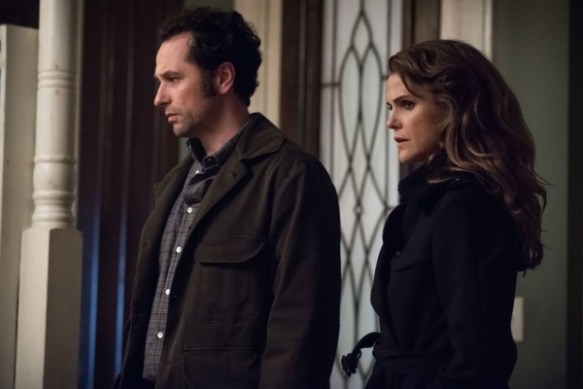
the americans 403

Source: mstarsnews.musictimes.com

Title: Experimental Prototype City of Tomorrow

Episode M.V.P.: Keri Russell
“Experimental Prototype City of Tomorrow” made me think a lot about the pilot of The Americans and how things have changed for its characters since that first episode. And no character has changed more since her first appearance than Elizabeth Jennings. When we first met her, she was a woman who put her mission above everything else, and Keri Russell was so good at showing Elizabeth as steel personified—protecting herself from the inside out. But time changes people, and so does love. Elizabeth isn’t who she was when we first met her, but she’s not unrecognizable like she could have been if a lesser actor had been tasked with her transformation. Instead, Russell has showed us—in this episode perhaps better than any other—that the change in Elizabeth has come from letting herself have emotions and reactions that she would have previously compartmentalized to focus on the best way to serve her cause. They’ve always been a part of her, but she’s showing them now, and it’s added a wonderful layer of depth to Russell’s already nuanced performance.

Elizabeth has previously used her missions as ways to let hidden parts of her see the light (like when she opened up to her mark in Season Two about being raped), but this episode was the first time we saw her genuinely have fun while on a mission. And it wasn’t Patty the potential Mary Kay salesperson having fun. It was Elizabeth having fun. It was Elizabeth bonding with Young Hee (who I already love) and forming what felt like a sincere connection and not just a front for whatever Elizabeth’s endgame is. Russell did a masterful job of making me wonder how much of that dynamic is forced and how much is the beginning of a real friendship between two women who connect with each other as immigrants (even if Elizabeth can’t tell Young Hee she’s also an immigrant)? My gut reaction is that Young Hee has the potential to be Elizabeth’s Martha—there was something about the instant kinship Russell projected in the scenes between them that has me thinking it won’t be easy for Elizabeth to do something terrible to this woman for her job.

I loved seeing the sincerity in some of Elizabeth’s interactions with Young Hee contrasted with her interactions with Pastor Tim. Russell was brilliant in that confrontation, allowing us to feel how hard it was for Elizabeth to interact with him. It was uncomfortable, and it was supposed to be. And so much of that pitch-perfect uneasiness came from Russell’s fake smile and forced tone of voice. It takes a great actor to show someone struggling to give a good performance, and luckily, Russell is truly one of the greatest actors on television right now.

As the episode went on and Elizabeth wrestled with the lose-lose situation she and Philip were in, I found myself more and more captivated by Russell’s silent reactions to everything happening around her. Where there once would have been firm conviction in her eyes, there was sadness. Where she once would have pushed Philip away, she reached for his hand. In this episode, Elizabeth showed her feelings as she felt them—her uncertainty, her love, and her fear. They still may not be worn on her sleeve, but they’re visible if you know where to look (her facial expressions, her tone of voice, her body language). And that’s what makes them all the more affecting.

Continue reading

Fangirl Thursday: The Best Seat in the House

When you love television as much as I do, where you watch matters almost as much as what you’re watching. Everyone has their favorite place to watch their favorite shows. It can be an oversized chair in a room where friends and family gather to watch things together or a darkened bedroom where you escape with your laptop and Netflix.

Sometimes it’s a cozy couch with room for the people you love to share the shows you love. My couch has quite the reputation as a great TV-watching couch. It was where I cried when Castle walked away from Beckett to end Castle’s second season. It was where I spent a glorious few days hosting mini marathons of Parks and Recreation episodes when Heather came to Buffalo a couple of years ago. And it’s where I watch every episode of Once Upon a Time with my sister and my mom on Sunday nights.

My couch is an ideal place to watch television—it’s huge and comfortable and right in front of a big HD screen. However, it’s not my favorite place to watch television. That honor belongs to a corner of my kitchen where a small television stands next to a coffee pot and a bowl of fresh fruit.

Continue reading

TV Time: Once Upon a Time 5.15

COLIN O'DONOGHUE, JENNIFER MORRISON

Source: ABC/Eike Schroter

Title The Brothers Jones

Two-Sentence Summary When Killian reunites with his brother Liam in the Underworld, he discovers the truth about how they came to survive a shipwreck and join the navy in the past. Meanwhile, Henry’s quest to find the Author’s pen proves to be a potential key to defeating Hades.

Favorite Line “You can come home. You just have to forgive yourself. The thing is, no matter how many times I tell you—or anybody else does—you have to do it yourself.” (Emma, to Killian)

My Thoughts Heroes inspire others. Stories of their brave, selfless deeds are meant to fill us with a desire to follow in their footsteps. However, sometimes those stories hurt more than they help. When all we know about a person is their best—their highlights—then it can sometimes feel depressing rather than inspiring to hear their stories, because we know both our best and our worst—our errors as well as our highlights. If we never see someone struggle, then we sometimes come to believe that our normal, human struggles shouldn’t happen and that we should beat ourselves up over not being perfect—when, in truth, no one is.

That’s why the most inspiring stories are those of people who overcame struggles, who fought to be the best version of themselves. The stories we most often need are not stories of heroes who are never shown to do anything wrong but of people who make mistakes, have flaws, and are honest about every stumble and failure they have along the way as they grow.

Once Upon a Time is telling stories of those kinds of heroes. Even its characters who’ve seemed like paragons of good choices have made mistakes. None of them are perfect, and that’s what makes them interesting and inspiring. And that’s a lesson multiple characters learned in “The Brothers Jones”: Being a hero isn’t about being perfect; it’s about doing the best you can and being honest about those times when you struggle with doing the best you can. That’s how you inspire hope in others—by helping them see that everyone has flaws and makes mistakes, so they’re not beyond hope if they’re imperfect.

“The Brothers Jones” was a thematically rich episode of Once Upon a Time. Its most obvious theme was that of forgiving yourself, but there was another theme that came up in nearly every storyline this week that tied directly into the idea of forgiving yourself—and that was the danger of comparison. The only way to forgive yourself for being imperfect and for making mistakes is to stop comparing yourself to others, because we don’t often know anyone’s true story but our own.

Continue reading

TV Time: The Americans 4.02

Title: Pastor Tim

Episode M.V.P: Matthew Rhys and Keri Russell
While I liked last week’s season premiere, it didn’t grab me emotionally the same way “Pastor Tim” did, and I know exactly why: I’m always more interested in Philip and Elizabeth’s partnership than I am in their separate endeavors. Their marriage is what got me invested in this show in the first place, so I’m partial to episodes in which they spend the majority of the hour together—or at least working through parallel storylines. And so much of the reason I love those episodes is because they revolve around the best scene partners on television: Matthew Rhys and Keri Russell.

“Pastor Tim” was an episode that took Philip another step closer to his breaking point, and Rhys is doing such masterful work as his character gets pushed to the edge. You can feel the exhaustion in his body language, and you can hear the uncertainty and anxiety in the long pauses as he searches for the right words when he speaks. Philip is a man coming apart at the seams, and Rhys makes you believe that any moment could be the moment he breaks beyond repair. But what this episode showed is that Philip isn’t the only one struggling. Elizabeth is starting to question things, too—things she’d never questioned before. The tension in her posture when she met with Gabriel was pointed; in just the set of her shoulders and the steely look in her eyes she showed that Philip isn’t the only one doubting the Center now. Russell’s ballet training made her an actor who can effortlessly make the emotional something physical, and she used that ability brilliantly in the scene in which Paige hugged Elizabeth. The conflict in her between the loving mother and the agent who’d been betrayed was evident in every moment without her needing to say anything or project anything too obviously.

Russell and Rhys are the kind of actors who are so good at playing everything small that when they do have big moments, they matter. When Elizabeth lost her composure with Paige after she confessed, it reminded me of the moment when Philip yelled at Paige in Season Two’s “Martial Eagle.” We get so used to these characters speaking in controlled tones that when they yell, they make it count. They show the cracks in their steely façade in those moments, and this scene was especially powerful because Elizabeth hardly ever shows that kind of uncontrolled emotion. But that’s how high the stakes are right now—and how much stress she’s under.

Russell and Rhys are also the kind of actors that are great individually but even better together. In this episode, their interactions ranged from all-too-realistic fights to gorgeously tentative moments of vulnerability. They project such honest sincerity in their scenes together, and I love that it comes through in the smallest gestures: a shaky inhale before sharing a truth, turning toward the other in bed, or physically reaching out to the other when they can tell their partner is falling apart. It’s those small gestures that make this marriage feel real, and it’s all because of the two actors who’ve been tasked with bringing it to life.

Continue reading

TV Time: Once Upon a Time 5.14

Title Devil’s Due

Two-Sentence Summary In order to save Killian, Emma and Rumplestiltskin—who’s eager to get home to Belle for mysterious reasons—seek Milah’s help. Flashbacks to Rumplestiltskin and Milah’s past reveal more about their broken marriage and the deal he once made that threatens his future in the present.

Favorite Lines
Killian: You’re impossible.
Emma: And you love me for it.

My Thoughts
“I still see hope in your eyes.”

When Hades finally explained that this—the hope Killian still has—was the reason for his torture, it made perfect sense. If there’s one thing Once Upon a Time has always preached, it’s that heroes hold on to hope even when things seem hopeless and work to spread hope to those who need it, while villains often feel hopeless themselves and want others to feel that way, too. Hope is the heroes’ greatest weapon and the villains’ greatest enemy, so the villains will do whatever it takes to destroy hope. And that central conflict between those who spread hope and those who try to snuff it out played a major part in “Devil’s Due,” which was ultimately one of the most tragic episodes of Once Upon a Time in recent memory. (Yes, I would argue it was even more tragic than “Swan Song.”)

The tragedy of “Devil’s Due” came from the fact that sometimes hope isn’t enough. Sometimes you can’t escape your past. And sometimes you can’t get closure after you lose a loved one.

Lost souls were an important concept in this episode, and I don’t think there’s a better example of a lost soul than Milah. I’ve always been fascinated by her as a character because she’s seemed so complex, and all this episode did was add even more layers to her character. (Of course it added more layers to a fascinating female character; it was written by Jane Espenson, who literally never lets me down.)

Have I always agreed with Milah’s decisions? No. Have I always liked how she spoke to her husband after he came back from the Ogre Wars? No. Would I have done some things differently than she did? I’d like to think so. But that’s what makes her such a well-written character. I may not believe I would have done things the way she did them, but I completely understand her actions and the thoughts and feelings behind them. And who knows? If I was in her situation, maybe I would have handled things the same way. That’s the beauty of fiction; it asks us to be empathetic toward people who seem different from us. It asks us to walk in their shoes. And now, knowing what we know about Rumplestiltskin’s deal and Milah’s first meeting with Killian, I understand better than ever how she could leave her family to be with a man who gave her a choice when she felt all her choices had been taken from her.

Continue reading

The Best Thing I Saw on TV This Week (3/13 – 3/20)

I apologize for the long hiatus with these posts. Unfortunately, the job that pays the bills took up a lot of my Sundays over the last few months. But now that things have slowed down a little in that regard, I’m back and ready to talk about the high points in the last week of television with all of you! 

This week in television kicked off with a strong episode of Once Upon a Time (pun intended) on Sunday that introduced us to Hercules and reintroduced us to part of a main character’s identity that’s been missing for far too long. Monday gave us the season finale of The Bachelor, which ended with a proposal but wasn’t exactly a fairytale (or maybe I’m just not used to fairytales that involve a guy telling two women he loves them right until he has to make the choice of who to propose to). On Tuesday’s Brooklyn Nine-Nine, Jake helped Terry solve an old case and stand up to detectives in his old precinct, and Tuesday’s The People vs. O.J. Simpson was a case study in how to use dramatic irony to its fullest. (I wanted to scream “Don’t make him try on the glove!”) Wednesday featured a big Nashville wedding event, as Rayna and Deacon finally tied the knot, and the intense and suspenseful season premiere of The Americans. Finally, the start of March Madness provided college basketball fans with plenty of memorable moments, even if most of our brackets blew up in the process.

Those exciting March Madness games remind us every year not to count people out; it’s not over until it’s over. And that same lesson was presented in a surprising way on Once Upon a Time this week. I’ll admit it: I never expected Snow to find her spark again. I thought she would always be Mary Margaret, and it made me so sad that I tried not to focus on it too much—because it was hard to think about what had happened to my favorite character over the last few seasons of the show. So imagine my delight when Snow not only reclaimed her fighting spirit and her leadership abilities; she reclaimed the name I feared was lost forever. She became a woman of action again, an active participant in her own story instead of a passive supporting character in the stories of those around her. Seeing Snow choose who she wanted to be and how she wanted others to see her was inspirational. And the reactions of those who love her were perfect—from Regina’s “It’s about time!” and Emma’s proud smile to the swoon-worthy sincerity in Charming’s voice when he called his wife by her real name. It finally felt like my favorite character was back, and that moment gave me so much hope—hope that it’s never too late to remember your best self and to connect with that best self again. And when you do decide who you want to be, those you love will be there to support and encourage you.

What was the best thing you saw on TV this week?

TV Time: The Americans 4.01

the americans 401

Source: blogs.wsj.com

Welcome back (or welcome to any newcomers!) to our weekly discussions of The Americans here at NGN! I can’t wait to write about another season of this incredible show and to discuss it with all of you. After you finish reading, remember to share your thoughts with us in the comments!

Title: Glanders

Episode M.V.P.: Alison Wright
“Glanders” was an episode that arranged the chessboard for the season to come, but in the middle of all the plot setup, there were still moments of startling emotion. I didn’t expect to cry during this season premiere. But two little words from Martha, delivered multiple times with such devastating grief and panic from Alison Wright, sent my tear ducts into overdrive.

“Oh no…”

While Matthew Rhys and Keri Russell deserve every word of praise sent their way (Rhys, in particular, was outstanding in this episode—a portrait of a rubber band pulled so tightly that it could snap at any moment.), Wright has become this show’s secret weapon. Martha is one of its most tragic characters, and so much of that comes from how realistic Wright has made her feel. And in the moment Philip revealed to Martha that he killed her coworker to protect her, I felt Martha’s fear and loss so acutely it was almost oppressive. Wright was at the center of a storm of emotions in that scene, and she grounded them all in a sincere vulnerability that was best reflected in that broken refrain of “Oh no…”

In that scene, I also felt Martha’s guilt, as she asked “What have I done?” with such heartbreaking horror. “Glanders” spent a lot of time dealing with characters wondering what their choices say about who they really are. Many of its main players were wracked with guilt, but perhaps none more than Martha in that moment. However, the most heartbreaking part of “Glanders” wasn’t Martha wondering what she’d done; it was Martha making the choice to continue doing it—to continue helping Philip despite knowing what he’s done. Wright broke me with her breakdown earlier in the episode, but what’s still haunting me today was her stoic acceptance of her continued role as Philip’s link to the FBI (which I’m sure was connected to the gut-wrenching gratitude she showed him when he opened up to her in such a small way about his past).

For so long, I wondered if Martha was going to have to die, but this—choosing to keep helping Philip even with the knowledge that he killed her coworker—might be worse. It’s like watching someone lose their soul in an effort to keep a relationship that’s not even real, and Wright is making every moment of that tragedy resonate with me on a visceral level.

Favorite Scene: Paige can’t say the Pledge of Allegiance
It’s not easy being a teenage girl and trying to carve out your own identity. It’s even harder when you’re a teenage girl who found out her entire life—and her parents’ lives as she knew them—is a lie. Just as Philip and Elizabeth’s story addresses universal questions about marriage and parenthood, Paige’s story addresses questions we all have as we grow up: Who am I? How am I different from my parents? What do I really care about? And it’s so heartbreakingly clear that Paige doesn’t know the answers to any of those questions anymore, which is such a change from the girl who was so strong in her convictions and her sense of self until she learned the truth about her parents last season.

Continue reading

TV Time: Once Upon a Time 5.13

JONATHAN WHITESELL, GINNIFER GOODWIN

Source: ABC/Eike Schroter

Title Labor of Love

Two-Sentence Summary As flashbacks reveal Snow’s connection to the young demigod Hercules, she works in the present to remind him of what he’s capable of, while also rediscovering what she’s capable of. The two heroes team up with Meg to bring down Cerberus, while Henry runs into an old foe with a new plan and Hades continues to find new ways to torture Killian.

Favorite Line “I’m saying I don’t want to be Mary Margaret anymore. I want to be Snow White again.” (Snow)

My Thoughts Once Upon a Time has many recurring themes: redemption and forgiveness, hope, love, family…But my favorite theme tackled on this show has always been self-definition. I’ve loved watching the way Emma’s line from Season One about punching back and saying, “No, this is who I am,” has been reflected in the journeys of so many of this show’s characters—from Emma herself to Regina and Killian.

“Labor of Love” put that theme in the spotlight once again, and it did so using a common motif for this show: the reclamation of a name. Names matter on Once Upon a Time. And in an episode that started with Killian using his given name first and his more common—but more villainous—name second, names mattered perhaps more than ever.

For so long, I’ve been decrying the use of “Mary Margaret” instead of “Snow White,” and it seems those who sit on the Once Upon a Time version of Mt. Olympus finally heard my pleas to bring back the name—and the identity—of my favorite character, the one who made me fall in love with this show and the one I relate to the most. I might be biased because of how much that name change meant to me, but I thought this was one of the strongest episodes in recent memory. It took one of the show’s most important themes and carried it through stories in the past and present that shed new light on a character who’d been stuck in the shadows for far too long.

Continue reading

Guest Post: Join the Clone Club!

One month from tomorrow (April 14) Orphan Black returns with its Season Four premiere. To celebrate, please welcome our newest NGN Contributing Writer Meera, who’s written a little something about why this show means so much to her.

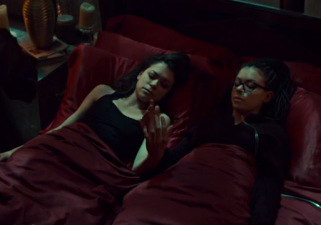
orphan-black-season-2-finale

Every so often we come across a book, film, or TV show that leaves us in awe. One such TV show for me is Orphan Black, the Canadian TV show based on human cloning. It kicks off with protagonist Sarah Manning witnessing the suicide of a girl who looks just like her (Beth Childs). Sarah steals Beth’s wallet with the hope of taking up Beth’s identity to fix her messy life. This is where the mystery unfolds and chaos ensues. Sarah learns she is a clone, she meets her clone sisters (Cosima Niehaus, Alison Hendrix, and Helena), and a series of adventures unfold—which I am not going to get into because I’d rather you watch the show yourself. I am, however, going to get into why this show is so special to me and why it is so important for today’s day and age.

First, the show’s representation of women is, above all, realistic. The show has many female characters—from the clone sisters to scientists to mothers. The women are not just stereotypical “strong independent women;” they are that and so much more. We get to see the lengths a mother is willing to go to protect her child. We discover irresponsible women who change entirely when it is their child in danger. We’re introduced to women who get anxious and turn to alcohol and pills, and eventually go through rehab. We meet smart women who are excited by the tiniest scientific discoveries. We see women who love food, women who smoke pot, women who have been broken, and women who have been abandoned and are dealing with the repercussions of that. We watch women fall in love, fall out of love, and even crave love. We see women with heels, with dresses, and with sneakers and leather jackets. We see women in control, we see them being controlled, we see them take control, and we see them lose control. We uncover the vulnerabilities, the sacrifice, and all the other facets of these female characters that are present in women of all ages, and that is just beautiful.

Continue reading