TV Time: The Americans 4.04

The Americans 404

Source: youtube.com

Greetings, comrades! I decided to slightly change the format for this week’s post in order to start by talking about the first thing on everyone’s mind. I couldn’t possibly call that scene my favorite, so I needed to add a separate section to talk about it the way I wanted to. With all that being said, you will see MAJOR SPOILERS FOR THIS EPISODE…shortly.

Title: Chloramphenicol

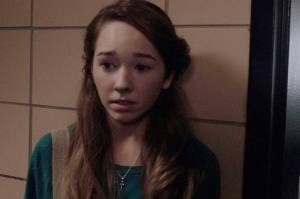
Most Important Scene: Nina’s death
There’s been a trend over the last few years of trying to shock viewers into thinking they’re watching good television. However, shock value doesn’t always equal strong storytelling. I think so many shows have been killing off and teasing about killing off major characters at this point that it’s easy to become desensitized to death on television. After a while, it all starts to feel like a big, gratuitous pile of bodies offered up at the altar of televised drama.

But Nina Sergeevna Krilova isn’t just another character to add to that pile. Her death was shocking in some ways and completely inevitable in others. But the important thing to remember is that it mattered. It mattered for her character, and it mattered for the show.

As Nina’s story became more isolated following her imprisonment in Russia, it became clear that one of two things had to happen: Nina would somehow make it back to America, or Nina was going to die. I should have seen her death coming—between the symbolism of her dream that looked like it was taking place in a funeral parlor with all the flowers and the sheer fact that getting Nina back to America would take a kind of suspension of disbelief that this show never calls for. There was no other way for Nina’s story to end, but that didn’t stop me from hoping—especially in this episode—that she would be spared. It didn’t help my sense of irrational hope that this episode focused on Oleg’s quest to free her, and I always connected more with his relationship with Nina than her relationship with Stan. I thought if anyone could get her out, Oleg might have a chance.

And I kept hoping until the last possible moment. I knew Nina’s dream was just a dream from its gorgeous lighting, but it still messed with my mind—because my thought as Nina was being sentenced was that she was going to wake up, and this would be the nightmare to contrast her good dream. However, the team behind this episode left no cheeky tease about her possibly surviving. There was no cliffhanger with whether or not she actually died. We saw the blood pool around her head. We saw the man check her pulse. We saw the guards wrap her lifeless body in burlap. Nina is dead, and I’m glad they left us with no doubts about that. The drama comes not from wondering if she’s really dead but from what her death will mean for the show and its characters going forward.

Continue reading

TV Time: Once Upon a Time 5.16

Title Our Decay

Two-Sentence Summary When Hades gets Rumplestiltskin to open a portal between Storybrooke and the Underworld, Zelena, her daughter, and Belle are all brought to the realm of the dead, leading to revelations for both Rumplestiltskin and Belle and Hades and Zelena. The latter pair of characters is the focus of the flashbacks, which reveal Hades own plan for vengeance against a sibling and the love that made him reconsider his plans.

Favorite Lines
Zelena: Who the hell are you?
Hades: Who the hell am I? That question is more appropriate than you think.

My Thoughts Well that episode was just full of surprises, wasn’t it?

At a time when spoilers are readily available and episodes seem to be discussed and analyzed in intricate detail long before they actually air, it’s nice to still be surprised sometimes. And it’s nice to know that after five seasons, Once Upon a Time can still surprise me—not just by the twists and turns of its plot but by the unexpected emotional reactions I end up having.

“Our Decay” was a surprising episode on all fronts. But it wasn’t an out-of-character episode for this show. In fact, its surprises came from the way it took many of the show’s most important themes—self-definition, choice, love vs. power, family (specifically motherhood), and hope—and reflected them through new lenses.

Each storyline in this episode was connected through the theme of selfless love. True Love isn’t selfish. It’s the recognition that sometimes you have to sacrifice what you want for what the person you love needs; it’s the belief that the person you love always deserves their best chance, even if that’s not with you and even if you have to go to great lengths to secure that best chance. And that’s never more evident on this show than it is in the relationships between parents and children.

One of the biggest surprises of this episode was the way it made us truly care about Zelena as a mother. Before “Our Decay,” I never really believed that she actually cared about her baby beyond her daughter’s potential to love her (which was a selfish way of looking at parenthood rather than a selfless way of viewing it, though it made sense considering her history of abandonment and her deep-rooted mommy issues). And even at times in this episode, I found myself rooting against her and hoping Regina and Robin would get the baby away from her. However, through an amazing performance by Rebecca Mader and smart writing that paralleled some of this show’s most poignant scenes, it became clear to me that Zelena does truly love her daughter.

Continue reading

Scandal 5.16: “The Miseducation of Susan Ross”

Let’s all welcome back Laura, who’s returned to NGN to offer her take on Scandal as the show heads into the home stretch!

Hi folks! Sorry for the long hiatus from these Scandal posts; I’ve been dealing with some health issues. But I’m back now, and boy do I have a lot to say about where this show has been going in the second half of the season!

White hats came and went and came back again in this episode of Scandal. For a while, I thought my headline for this post would be “Olivia’s White Hat Gone for Good.” I’m thrilled the episode proved me wrong, although it did it in a way that took some of the choice out of Olivia’s hands. She fully intended to expose Susan’s secret and go ahead with her baby daddy’s interview until the moment she learned he’d hanged himself in prison. It wouldn’t be as much of a story without Ronny there to back up the paternity claims, which, in some ways, made it a lot easier for Olivia to put the white hat back on. Still, she deserves some credit; she plans to keep that hat on moving forward so she can end the campaign “with dignity.”

When Fitz and Huck are on the same side and have the moral high ground, telling you that you’re crossing a line, you know it’s time to rethink your actions. Olivia crossing that line did cause Ronny’s suicide—a fact that gets glossed over in her final conversation and drink with Fitz. She didn’t put the white hat back on in time to prevent that tragedy. Hopefully that fact will stick with her.

Speaking of Fitz, he seems to have undergone a profound transformation. I’ve always been a vocal supporter of Team Jake, but now that Jake’s working with Papa Pope, he’s starting to bring out the worst in Olivia instead of the best like before. And Fitz, who I originally thought brought out all of Olivia’s least desirable traits (not to mention I hated how he controlled her), is now pushing her to be a better person. Not sure I’m entirely ready to give up on Jake and join the Olitz fans, but that may change if this trend continues.

Continue reading

TV Time: The Americans 4.03

the americans 403

Source: mstarsnews.musictimes.com

Title: Experimental Prototype City of Tomorrow

Episode M.V.P.: Keri Russell
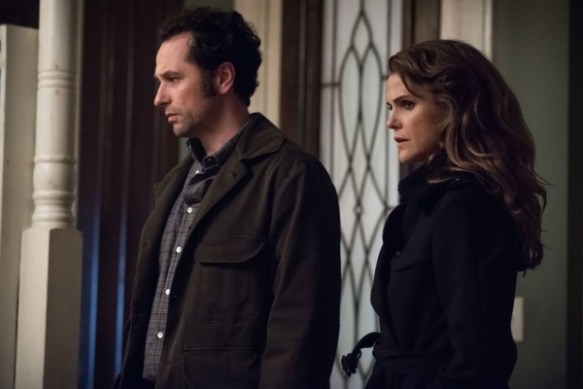
“Experimental Prototype City of Tomorrow” made me think a lot about the pilot of The Americans and how things have changed for its characters since that first episode. And no character has changed more since her first appearance than Elizabeth Jennings. When we first met her, she was a woman who put her mission above everything else, and Keri Russell was so good at showing Elizabeth as steel personified—protecting herself from the inside out. But time changes people, and so does love. Elizabeth isn’t who she was when we first met her, but she’s not unrecognizable like she could have been if a lesser actor had been tasked with her transformation. Instead, Russell has showed us—in this episode perhaps better than any other—that the change in Elizabeth has come from letting herself have emotions and reactions that she would have previously compartmentalized to focus on the best way to serve her cause. They’ve always been a part of her, but she’s showing them now, and it’s added a wonderful layer of depth to Russell’s already nuanced performance.

Elizabeth has previously used her missions as ways to let hidden parts of her see the light (like when she opened up to her mark in Season Two about being raped), but this episode was the first time we saw her genuinely have fun while on a mission. And it wasn’t Patty the potential Mary Kay salesperson having fun. It was Elizabeth having fun. It was Elizabeth bonding with Young Hee (who I already love) and forming what felt like a sincere connection and not just a front for whatever Elizabeth’s endgame is. Russell did a masterful job of making me wonder how much of that dynamic is forced and how much is the beginning of a real friendship between two women who connect with each other as immigrants (even if Elizabeth can’t tell Young Hee she’s also an immigrant)? My gut reaction is that Young Hee has the potential to be Elizabeth’s Martha—there was something about the instant kinship Russell projected in the scenes between them that has me thinking it won’t be easy for Elizabeth to do something terrible to this woman for her job.

I loved seeing the sincerity in some of Elizabeth’s interactions with Young Hee contrasted with her interactions with Pastor Tim. Russell was brilliant in that confrontation, allowing us to feel how hard it was for Elizabeth to interact with him. It was uncomfortable, and it was supposed to be. And so much of that pitch-perfect uneasiness came from Russell’s fake smile and forced tone of voice. It takes a great actor to show someone struggling to give a good performance, and luckily, Russell is truly one of the greatest actors on television right now.

As the episode went on and Elizabeth wrestled with the lose-lose situation she and Philip were in, I found myself more and more captivated by Russell’s silent reactions to everything happening around her. Where there once would have been firm conviction in her eyes, there was sadness. Where she once would have pushed Philip away, she reached for his hand. In this episode, Elizabeth showed her feelings as she felt them—her uncertainty, her love, and her fear. They still may not be worn on her sleeve, but they’re visible if you know where to look (her facial expressions, her tone of voice, her body language). And that’s what makes them all the more affecting.

Continue reading

TV Time: Once Upon a Time 5.15

COLIN O'DONOGHUE, JENNIFER MORRISON

Source: ABC/Eike Schroter

Title The Brothers Jones

Two-Sentence Summary When Killian reunites with his brother Liam in the Underworld, he discovers the truth about how they came to survive a shipwreck and join the navy in the past. Meanwhile, Henry’s quest to find the Author’s pen proves to be a potential key to defeating Hades.

Favorite Line “You can come home. You just have to forgive yourself. The thing is, no matter how many times I tell you—or anybody else does—you have to do it yourself.” (Emma, to Killian)

My Thoughts Heroes inspire others. Stories of their brave, selfless deeds are meant to fill us with a desire to follow in their footsteps. However, sometimes those stories hurt more than they help. When all we know about a person is their best—their highlights—then it can sometimes feel depressing rather than inspiring to hear their stories, because we know both our best and our worst—our errors as well as our highlights. If we never see someone struggle, then we sometimes come to believe that our normal, human struggles shouldn’t happen and that we should beat ourselves up over not being perfect—when, in truth, no one is.

That’s why the most inspiring stories are those of people who overcame struggles, who fought to be the best version of themselves. The stories we most often need are not stories of heroes who are never shown to do anything wrong but of people who make mistakes, have flaws, and are honest about every stumble and failure they have along the way as they grow.

Once Upon a Time is telling stories of those kinds of heroes. Even its characters who’ve seemed like paragons of good choices have made mistakes. None of them are perfect, and that’s what makes them interesting and inspiring. And that’s a lesson multiple characters learned in “The Brothers Jones”: Being a hero isn’t about being perfect; it’s about doing the best you can and being honest about those times when you struggle with doing the best you can. That’s how you inspire hope in others—by helping them see that everyone has flaws and makes mistakes, so they’re not beyond hope if they’re imperfect.

“The Brothers Jones” was a thematically rich episode of Once Upon a Time. Its most obvious theme was that of forgiving yourself, but there was another theme that came up in nearly every storyline this week that tied directly into the idea of forgiving yourself—and that was the danger of comparison. The only way to forgive yourself for being imperfect and for making mistakes is to stop comparing yourself to others, because we don’t often know anyone’s true story but our own.

Continue reading

TV Time: The Americans 4.02

Title: Pastor Tim

Episode M.V.P: Matthew Rhys and Keri Russell
While I liked last week’s season premiere, it didn’t grab me emotionally the same way “Pastor Tim” did, and I know exactly why: I’m always more interested in Philip and Elizabeth’s partnership than I am in their separate endeavors. Their marriage is what got me invested in this show in the first place, so I’m partial to episodes in which they spend the majority of the hour together—or at least working through parallel storylines. And so much of the reason I love those episodes is because they revolve around the best scene partners on television: Matthew Rhys and Keri Russell.

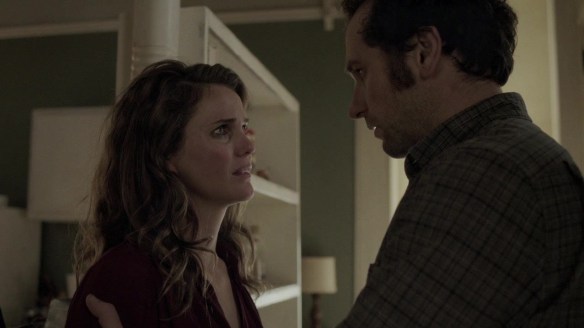
“Pastor Tim” was an episode that took Philip another step closer to his breaking point, and Rhys is doing such masterful work as his character gets pushed to the edge. You can feel the exhaustion in his body language, and you can hear the uncertainty and anxiety in the long pauses as he searches for the right words when he speaks. Philip is a man coming apart at the seams, and Rhys makes you believe that any moment could be the moment he breaks beyond repair. But what this episode showed is that Philip isn’t the only one struggling. Elizabeth is starting to question things, too—things she’d never questioned before. The tension in her posture when she met with Gabriel was pointed; in just the set of her shoulders and the steely look in her eyes she showed that Philip isn’t the only one doubting the Center now. Russell’s ballet training made her an actor who can effortlessly make the emotional something physical, and she used that ability brilliantly in the scene in which Paige hugged Elizabeth. The conflict in her between the loving mother and the agent who’d been betrayed was evident in every moment without her needing to say anything or project anything too obviously.

Russell and Rhys are the kind of actors who are so good at playing everything small that when they do have big moments, they matter. When Elizabeth lost her composure with Paige after she confessed, it reminded me of the moment when Philip yelled at Paige in Season Two’s “Martial Eagle.” We get so used to these characters speaking in controlled tones that when they yell, they make it count. They show the cracks in their steely façade in those moments, and this scene was especially powerful because Elizabeth hardly ever shows that kind of uncontrolled emotion. But that’s how high the stakes are right now—and how much stress she’s under.

Russell and Rhys are also the kind of actors that are great individually but even better together. In this episode, their interactions ranged from all-too-realistic fights to gorgeously tentative moments of vulnerability. They project such honest sincerity in their scenes together, and I love that it comes through in the smallest gestures: a shaky inhale before sharing a truth, turning toward the other in bed, or physically reaching out to the other when they can tell their partner is falling apart. It’s those small gestures that make this marriage feel real, and it’s all because of the two actors who’ve been tasked with bringing it to life.

Continue reading

TV Time: Once Upon a Time 5.14

Title Devil’s Due

Two-Sentence Summary In order to save Killian, Emma and Rumplestiltskin—who’s eager to get home to Belle for mysterious reasons—seek Milah’s help. Flashbacks to Rumplestiltskin and Milah’s past reveal more about their broken marriage and the deal he once made that threatens his future in the present.

Favorite Lines
Killian: You’re impossible.
Emma: And you love me for it.

My Thoughts
“I still see hope in your eyes.”

When Hades finally explained that this—the hope Killian still has—was the reason for his torture, it made perfect sense. If there’s one thing Once Upon a Time has always preached, it’s that heroes hold on to hope even when things seem hopeless and work to spread hope to those who need it, while villains often feel hopeless themselves and want others to feel that way, too. Hope is the heroes’ greatest weapon and the villains’ greatest enemy, so the villains will do whatever it takes to destroy hope. And that central conflict between those who spread hope and those who try to snuff it out played a major part in “Devil’s Due,” which was ultimately one of the most tragic episodes of Once Upon a Time in recent memory. (Yes, I would argue it was even more tragic than “Swan Song.”)

The tragedy of “Devil’s Due” came from the fact that sometimes hope isn’t enough. Sometimes you can’t escape your past. And sometimes you can’t get closure after you lose a loved one.

Lost souls were an important concept in this episode, and I don’t think there’s a better example of a lost soul than Milah. I’ve always been fascinated by her as a character because she’s seemed so complex, and all this episode did was add even more layers to her character. (Of course it added more layers to a fascinating female character; it was written by Jane Espenson, who literally never lets me down.)

Have I always agreed with Milah’s decisions? No. Have I always liked how she spoke to her husband after he came back from the Ogre Wars? No. Would I have done some things differently than she did? I’d like to think so. But that’s what makes her such a well-written character. I may not believe I would have done things the way she did them, but I completely understand her actions and the thoughts and feelings behind them. And who knows? If I was in her situation, maybe I would have handled things the same way. That’s the beauty of fiction; it asks us to be empathetic toward people who seem different from us. It asks us to walk in their shoes. And now, knowing what we know about Rumplestiltskin’s deal and Milah’s first meeting with Killian, I understand better than ever how she could leave her family to be with a man who gave her a choice when she felt all her choices had been taken from her.

Continue reading

TV Time: The Americans 4.01

the americans 401

Source: blogs.wsj.com

Welcome back (or welcome to any newcomers!) to our weekly discussions of The Americans here at NGN! I can’t wait to write about another season of this incredible show and to discuss it with all of you. After you finish reading, remember to share your thoughts with us in the comments!

Title: Glanders

Episode M.V.P.: Alison Wright
“Glanders” was an episode that arranged the chessboard for the season to come, but in the middle of all the plot setup, there were still moments of startling emotion. I didn’t expect to cry during this season premiere. But two little words from Martha, delivered multiple times with such devastating grief and panic from Alison Wright, sent my tear ducts into overdrive.

“Oh no…”

While Matthew Rhys and Keri Russell deserve every word of praise sent their way (Rhys, in particular, was outstanding in this episode—a portrait of a rubber band pulled so tightly that it could snap at any moment.), Wright has become this show’s secret weapon. Martha is one of its most tragic characters, and so much of that comes from how realistic Wright has made her feel. And in the moment Philip revealed to Martha that he killed her coworker to protect her, I felt Martha’s fear and loss so acutely it was almost oppressive. Wright was at the center of a storm of emotions in that scene, and she grounded them all in a sincere vulnerability that was best reflected in that broken refrain of “Oh no…”

In that scene, I also felt Martha’s guilt, as she asked “What have I done?” with such heartbreaking horror. “Glanders” spent a lot of time dealing with characters wondering what their choices say about who they really are. Many of its main players were wracked with guilt, but perhaps none more than Martha in that moment. However, the most heartbreaking part of “Glanders” wasn’t Martha wondering what she’d done; it was Martha making the choice to continue doing it—to continue helping Philip despite knowing what he’s done. Wright broke me with her breakdown earlier in the episode, but what’s still haunting me today was her stoic acceptance of her continued role as Philip’s link to the FBI (which I’m sure was connected to the gut-wrenching gratitude she showed him when he opened up to her in such a small way about his past).

For so long, I wondered if Martha was going to have to die, but this—choosing to keep helping Philip even with the knowledge that he killed her coworker—might be worse. It’s like watching someone lose their soul in an effort to keep a relationship that’s not even real, and Wright is making every moment of that tragedy resonate with me on a visceral level.

Favorite Scene: Paige can’t say the Pledge of Allegiance
It’s not easy being a teenage girl and trying to carve out your own identity. It’s even harder when you’re a teenage girl who found out her entire life—and her parents’ lives as she knew them—is a lie. Just as Philip and Elizabeth’s story addresses universal questions about marriage and parenthood, Paige’s story addresses questions we all have as we grow up: Who am I? How am I different from my parents? What do I really care about? And it’s so heartbreakingly clear that Paige doesn’t know the answers to any of those questions anymore, which is such a change from the girl who was so strong in her convictions and her sense of self until she learned the truth about her parents last season.

Continue reading

TV Time: Once Upon a Time 5.13

JONATHAN WHITESELL, GINNIFER GOODWIN

Source: ABC/Eike Schroter

Title Labor of Love

Two-Sentence Summary As flashbacks reveal Snow’s connection to the young demigod Hercules, she works in the present to remind him of what he’s capable of, while also rediscovering what she’s capable of. The two heroes team up with Meg to bring down Cerberus, while Henry runs into an old foe with a new plan and Hades continues to find new ways to torture Killian.

Favorite Line “I’m saying I don’t want to be Mary Margaret anymore. I want to be Snow White again.” (Snow)

My Thoughts Once Upon a Time has many recurring themes: redemption and forgiveness, hope, love, family…But my favorite theme tackled on this show has always been self-definition. I’ve loved watching the way Emma’s line from Season One about punching back and saying, “No, this is who I am,” has been reflected in the journeys of so many of this show’s characters—from Emma herself to Regina and Killian.

“Labor of Love” put that theme in the spotlight once again, and it did so using a common motif for this show: the reclamation of a name. Names matter on Once Upon a Time. And in an episode that started with Killian using his given name first and his more common—but more villainous—name second, names mattered perhaps more than ever.

For so long, I’ve been decrying the use of “Mary Margaret” instead of “Snow White,” and it seems those who sit on the Once Upon a Time version of Mt. Olympus finally heard my pleas to bring back the name—and the identity—of my favorite character, the one who made me fall in love with this show and the one I relate to the most. I might be biased because of how much that name change meant to me, but I thought this was one of the strongest episodes in recent memory. It took one of the show’s most important themes and carried it through stories in the past and present that shed new light on a character who’d been stuck in the shadows for far too long.

Continue reading

TV Time: Once Upon a Time 5.12

Title Souls of the Departed

Two-Sentence Summary As Regina’s relationship with both of her parents is explored in the past and present, she begins to sew the seeds of hope in the Underworld. That hope will be needed, as the quest to save Hook is revealed to be even more challenging than initially feared.

Favorite Line “If you stay, you spread hope, and that’s the best thing anyone can do.” (Henry Sr., to Regina)

My Thoughts It all started with the tick of a clock…

The pilot of Once Upon a Time ended with a ticking clock and a smiling little boy, a symbol of the possibility that things could begin to change for the better and that hope had arrived in a place long thought to be without it. The 100th episode of Once Upon a Time also featured a ticking clock in its final minutes, serving once again as a symbol of positive change in a previously hopeless world. The difference this time was in the person smiling as the clock began to tick and hope began to spread. In the pilot episode, Regina was the villain keeping everyone in a state of hopeless stasis, but 99 episodes later, she was now the hero smiling at the possibility of restoring hope and happiness in a dark world.

“Souls of the Departed” showed how much Once Upon a Time has grown over the course of 100 episodes while still honoring the hopeful tone that has always been its hallmark. And it did so through the lens of Regina’s character growth. Did we need another flashback to the Regina/Snow war? Of course not. That story’s been told an exhaustive number of times. (Although it was nice to fill in the gaps concerning how Cora came to be in possession of a shrunken version of her husband.) But it served as a nice reminder of how far Snow and Regina’s relationship and Regina’s character in general have come since the days when the story told in those flashbacks was the only story to tell for those characters. And it’s always fun to see Lana Parrilla in full “Evil Queen mode,” complete with those gorgeous costumes.

The flashbacks also set up a very nice parallel between Emma in the Once Upon a Time pilot and Regina in the show’s 100th episode. I don’t think it was a coincidence that the writers chose to set this episode’s flashback on Regina’s birthday, just as the series started on Emma’s birthday. Emma and Regina have always been positioned as two sides of a coin, characters whose journeys reflect each other in fascinating ways. And just like when Emma’s decision to stay in the pilot made the clock move, Regina’s decision to stay in this episode did the same. Both of these women have grown from being loners to being part of a loving family, and their choices to stay and be a part of something instead of running away represent the hope that we can all find it in ourselves to stay and fight for what’s right when it feels easier and safer to leave.

Continue reading