Son of a Nutcracker!: My Favorite Christmas Movies

It’s finally here! The turkey is eaten, the shopping is underway, and the tree is ready to be decorated. It’s Christmastime once again, and I couldn’t be happier. It’s a time when the joy of giving, the peace of a winter’s night, and the beauty found in simple moments with people you love aren’t just cliches. The holiday season is my favorite time of year, and it’s my hope that I can share some of the happiness I feel during this time with all of the people in my life—including all of you that read NGN.

As I get ready for my first viewing of one of my favorite Christmas movies tonight, I want to share with you my list of 10 must-see Christmas films and holiday specials. These aren’t necessarily the best or the most popular, but they’re my personal favorites—the movies I come back to every year when I want to get into the holiday spirit.

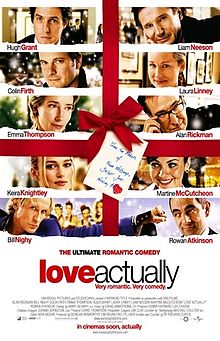
1.) Love Actually: If you don’t like at least some aspect of this multi-storyline romantic comedy, then you should probably check to make sure your heart hasn’t been replaced with stone. Sometimes sweet, sometimes sad, sometimes silly—this is a movie that celebrates the unashamed romanticism of the holiday season with some of the best British actors around. (Hugh Grant’s adorable Prime Minister is a personal favorite of mine.)

Continue reading

Nerdy Girl Goes to the Movies: Breaking Dawn Part 2


Title: The Twilight Saga: Breaking Dawn Part 2

Rating: PG-13

Cast: Kristen Stewart (Bella Swan/Cullen), Robert Pattinson (Edward Cullen), Taylor Lautner (Jacob Black), Mackenzie Foy (Renesmee Cullen), Peter Facinelli (Carlisle Cullen), Elizabeth Reaser (Esme Cullen), Nikki Reed (Rosalie Hale), Kellan Lutz (Emmett Cullen), Jackson Rathbone (Jasper Hale), Ashley Greene (Alice Cullen), Billy Burke (Charlie Swan), Michael Sheen (Aro)

Director: Bill Condon

The Basics: Based on the second half of the fourth and final volume in Stephenie Meyer’s worldwide literary phenomenon, The Twilight Saga: Breaking Dawn Part 2 picks up where Part 1 left off, with Bella awakening to a life as a newborn vampire after the birth of her daughter, Renesmee. This half-human, half-vampire child draws the attention of the dangerous Volturi, who plan to attack the Cullens as punishment for creating what they believe to be a dangerous “immortal child” (aka child vampire). While some aspects of this film are stronger than any of the others in the series (Bella’s character most of all), the failure of the much-hyped “twist” proves that the inherent weaknesses of the source material are too much to overcome, except in the eyes of the most ardent fans, who will be especially drawn to the surprisingly emotional ending.

M.V.P. (Most Valuable Performer): Kristen Stewart has never looked better than she did in this film, and I mean that as both a beautiful young woman and an actress. There’s a strength in her performance that was largely missing from the other four films. It seems that giving Bella a purpose and plot beyond Edward and Jacob also gave Stewart purpose in her performance. The smiles feel more genuine, the passion feels less forced, and the happiness Bella feels in her new life is palpable. The maturity she gives to Bella this time around really surprised me; I especially liked the depth of chemistry between Stewart and Pattinson this time around. There is a warmth between them that feels more interesting than the obsessive, heavy-breathing “passion” that used to pass for their relationship, and a lot of that credit should go to Stewart, who I always saw as the one dragging that onscreen relationship down in previous installments. That warmth extended to her chemistry with Foy as well; I was downright shocked at how good Stewart is at playing a mother. This film was the first and only chance for Bella to show her strength as a character, and Stewart proved herself more than ready for the task.

Scene Stealer: Billy Burke has always been the scene-stealer extraordinaire in this series, and this was no exception. His dry humor, believable warmth, and undercurrent of genuine emotion have made Charlie Swan one of the most memorable and lovable characters in the Twilight movies. All of those wonderful elements are present in his performance once again, and though his time onscreen is short, Burke makes the most of it, creating some of the most humorous and poignant moments in the entire film.

Bring the Tissues? The best way to answer that question is to answer this one: Are you a fan of the series or have you ever been a fan of it (even on just a “guilty pleasure” level)? If the answer is no, then I think you can skip packing the Kleenex. But if the answer is yes, then you’ll definitely find yourself getting at least a little misty-eyed. Even as someone whose relationship with this series has soured over time, I found myself wiping my eyes by the end.

Should I Stay or Should I Go? I honestly don’t know the answer to that question this time around. Our theater was full and the people in our row were in a hurry to leave, so I only stayed until about halfway through the credits. However, you should definitely stay for at least the beginning of the credits to see a very nice (and very comprehensive) tribute to all of the actors who’ve appeared in the films throughout this series.

Most Memorable Scene: I know most people will probably answer this with “the fight scene,” but I have too many conflicting feelings about that sequence to single it out in this review. For me, the scene with the most lasting impact—the one I’m still thinking about hours later—is the ending. As Bella lets Edward read her thoughts for the first time, we see flashbacks to the most pivotal moments in their relationship throughout all five films. The way the series is wrapped up in this final scene between Edward and Bella struck a very moving and nostalgic chord with me. (I’m also a sucker for Christina Perri’s “A Thousand Years,” which was used to beautiful effect in this scene.) Then, the film concludes with a shot of the final page of the novel, which I found a very nice nod to fans that have been with the series since the books were published. I applaud the writers, Condon, Stewart, and Pattinson for creating such a fitting and surprisingly affecting conclusion to the series.

Continue reading

A Distressing Damsel: An Open Letter to Princess Leia

“I was not a damsel in distress. I was a distressing damsel.” – Carrie Fisher, on playing Princess Leia

Dear Princess Leia,

For as long as I can remember, you’ve been a part of my life. I was introduced to you when I was around five or six years old (definitely before I was seven because I have memories of watching A New Hope in the first house I lived in), and it was love at first sight. You had brown hair like I did, you were small like I was, and—most importantly—you were a girl like me. When I played Star Wars with my cousins on the playground near our grandparents’ house, I didn’t have to just watch while they played heroes like Luke and Han. Thanks to you, I got to play a hero, too, every time I pretended to be you (which was often).

You were the first female hero I met through the media, the first in a long line that took me past Sydney Bristow and Hermione Granger on the way to Zoe Washburne, Katniss Everdeen, and Kate Beckett. I may have had many fictional role models along the way as I grew up, but you never forget your first.

I was born at a time when Disney princesses were experiencing a renaissance, when Ariel, Belle, and Jasmine started showing some smarts and spark that were missing from their earlier counterparts. I loved and still love Belle with the fervor of a three-year-old watching her sing about the “great, wide somewhere” for the first time, but pretending to be Belle was never as much fun as pretending to be you.

When I pretended to be you, I got to run and climb and boss people around. I got to play a game with higher stakes than just finding a prince; I got to fight Darth Vader for the freedom of an entire galaxy.

I learned so much from you without even realizing it until much later. I learned about passion, courage, and fighting for what you believe in. I learned that women can be political leaders and military strategists. I learned that smart women are the ones who get to do all of the cool stuff, like leading attacks on the Death Star (and capturing the heart of Han Solo). I learned that there are times when even strong women need rescuing, but then there are times when they get to do the rescuing, too.

I’ve always been a tiny girl with a big mouth, and with the memory of you etched in my brain from early childhood, I’ve always felt like those things are a pretty great combination. You spoke your mind, so I grew up believing it was okay to do the same. You never let the men around you keep you from voicing your opinions; being a woman never meant you had to be silent. You were just as good a leader and a shot as the men around you, so I grew up believing I could do anything boys could do. That’s a belief that fades for a lot of girls as they grow up, but I’m so thankful that I had a fictional role model like you (in addition to the great role models I’ve had in my everyday life) to show me that women are in no way “the weaker sex.”

Continue reading

Nerdy Girl Goes to the Movies: Argo

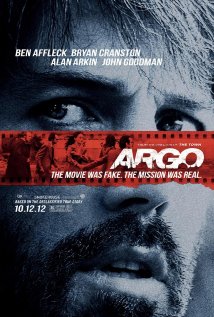
Argo

Title: Argo

Rating: R

Cast: Ben Affleck (Tony Mendez), Bryan Cranston (Jack O’Donnell), Alan Arkin (Lester Siegel), John Goodman (John Chambers), Victor Garber (Ken Taylor)

Director: Ben Affleck

The Basics: In the middle of the Iranian hostage crisis, CIA exfiltration expert Tony Mendez is tasked to come up with a plan to bring home six U.S. embassy workers who escaped to the Canadian ambassador’s residence. Mendez, with the help of friends in Hollywood, devises a plan to enter Iran under the guise of scouting locations for a film, giving the six trapped Americans cover identities as his crew. Argo somehow manages to give a true sense of suspense to a story in which the ending is already known. Its tight direction, breathless pacing, and solid performances make it the first real contender of the early Oscar-buzz season.

M.V.P. (Most Valuable Performer): Ben Affleck is enjoying a career rebirth as a director, but Argo also reminded me what a great actor he can be when given the right material. Tony Mendez is the glue that holds this film together, and Affleck wears that responsibility well. His performance is wonderfully understated; there are no theatrics, no “badass, tough guy” moments. Instead, there are quiet scenes where a close-up on his face speaks volumes about the incredible strain this man is under. Mendez has six lives in his hands, and that is never lost on the audience because Affleck makes certain it is never lost in his performance. He moves and blinks and breathes as if the weight of the world is on his shoulders, and that’s because—in a very real sense—it is. The humanity that he gives Mendez is exactly what is necessary to make us care about this man’s fate as much as we care about the fate of the six he’s trying to extract. The scene where he unsuccessfully attempts to call his wife and son before getting on the plane to Iran broke my heart, and that’s all because of Affleck’s eyes. This is the kind of film that could be undone with an overblown performance at its center. Instead, Affleck’s quiet power and undercurrent of humanity keep it perfectly grounded.

Scene Stealer: Alan Arkin is brilliant in everything he does, and he was the perfect casting choice for veteran producer Lester Siegel. His sharp sense of humor and biting line delivery are like a breath of fresh air in this very tense film. While his character mostly provides much-needed relief from the suspense, he never takes over the film with his performance. He maintains a level of gravitas that shows that even this fast-talking Hollywood suit understands the urgency and importance behind what he’s being asked to do. I wouldn’t be surprised to see his name on the Best Supporting Actor Oscar ballot once again this year.

Bring the Tissues? This isn’t really a tearjerker, although I did find myself a little choked up when the plane carrying Mendez and the six Americans left Iranian airspace. The genuine feeling of relief was palpable, and a lot of it had to do with the fact that each actor played their reactions uniquely—some with hugs, some with tears, and some with silence. Also, the final scene of Mendez coming home to his wife and son was incredibly moving without being cloyingly sentimental.

Should I Stay or Should I Go? Stay through the first part of the credits to see photos of the real people and events put side-by-side with their cinematic counterparts. It’s a great reminder of how much care Affleck took to show the reality behind such a fantastic kind of story.

Most Memorable Scene: While the airport scenes are probably the most taught and suspenseful in the film, the most memorable scene for me boils all of the tension in the entire film into one breathtaking sequence. When Mendez is driving the six to the bazaar to maintain their covers as location scouts, they run across a demonstration in the streets. As their van slowly works its way through the angry, violent mob of Iranians, the tension is so high I found myself holding my breath. The lack of dialogue besides the chanting and shouts of the protestors adds to the feeling that even the audience has to be silent and still while watching—an experience I’ve never had so intensely during a film before. Affleck does a masterful job of keeping the camera tight on the people in the van and their reactions to the mob surrounding them, giving the scene a claustrophobic kind of intensity that only a very strong director and group of actors could achieve.

Continue reading

Why We Need Katniss

Before I started this blog, I made a list of possible topics that I wanted to write about. Near the top of the list was “Why We Need Katniss.” As I sat down to watch my new copy of The Hunger Games on DVD Saturday night, I realized that the reason I hadn’t written this post yet was because the question it poses is one I had yet to answer.

Why do we need Katniss Everdeen?

As a writer, I see the world in terms of the stories we all have to tell. And it worries me to see the many ways that we – especially we as women – hand over our stories to other people, other forces. Our sense of personal authorship becomes diminished whenever we let other people tell us how to feel about ourselves; whenever we judge our actions, our appearance, our worth, and our value as human beings by society’s ever-changing and arbitrary standards.

So what does this have to do with Katniss?

Even when it seems like the Capitol has total control over her, Katniss fights for her right to live her own life on her terms. To make her own decisions. To tell her own story.

And what is Katniss’s story? Her story is the journey from isolation to community, from suspicion to trust, from detachment to love.

Katniss’s story is the story of how one young woman can inspire change simply by striving to be, as Peeta says, “more than just a piece in their games.”

Continue reading

Nerdy Girl Goes to the Movies: The Amazing Spider-Man

Title: The Amazing Spider-Man

Rating: PG-13

Cast: Andrew Garfield (Peter Parker), Emma Stone (Gwen Stacy), Rhys Ifans (Dr. Curt Connors), Sally Field (Aunt May), Martin Sheen (Uncle Ben), Denis Leary (Captain Stacy)

Director: Marc Webb

The Basics: Some parts of the Spider-Man story we’ve seen on the big screen before: the life-changing spider bite, the loss of Peter Parker’s father figures, the journey from masked vigilante to superhero…But some parts are new to moviegoers: Peter’s struggles with being abandoned by his parents, his first love with fellow science prodigy Gwen Stacy, and his battles with Dr. Curt Connors’s alter ego The Lizard. The Amazing Spider-Man takes a story we’re all familiar with (thanks to 50 years of comics and Sam Raimi’s recent trilogy of films) and makes it profoundly personal.This is a superhero movie that at times feels like a small character study, with moments of real warmth and surprising depth amid the action and special effects.

M.V.P. (Most Valuable Performer): Spider-Man is literally Andrew Garfield’s dream role (just watch his speech at last year’s Comic-Con if you want proof), and you could feel it in every moment he was onscreen in this film. His total dedication to making both Peter Parker and Spider-Man human and relatable is a beautiful thing to watch. Physically, he deftly balances the mannerisms of Peter the gangly teenage boy and the surprising grace of Spider-Man the superhero. That dichotomy carries over into every aspect of his performance. He gives Peter the perfect combination of sadness, sweetness, and anger. His Peter is a loner by choice, living with the weight of being abandoned and then orphaned. It’s only when he’s with Gwen that we see that weight lifted, and Garfield shines in his moments with Emma Stone. This is a different kind of humanity that Garfield gives to Peter – not the crushing sadness of being an orphan but the incredible joy of being in love for the first time. He’s by turns awkward, playful, and warm – adding a lightness to the film that is very much appreciated.

Garfield also brings new life to Peter’s persona as Spider-Man. This is the Spider-Man of the comics: sarcastic and full of quips. Spider-Man is who Peter is without inhibition, under the protective mask of anonymity. The balance between Spider-Man’s inherent heroic streak and his sense of humor is deftly handled, and I don’t think that would have been the case without an actor of Garfield’s caliber in both Peter’s glasses and Spider-Man’s suit.

Scene Stealer: Gwen Stacy is no ordinary “superhero girlfriend,” and no ordinary actress could bring to life her beguiling mixture of beauty, bravery, depth, and intelligence like Emma Stone did in this film. She brings her own spark to one of the most iconic significant others in the Marvel universe, and it’s a spark that ignites some of the most charming and memorable moments in the film. Whether she’s bantering with Peter, using her scientific skills to save New York City, or showing a rare glimpse at the vulnerability behind her perfectionist exterior, Stone’s Gwen is a fully-realized character, and so much of that comes from the vitality Stone brings to the role. We know she can do comedy – and she’s excellent in her comedic scenes in this film – but she also has a talent for showing real emotion in dramatic scenes. She and Garfield bring out the best in each other as actors just as Gwen and Peter bring out the best in each other in the film.

Bring the Tissues? Yes. There are some truly moving moments in this film: the farewell between young Peter and his mother; Uncle Ben’s murder and Peter’s reaction to it; two poignant scenes of vulnerability between Peter and Gwen – one in her bedroom and one at his doorstep; and a scene featuring tower cranes that some might call cheesy but I call a moment to celebrate the heroism of the common man. Also, there’s a scene between Peter and Aunt May that will have me getting misty-eyed every time I see a carton of organic eggs (which, thankfully, doesn’t happen too often).

Should I Stay or Should I Go? Stay until about halfway through the credits for a mysterious confrontation about Peter’s fate. Who’s the man with the hat? It’s a question to keep us guessing until the next installment arrives in theaters.

Most Memorable Scene: In terms of cinematic spectacle, the centerpiece of the film (and one of its most stirring moments) is the aforementioned scene in which crane workers help an injured Spider-Man across the skyline of Manhattan to his final confrontation with the Lizard. However, the most memorable thing about the film as a whole is the blinding chemistry between Garfield and Stone. That chemistry shines throughout the film, but it’s at its strongest in two scenes that transcend the “superhero” genre and could stand on their own in any romantic film: Peter asking Gwen on a date (and Gwen accepting) in the most awkwardly endearing way imaginable and Gwen tending to Peter’s wounds while confessing her fears of the men she loves going off to save the world and never coming back.

Continue reading

Midnight Madness

With the summer blockbuster season already in full swing, it’s time to get down to business here at Nerdy Girl Notes and talk about one of the most entertaining ways to experience a film: a midnight screening.

There’s nothing quite like the atmosphere at a midnight screening. If you want to be surrounded by people who are incredibly passionate about the movie they are about to see, there’s no better place to be. From the costumes to the discussions while waiting in line to the reactions during the film itself, a midnight screening is a reminder that going to the movies is a communal activity. There’s a sense of unity among the people you meet in line and in the theater while you’re waiting for the clock to strike 12:01. It gives you a feeling of belonging in a way that going to see the same movie at 7:30 on a random Saturday night can’t provide.

I’ve seen six popular movies at midnight screenings: The Hunger Games, three Harry Potter films (Half-Blood Prince and both Deathly Hallows installments), and even two parts of the Twilight Saga (the first film and Eclipse). This week will mark my seventh, as I line up for the 12:01 a.m. showing of Brave. If my schedule allowed it, I would see every movie that stirs some level of excitement in me at its midnight screening. I have more fond memories of these kinds of screenings than I can list with any sort of brevity, so I won’t even attempt.

Instead, I will present you with a different kind of list. If you’re planning on attending any midnight movie screenings this summer, here’s some advice for you:

Buy your tickets as soon as they become available. There’s no greater disappointment for a film nerd than finding out that the midnight screening for the movie you’ve been following from pre-production through its release is sold out. Oftentimes, Fandango will send email alerts for the day tickets for 12:01 a.m. showings of popular movies go on sale. I highly recommend making use of this alert system (or at least frequently checking their website or other entertainment news sources) and purchasing your tickets as soon as possible after they become available. Also, make sure that the day you purchase the tickets you know exactly how many people will be going with you. There are usually multiple theaters open for midnight screenings, and you don’t want anyone from your group exiled to a different theater just because they had to get their tickets at a different time.

Continue reading

A True American Horror Story: Violence, Childhood, and The Hunger Games

The Hunger Games can be described in many ways. It’s captivating. It’s haunting. It’s affecting. It’s terrifying.

It’s also unquestionably American.

According to Entertainment Weekly, “Internationally, The Hunger Games isn’t yet the franchise-launching blockbuster that it is Stateside.” As of last weekend (April 15), the film had grossed $337.1 million domestically but had yet to pass the $200 million mark internationally.

This disparity can be attributed to many causes, but I think it all boils down to one point: The Hunger Games is a distinctly American story. It reflects the uniquely American mythology of Twain’s The Adventures of Huckleberry Finn, Fitzgerald’s The Great Gatsby, and Lucas’s Star Wars. While Suzanne Collins surely meant for her novel to be enjoyed and analyzed by an international audience, she speaks directly to Americans with every turn of the page.

The basic premise of The Hunger Games points directly to two American obsessions: violence and youth. Never before have these two quintessentially American fascinations been linked in such a brutally direct way.

Continue reading